
Last updated October 16, 2026
 AC repair
 Furnace & heating
 Heat pumps
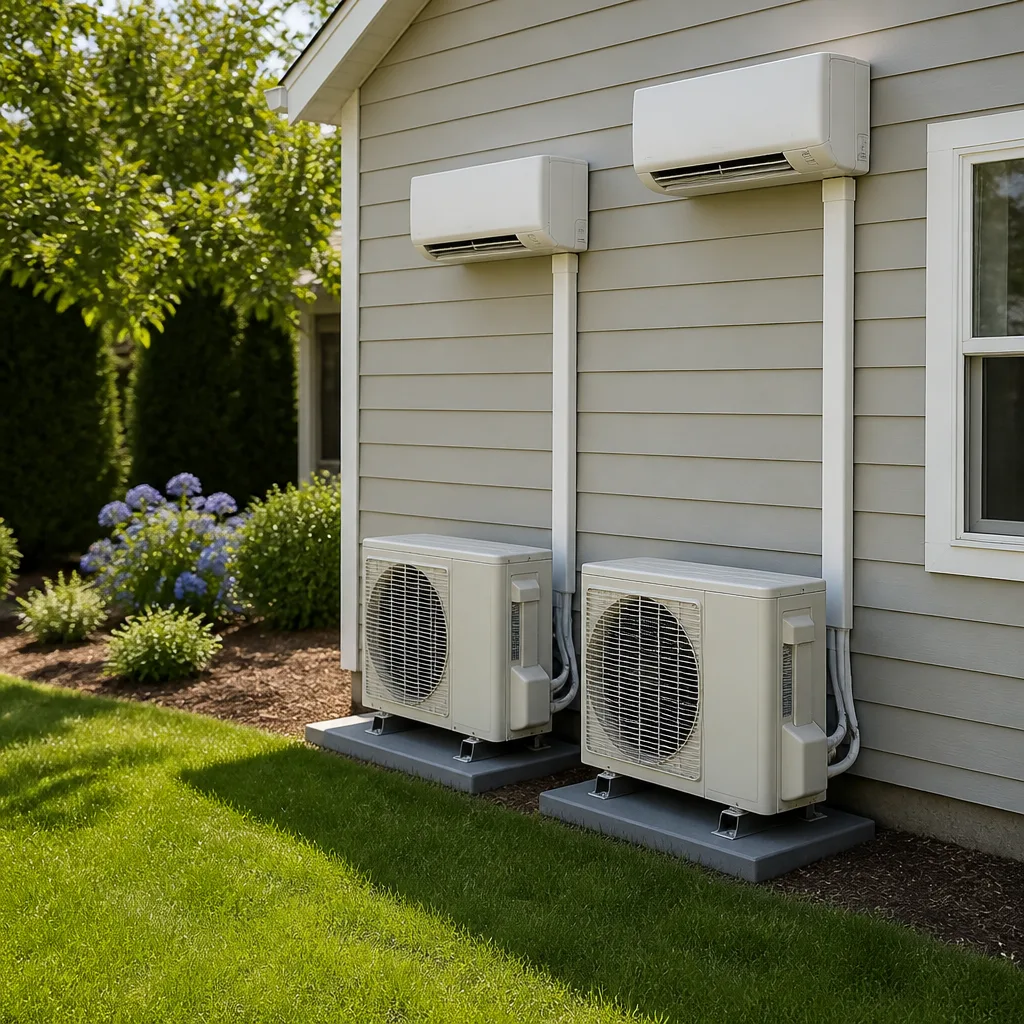 Ductless mini splits
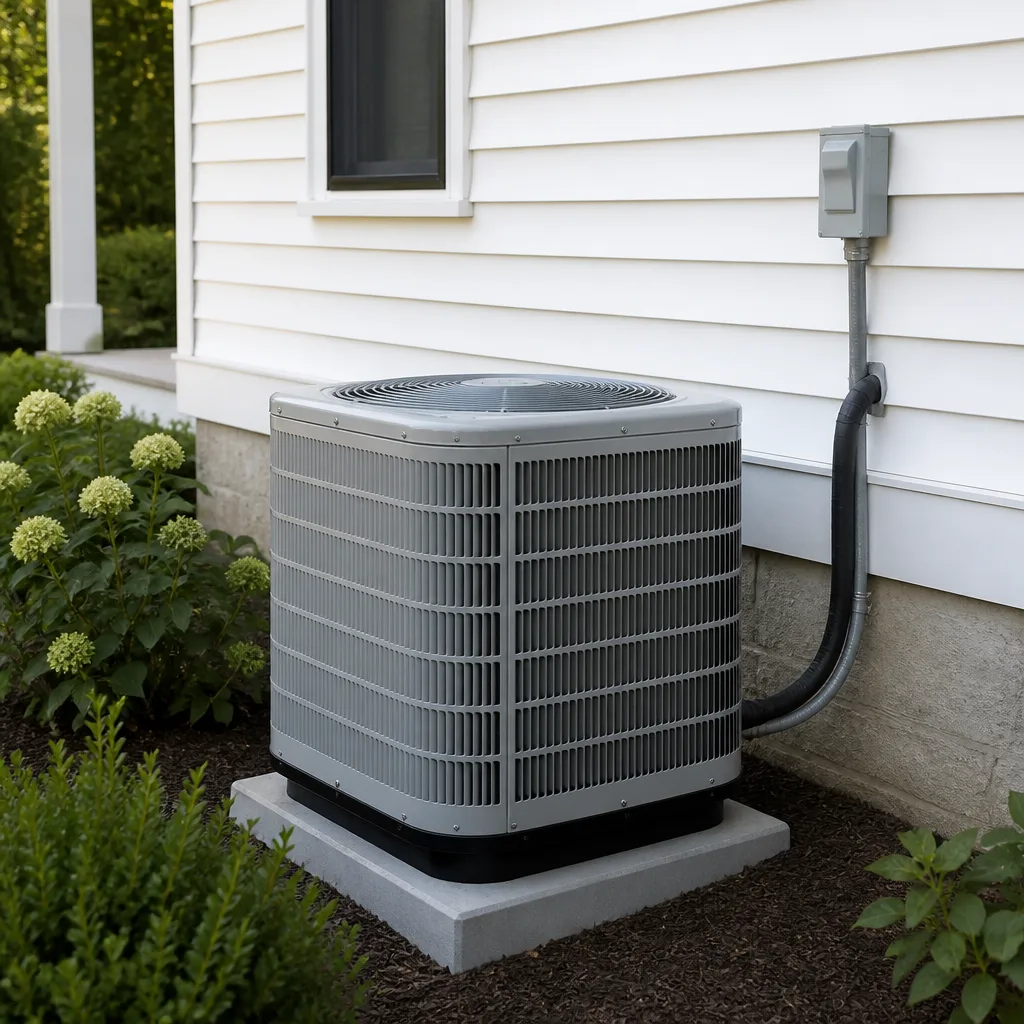 Carrier
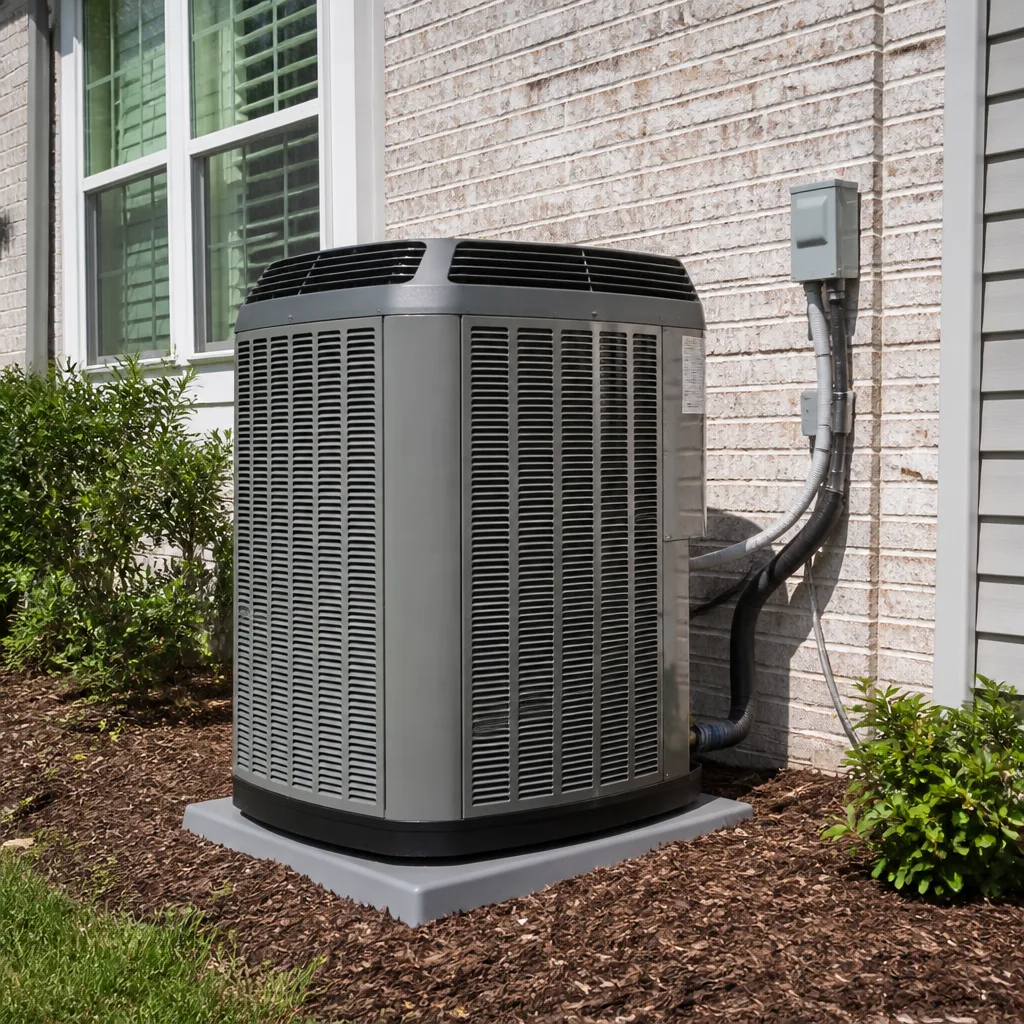 Trane
Trane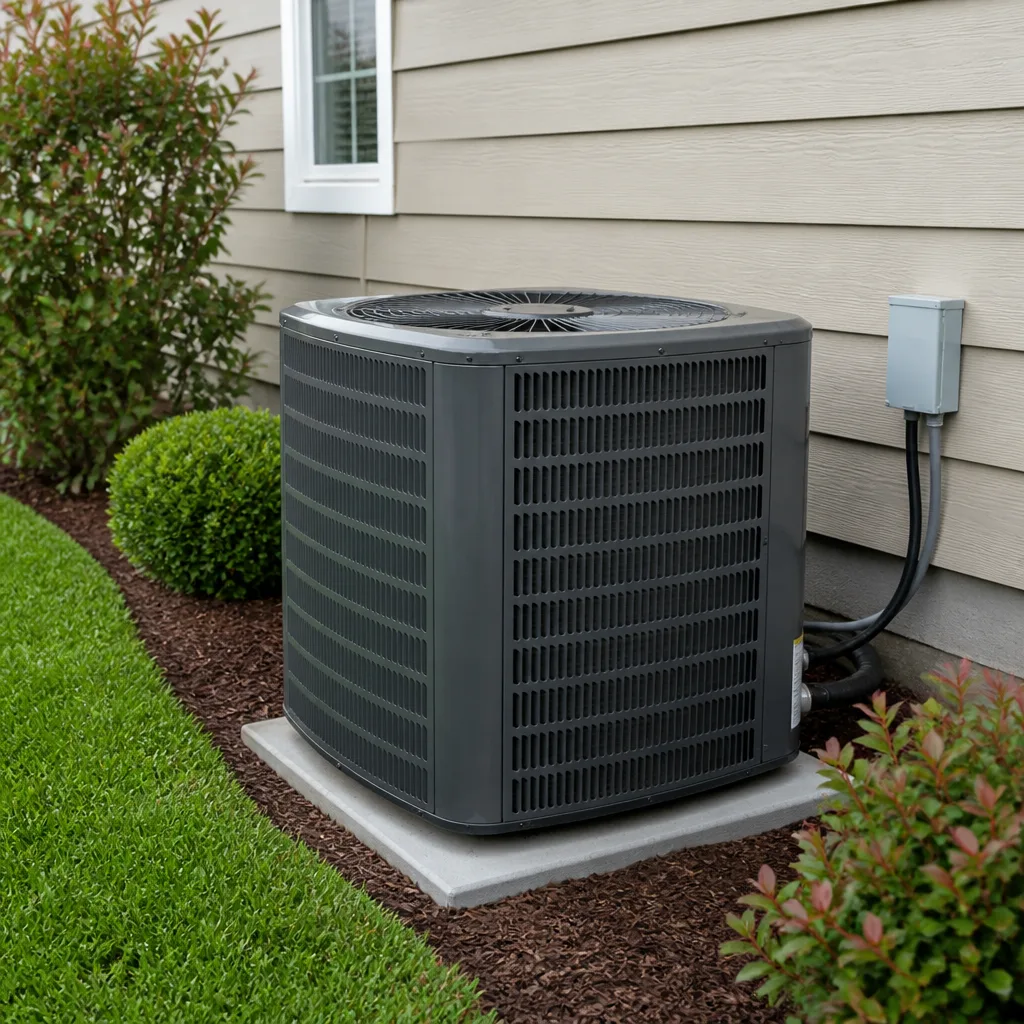 Goodman
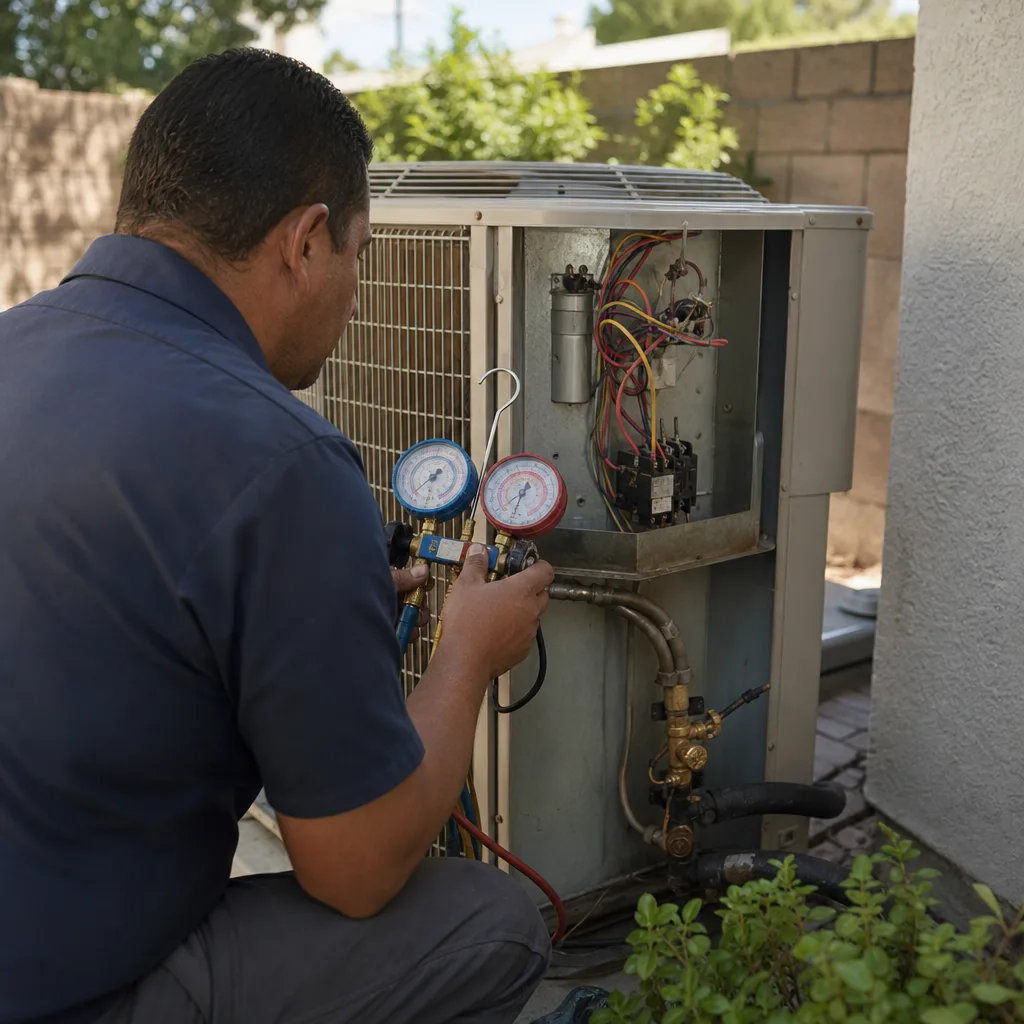
Seasonal tune-up and full diagnostic on your Carrier, Trane, or Goodman system - readings shown to you before any repair is proposed
Diagnosis first, numbers second - you approve the repair price before a single part goes in.
Get your free estimateAC Repair Maintenance Checklist for Fresno Homeowners
Here’s a fact most Fresno HVAC companies won’t tell you: the number-one cause of AC failure calls in Fresno in July isn’t a broken compressor. It’s a clogged condensate drain that was working fine in April and catastrophic by the Fourth of July. One $12 fix, skipped. In a city where summer temperatures routinely push past 100 degrees for weeks at a stretch, the margin between a cooling system that works and one that dies is thinner than in any other California market. This checklist is sequenced by Fresno’s actual seasonal risk, not alphabetical order, so you’ll know what to check now, what to check before the first heat wave, and what to document before you ever pick up the phone to call a technician for AC Repair.
Quick Answer
The AC maintenance checklist for Fresno homeowners comes down to this: clean or replace your air filter every 30 days during peak cooling season, flush your condensate drain line monthly from May through September, keep outdoor condenser coils clear of dust and debris (especially after spring wind and almond harvest events), and have a professional inspection done once in early spring and once in early fall. If your supply-return temperature split reads below 15 degrees, your refrigerant charge is low and you should call for service before the next heat wave hits. Most Fresno AC breakdowns are preventable with less than two hours of homeowner maintenance per year.
Styles & brands we work with
Table of Contents
- The Fresno Seasonal Maintenance Calendar
- Filter Checks: Fresno’s Dust Problem Is Different
- The Condensate Drain Line: The $12 Fix That Prevents $800 Repairs
- Coil Inspection After Spring Wind and Almond Harvest
- How to Test Refrigerant Health at Home (No Tools Required)
- What to Document Before Calling Any Technician
- Maintenance That Protects Your Warranty vs. What Voids It
The Fresno Seasonal Maintenance Calendar
Fresno’s climate doesn’t follow the same rhythm as coastal California. We don’t get a gentle slide into summer. We get a wall of heat that arrives in late May and doesn’t break until October. That means your AC maintenance schedule needs to be built around three distinct risk windows: pre-heat season, peak heat season, and post-harvest smoke season. Here’s the month-by-month breakdown we recommend for Fresno homeowners, or see The Complete Guide to HVAC in Fresno for the full picture:
- March (Pre-heat season): Replace the air filter with a fresh one, even if it doesn’t look dirty. Check the outdoor condenser unit for leaves, twigs, and rodent activity from winter. Pour one cup of white vinegar down the condensate drain line to clear early-season gunk. This is the month to schedule your spring tune-up, before HVAC companies get slammed with emergency calls.
- April (Wind and dust month): Fresno’s spring winds kick up valley dust that coats condenser coils fast. After the first windy week, rinse the outdoor unit with a garden hose on a gentle setting. Check the filter again. If it’s gray, swap it. April is also when almond harvest dust starts moving through the air in the San Joaquin Valley.
- May (First heat spike): Run your AC for a full 30 minutes during the first week even if it’s not that hot yet. Listen for odd noises. Check that condensate is flowing from the drain line outside. If the air coming from your vents feels cool but not cold, measure your temperature split before the first real heat wave arrives.
- June through September (Peak heat season): Check and replace the filter every 30 days, no exceptions. Pour vinegar down the condensate drain monthly. Keep the area around the outdoor unit clear of grass clippings and debris. If you have pets, check the filter every two weeks. If the outdoor unit is in direct afternoon sun, consider a shade cover that still allows airflow.
- October (Post-harvest and smoke season): Wildfire smoke and harvest dust leave a film on evaporator coils that reduces efficiency going into the cooler months. Have a professional clean the coils and inspect the blower. Check the filter for smoke particulate. This is your second tune-up window of the year.
- November through February (Off-season): Cover the outdoor condenser unit with a breathable cover if you live near trees or open fields. Do not seal it in plastic. Check the condensate drain line once in January to make sure it hasn’t dried out and cracked.
This schedule reflects what we actually see in Fresno service calls. The calls that come in during the first heat wave are almost always from homes that skipped the March and April maintenance steps. The calls that come in after the first big wildfire smoke event are from homes that never cleaned their coils. A little seasonal discipline keeps you out of both queues, and it means you’ll never be the person waiting three days for a repair while your house hits 92 degrees inside.
Filter Checks: Fresno’s Dust Problem Is Different
Fresno sits in the San Joaquin Valley, and the San Joaquin Valley sits in a bowl. Dust, pollen, agricultural particulate, and wildfire smoke all settle here and stay. That means your HVAC air filter is working harder than a filter in San Francisco, San Diego, or anywhere else on the California coast. A filter that might last 90 days in other climates will be clogged in 30 to 45 days in Fresno, especially if you live near agricultural land, along a busy road, or in neighborhoods with mature trees like Fig Garden or Tower District.
Here’s the standard we recommend for Fresno homeowners:
- Check the filter visually every two weeks during peak cooling season. Hold it up to a light. If you can’t see light through it, it’s time for a new one.
- Replace the filter every 30 days in summer, every 60 days in winter. If you have pets, kids who track in dust, or live near open fields, lean toward every 30 days year-round.
- Use the right MERV rating for your system. MERV 8 is fine for most residential systems. MERV 11 or 13 is better if you have allergies or asthma and a system that can handle the extra resistance. MERV 16 and HEPA filters can choke a standard residential blower. Check your system’s documentation before going higher than MERV 13.
- Don’t buy the cheapest fiberglass filter. A $3 fiberglass filter protects your blower motor but does almost nothing for air quality or coil protection. A pleated filter in the $10 to $20 range is the sweet spot for most Fresno homes.
- Check the filter direction arrow. The arrow should point toward the blower motor, which is usually toward the furnace or air handler, not toward you when you’re standing at the return grille.
One specific Fresno note: if you live anywhere near the almond orchards or grape vineyards on the edges of town, you’ll see a fine, gray-brown dust on your filter during spring and early summer. That dust is abrasive and will wear down a blower motor faster than normal household dust. In those areas, we recommend checking the filter every ten days during harvest season and replacing it when it turns gray, not when the calendar says so.
The Condensate Drain Line: The $12 Fix That Prevents $800 Repairs
A clogged condensate drain line is the most common preventable AC failure we see in Fresno. During peak cooling season, your AC pulls gallons of moisture out of the air every day. That water collects in a drip pan and drains through a narrow PVC line to the outside of your home. In Fresno’s dry heat, that water evaporates fast, which sounds like a good thing. It’s not. When water evaporates inside the drain line, it leaves behind mineral deposits and algae that build up over time. By midsummer, that line is often half-clogged. By the time it fully blocks, water backs up into the drip pan, overflows, and soaks whatever is beneath your air handler. We’ve seen overflow pans rust through and drop water onto ceilings, drywall, and hardwood floors. The repair bill for the water damage is always more than the repair bill for the AC.
Here’s the monthly maintenance routine we recommend, May through September:
- Locate the drain line. It’s a white PVC pipe near the indoor air handler, usually in a garage, closet, or attic. It exits to the outside of the home, typically near the outdoor condenser unit.
- Pour one cup of white vinegar down the line. Vinegar dissolves mineral buildup and slows algae growth. Let it sit for 30 minutes.
- Flush with a cup of warm water. This pushes the dissolved gunk through the line.
- Check for flow. Go outside and confirm that water is dripping from the drain line exit. No drip after 15 minutes means the line is clogged and needs professional clearing.
- If you have an overflow switch, test it. Many Fresno homes have a float switch that shuts off the AC when the drip pan fills. Gently lift the float. The AC should shut off. If it doesn’t, the switch is bad.
If the line is already clogged, do not pour chemical drain cleaner down it. Those chemicals can crack PVC and damage the drip pan. A wet/dry shop vac on the outside exit point can sometimes pull a clog free, but if that doesn’t work within a few minutes, call for service. A professional drain line clearing in Fresno typically runs $100 to $200, which is a fraction of the cost of repairing water damage to your home.
Coil Inspection After Spring Wind and Almond Harvest
The outdoor condenser coil is the part of your AC that releases heat into the outside air. In Fresno, that coil gets hit with two specific debris events every year. The first is the spring wind season, when valley dust and grit blow for days at a time and cake the coil fins. The second is almond harvest, which runs from late July through September and fills the air with fine chaff, dust, and pollen from tree shaking and sweeping operations. If you live on the western or southern edges of Fresno, or anywhere near orchard land, your condenser coil is working through a dust storm every single day of harvest season.
Here’s what to check and how to clean it safely:
- Visual inspection: Look at the coil fins on the sides of the outdoor unit. They should be silver and clean. If they’re gray, brown, or covered in what looks like felt, the coil is dirty. A dirty coil makes your compressor run hotter and shortens its life by years, not months.
- Rinse with a garden hose. Turn the AC off at the thermostat and at the breaker. Use a garden hose with a nozzle on a gentle setting. Spray from the inside of the unit outward, pushing debris away from the fins, not into them. Never use a pressure washer. It bends the aluminum fins flat and kills airflow permanently.
- Straighten bent fins. If you see fins bent over from hail, weed whacker debris, or someone bumping the unit, a fin comb costs about $10 and can straighten them. Straight fins equal proper airflow.
- Clear the surroundings. Keep grass, weeds, bushes, and anything else at least two feet away from the outdoor unit on all sides. Your condenser needs a full 360 degrees of airflow. In tight Fresno side yards, this is more important than most homeowners realize.
- Check the evap coil indoors. This is the coil inside the air handler that gets cold. In Fresno, a dirty filter lets dust through onto the evap coil, where it combines with condensation and forms a mud-like film. If your indoor coil hasn’t been professionally cleaned in more than three years, schedule it. Expect a professional coil cleaning to cost $150 to $300 depending on access.
We’ve opened air handlers in Fresno homes where the evap coil was so coated in harvest dust and pet hair that airflow was reduced by more than half. The homeowner had been running the AC at 72 degrees all summer and wondering why the house never got below 78. The AC wasn’t broken. It was suffocating. A clean coil would have fixed it in an afternoon.
How to Test Refrigerant Health at Home (No Tools Required)
Your AC doesn’t “use up” refrigerant. It’s a sealed system. If the refrigerant level is low, there’s a leak, and a leak only gets worse. The question is how to know if your refrigerant is low without buying gauges or spending money on a service call. Here’s the method we teach Fresno homeowners who want to know what’s going on before they call us:
The temperature split test. You’ll need a basic kitchen thermometer, the kind you can get for under $10 at any grocery store in Fresno. Here’s how to do it:
- Turn on the AC and let it run for at least 15 minutes. The longer it runs, the more accurate the test.
- Measure the return air temperature. Hold the thermometer near the return grille, the one that pulls air in. Write down the number.
- Measure the supply air temperature. Hold the thermometer at the vent closest to the air handler, the one that blows cold air out. Write down the number.
- Subtract supply from return. The difference is your temperature split. A healthy system in Fresno on a summer day will show a split of 15 to 20 degrees. A split below 15 degrees usually means low refrigerant, a dirty coil, or poor airflow. A split above 22 degrees usually means restricted airflow, which is often a clogged filter or collapsed duct.
Do this test once in late May before the real heat arrives. Write the number down. If the split is 16 degrees in May and 10 degrees in July, your refrigerant charge is dropping and the leak is getting worse. That’s the information you bring to a technician, and it changes the conversation. Instead of paying for a diagnostic visit and hearing “your refrigerant is low,” you’re calling and saying “my temperature split dropped from 16 to 10 degrees over six weeks, so I know there’s a leak. Can you find it and quote the repair?” A homeowner who can describe the problem accurately saves money and time. We service all major brands, from Goodman to Carrier to Trane, and in our experience a properly informed Fresno homeowner gets better service and a faster fix than one who just knows it’s “not cooling.”
What to Document Before Calling Any Technician
This section saves Fresno homeowners real money. When you call an HVAC company for a repair, you’re paying for two things: the technician’s time and the technician’s diagnostic process. If you’ve already done the diagnostic work yourself, you should arrive at the phone call with documentation that allows the technician to move straight to the repair. Here’s what to have ready before you dial:
- Your temperature split number. Write down the return temperature, supply temperature, and the date you took the reading. This tells the technician whether the issue is refrigerant, airflow, or both.
- Your filter history. What filter is in there, what MERV rating, how old it is. If you’ve been changing it on schedule, the technician can rule out airflow restriction from a dirty filter and move on.
- Your drain line history. When you last poured vinegar down the line, when you last saw water dripping outside. If you know the drain is clear, the tech won’t waste time checking it.
- Odd noises or smells. Write down when they started, what they sound like, and whether they happen all the time or only at startup. A screech at startup is a belt or bearing. A hiss near the outdoor unit is refrigerant. A musty smell from the vents is a dirty coil or mold in the drain pan. Giving the tech this detail narrows the diagnosis fast.
- Your thermostat behavior. Does it short cycle, meaning it kicks on and off every few minutes? Does the display flicker? Does one room stay hot while others cool fine? These are data points.
- The model number of your system. It’s on the data plate on the outdoor unit. Having it ready lets the dispatcher confirm the tech is bringing the right parts the first time.
Here’s the thing: every minute you can save the technician on diagnosis is money you’re not spending. Most Fresno HVAC companies bill diagnostic time separately, and an informed homeowner who shows up with the numbers already in hand often gets a faster, cheaper visit. At AC repair in Fresno, we always provide a written price before any work starts, so you’ll know what the visit costs before we ever touch your system, and your documentation makes the estimate faster and more accurate.
Maintenance That Protects Your Warranty vs. What Voids It
Your AC system probably came with a manufacturer’s warranty that covers parts for five to ten years, and possibly labor for a shorter period. What most Fresno homeowners don’t realize is that the warranty is conditional. The manufacturer requires proof of annual professional maintenance, and in many cases the warranty language specifies that neglect voids coverage. Here’s what protects you and what puts you at risk:
What protects your warranty:
- Annual professional tune-ups with documentation. When a major component fails and you file a warranty claim, the manufacturer may ask for maintenance records. If you can’t produce them, the claim can be denied. A professional tune-up with a written report is your proof.
- Filter changes on a documented schedule. Keep the receipt from your filter purchases or note the dates. It demonstrates reasonable care.
- Professional installation and service. If a part fails because a homeowner attempted a DIY repair and made it worse, most manufacturers will void the claim. For anything involving refrigerant, electrical components, or safety controls, use a licensed professional. Refrigerant handling is regulated by the EPA, and doing it yourself is both illegal and dangerous.
- Registering your system with the manufacturer. Some brands, like Goodman and Rheem, offer longer warranty coverage if you register the system within 60 or 90 days of installation. Many homeowners never register, and they lose years of coverage because of it.
What voids your warranty:
- Skipping professional maintenance entirely. A manufacturer denied a compressor claim because the homeowner couldn’t show a single tune-up in five years. The compressor was covered. The neglect wasn’t.
- Using unapproved replacement parts. Off-brand capacitors, contactors, and fan motors might work fine, but if a related part fails later and the manufacturer traces the failure to a non-OEM part, the warranty dies.
- DIY refrigerant work. Adding refrigerant without a license is a federal violation. If a system fails because of improper refrigerant handling, no manufacturer will cover it.
- Ignoring known issues. If you ran a system with a known failing capacitor for months and the compressor eventually burned out, the warranty claim can be denied on the grounds that the compressor failure was preventable.
The paperwork to demand from any maintenance visit is simple: a written report that states what was checked, what was found, and what was done, with the date, the technician’s name, and the company’s signature. At AC maintenance in Fresno, every tune-up includes exactly that: a documented service report you can file away and use as warranty proof if you ever need it. If a company hands you an invoice with no service detail, that document won’t hold up in a warranty dispute. Demand better.
Common Mistakes to Avoid
- Running the AC with a clogged filter for weeks because you forgot to buy a new one. A clogged filter restricts airflow, which makes the evaporator coil freeze. When it thaws, the water goes places it shouldn’t, often soaking the filter and dripping onto the blower motor. In Fresno, we see this constantly in June.
- Closing vents in unused rooms to save money. It doesn’t save money. It increases static pressure in the duct system, which makes the blower work harder, which raises energy bills and shortens blower life. Your system was designed for balanced airflow.
- Setting the thermostat to 68 degrees on a 110-degree day and expecting the house to reach it. Most residential AC systems in Fresno are sized to cool about 20 degrees below outdoor temperature. If it’s 110 outside, 78 to 80 inside is realistic. Setting the thermostat lower doesn’t make the AC work faster. It just makes it run longer and freeze the coil.
- Ignoring a drip from the outdoor drain line because it’s “just water.” If the drip stops suddenly in midsummer, that’s not a sign the system is fine. It’s a sign the line is clogged and water is backing up into your home. The drip is supposed to be there.
- Planting bushes or building a fence too close to the condenser. That unit needs at least two feet of clearance on every side. We’ve seen Fresno homeowners build a decorative lattice screen around the outdoor unit and then wonder why the compressor overheats every August.
- Waiting to schedule a tune-up until the first heat wave. HVAC companies in Fresno switch to emergency-only mode during heat waves. A tune-up that’s easy to schedule in March becomes a two-week wait in July. Do it in the spring. Do it before you need it.
- Attempting to fix a refrigerant leak with a can of stop-leak from the auto parts store. Automotive refrigerant and residential HVAC refrigerant are different chemicals, and automotive stop-leak is not designed for a residential system. It can clog the metering device and destroy the compressor. If you suspect a leak, the repair is a professional job.
See the difference
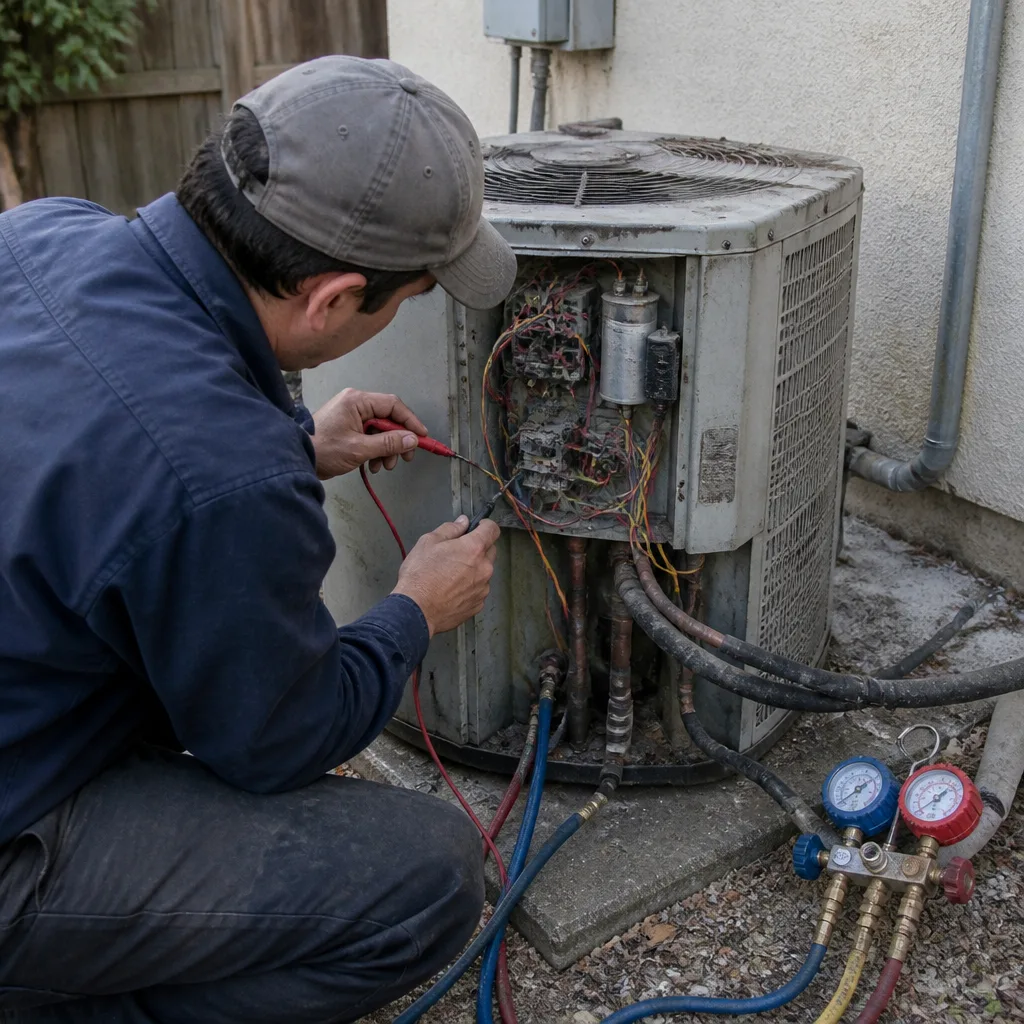 Before
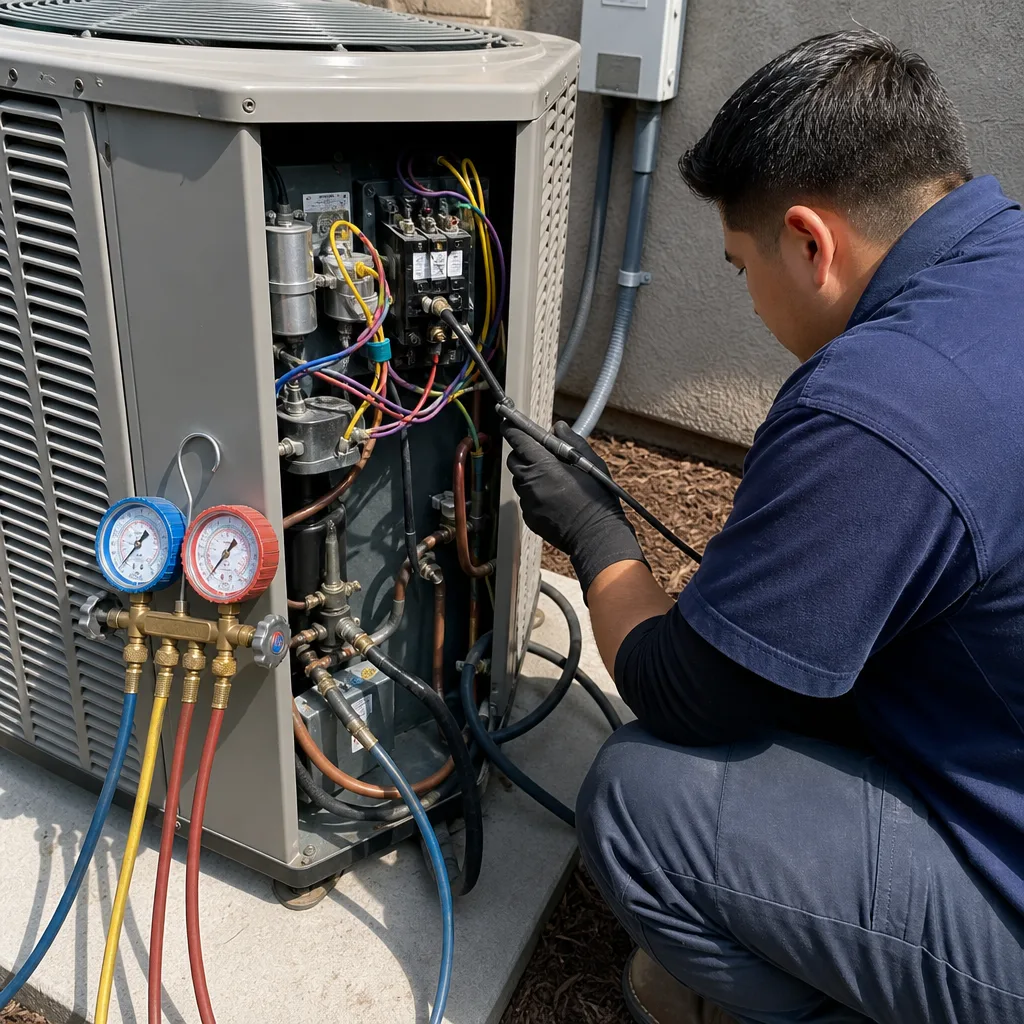 After
After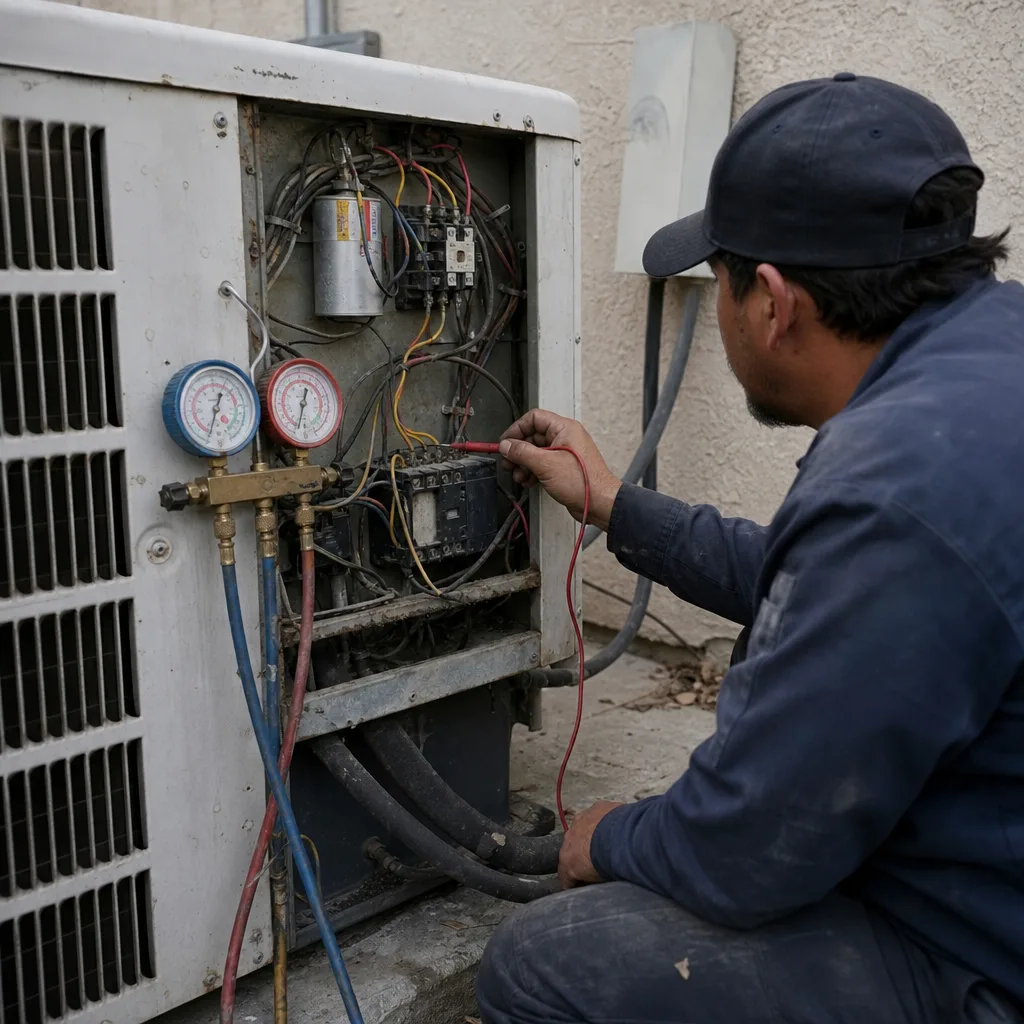 Before
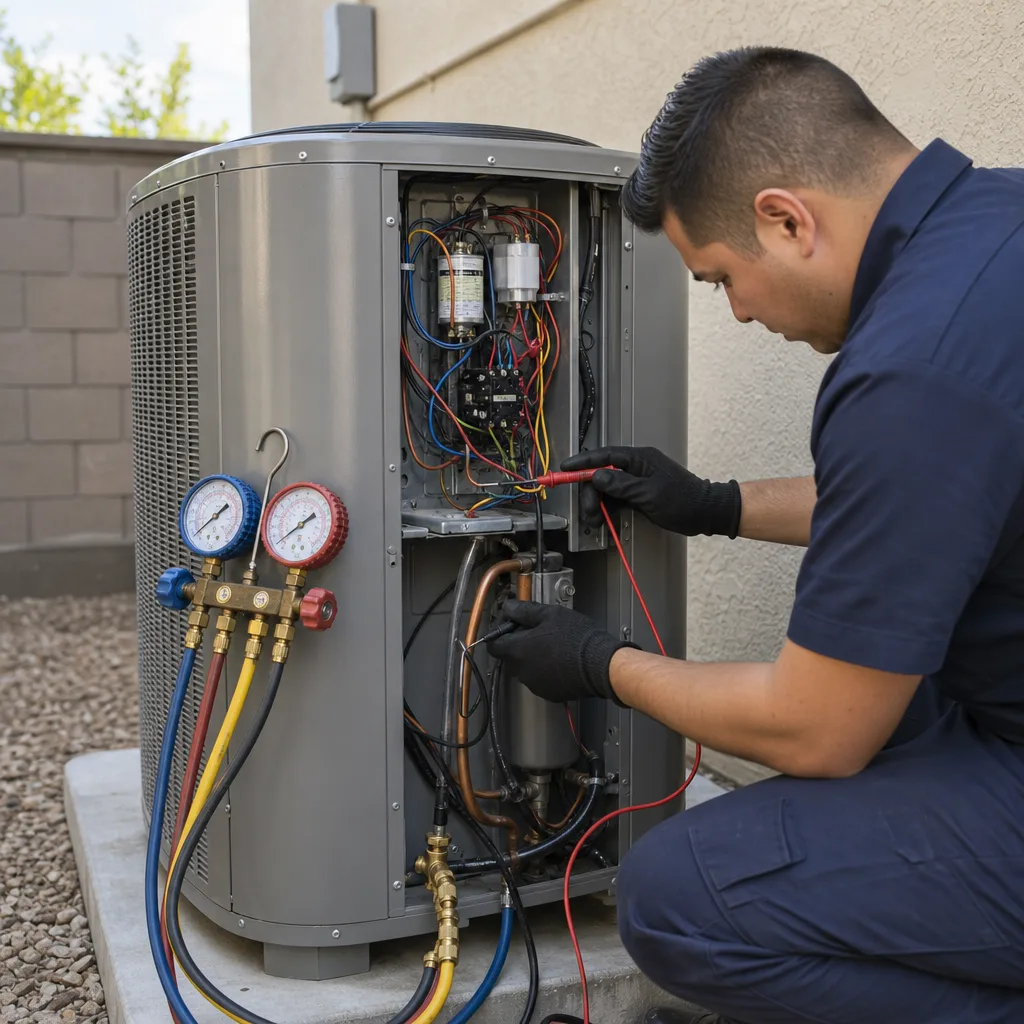 After
After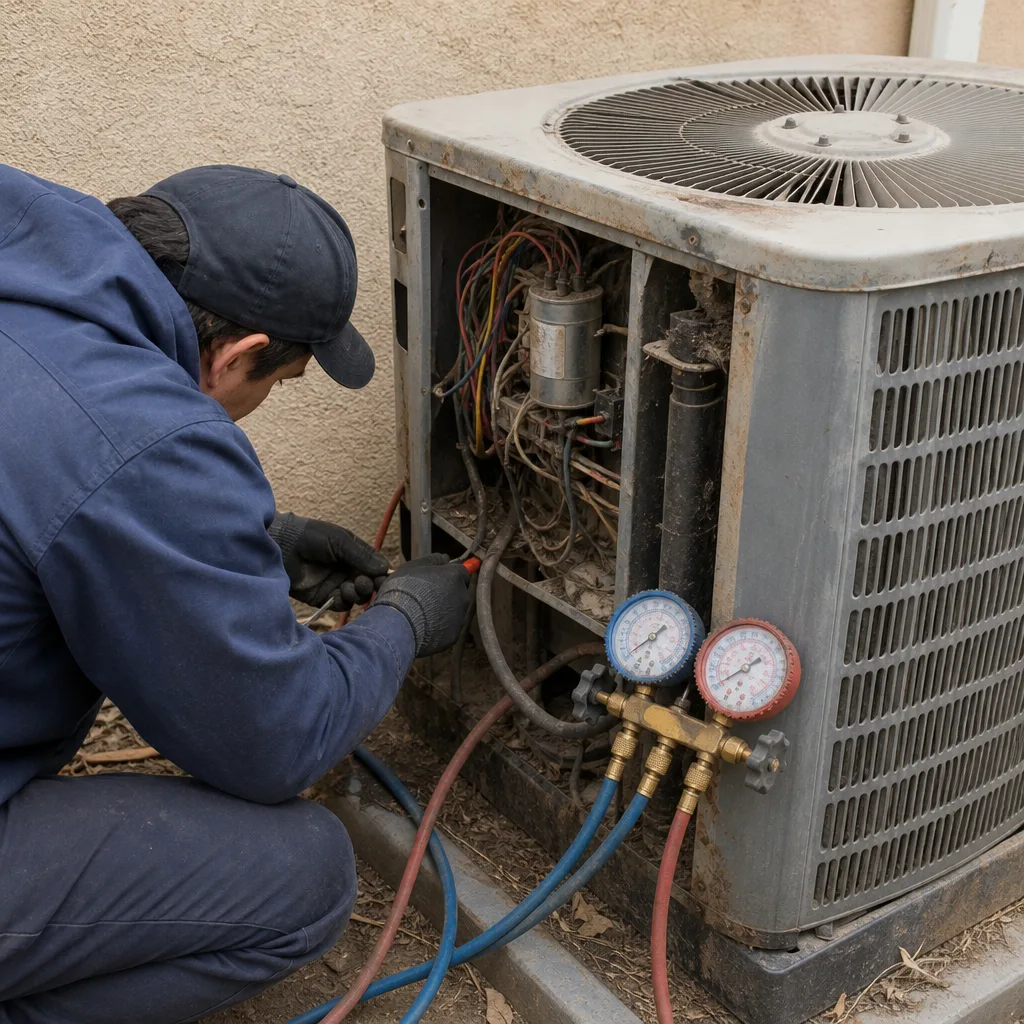 Before
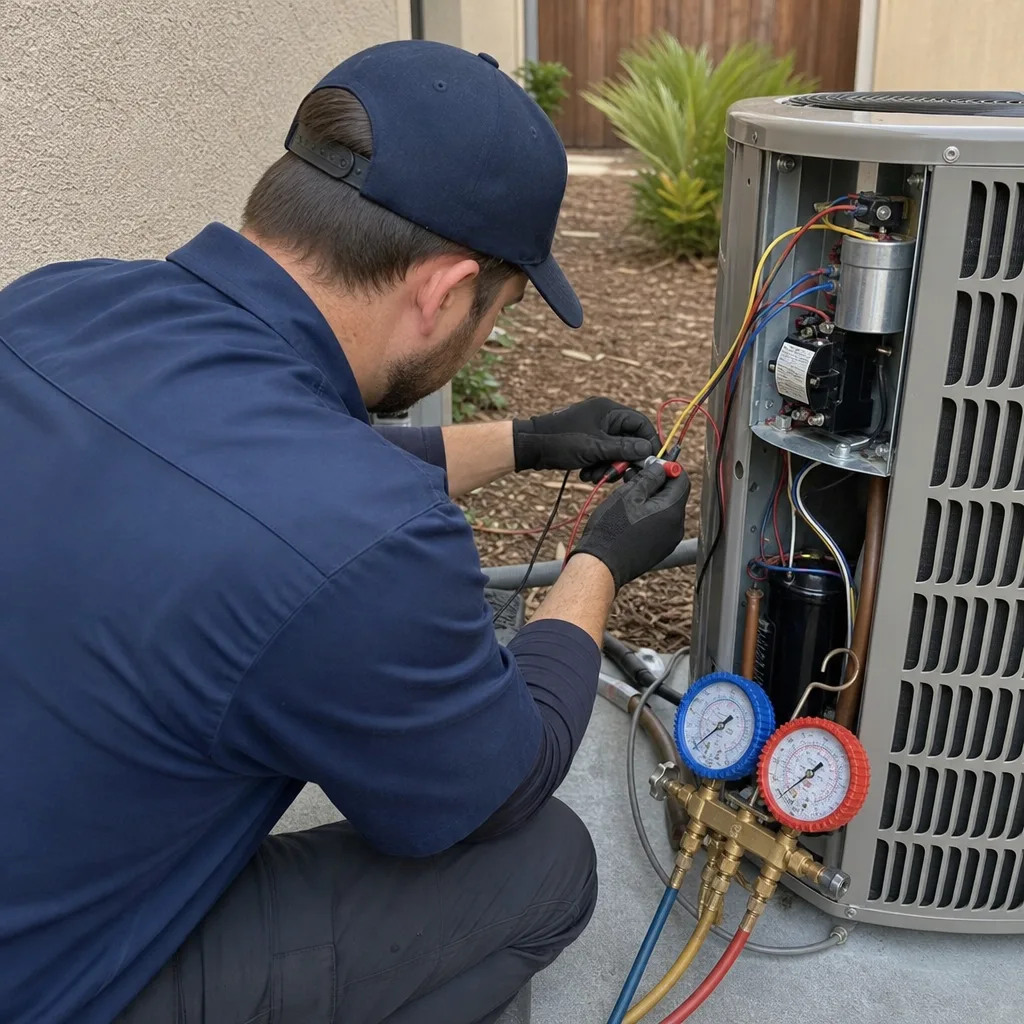 After
AfterWhen to Call a Professional
Some AC issues fall squarely in the homeowner-maintenance category. Others don’t, and knowing the difference saves you money and keeps you safe. See our DIY vs Professional HVAC: The Fresno Homeowner’s Decision Guide for a deeper breakdown. Call a professional if your temperature split is below 15 degrees and you’ve already replaced the filter and cleaned the coil, because that points to a refrigerant leak that requires a licensed tech with EPA certification. Call if you hear any grinding, screeching, or metallic banging from the outdoor unit or blower, because those sounds mean failing bearings or a broken component that will cascade into bigger damage if you keep running the system. Call if the AC trips a breaker more than once, because repeated tripping indicates an electrical fault that poses a fire risk. Call if the evaporator coil is iced over, because running a frozen system can destroy the compressor, and a compressor replacement runs into the thousands. And call if your condensate drain clog won’t clear with vinegar and a shop vac, because water damage inside your home costs more than any drain-clearing service ever will. Brandt HVAC Co Fresno offers free estimates in Fresno. Call (559) 354-6878 and a live person answers, 24 hours a day, every day of the year. We’ll give you a written price before any work starts, and every repair includes a written guarantee backed by our 365-Day Done Right Promise: if it isn’t done right the first time, we return and fix it at no charge.
Frequently Asked Questions
Every 30 days during cooling season, May through September, and every 60 days the rest of the year. Fresno’s valley dust, agricultural particulate, and wildfire smoke load filters faster than coastal California. If you live near orchards or open fields, check every two weeks during harvest season.
Set it to 78 degrees when you’re home and 84 to 86 degrees when you’re away. A residential AC in Fresno is typically sized to offset about 20 degrees from outdoor temperature, so on a 105-degree day, 78 to 80 degrees indoors is realistic and your system won’t run itself to death trying to reach 68.
In Fresno, the most common causes are a clogged filter, a dirty condenser coil, or low refrigerant. Check your filter first. If it’s clean, check the temperature split at the vents. A split below 15 degrees points to low refrigerant or dirty coils. If your split is normal but rooms stay warm, you may have duct leaks or poor insulation.
Professional AC maintenance in Fresno typically runs $100 to $200 for a tune-up that includes coil cleaning, drain line clearing, electrical checks, and a written report. That report is your warranty documentation, so keep it filed. Some homeowners skip the annual tune-up to save money, but a skipped tune-up is the single best predictor of a $500-plus emergency repair in July.
Only with a breathable cover that allows air circulation, and only if your unit sits under trees that drop leaves and twigs. Never use plastic sheeting or a tarp. Sealed covers trap moisture, which rusts components and invites rodents. Most Fresno homeowners are better off leaving the unit uncovered and raking leaves away in the fall.
Run the temperature split test. Run the AC for 15 minutes, measure the return air temperature and the supply air temperature, and subtract. A healthy split is 15 to 20 degrees. Below 15 degrees usually means low refrigerant or poor airflow. If your filter is clean and the coil is clean, and the split is still low, you likely have a refrigerant leak. Refrigerant doesn’t get used up over time. Low refrigerant always means a leak, and the repair should fix the leak, not just top off the charge.
The Bottom Line
Fresno’s AC season is longer and harsher than almost anywhere else in California, and the maintenance routine that works on the coast doesn’t cut it at 105 degrees. Change your filter every 30 days in summer, flush the condensate drain monthly, keep the condenser coil clean through wind season and harvest season, and run a temperature split test before the first heat wave so you know your refrigerant health. Document everything, file your maintenance reports for warranty proof, and call a professional when the problem is electrical, refrigerated, or beyond your tools. We’ve seen the same pattern in Fresno for over 20 years: the homeowners who do the small monthly tasks are the ones who never call us in a panic during a heat wave. The ones who don’t are the ones we get to know by name in July. Be the first kind. Your AC will last years longer, and your summer will cost hundreds less. For more guides & resources, visit our blog.
If you have questions about your specific system, call Brandt HVAC Co Fresno at (559) 354-6878. We’ll walk you through what to check, give you a straight answer, and if you need service, we’ll tell you exactly what it costs before we start. No surprises, no pressure. We serve Fresno and the surrounding San Joaquin Valley, and we’d rather help you avoid a breakdown than bill you for one.
Written by Devin Marlowe, Owner at Brandt HVAC Co Fresno, serving Fresno since 2003.