
Last updated October 16, 2026
 AC repair
 Furnace & heating
 Heat pumps
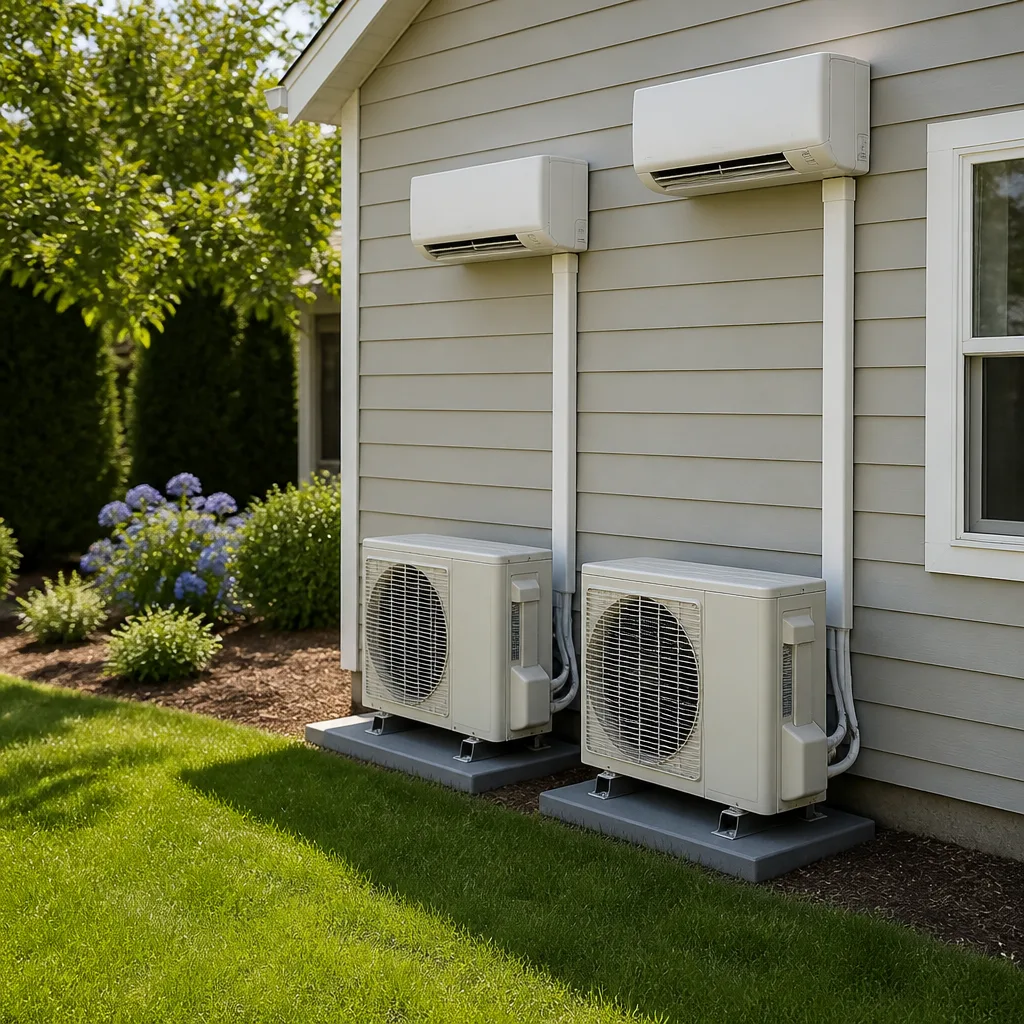 Ductless mini splits
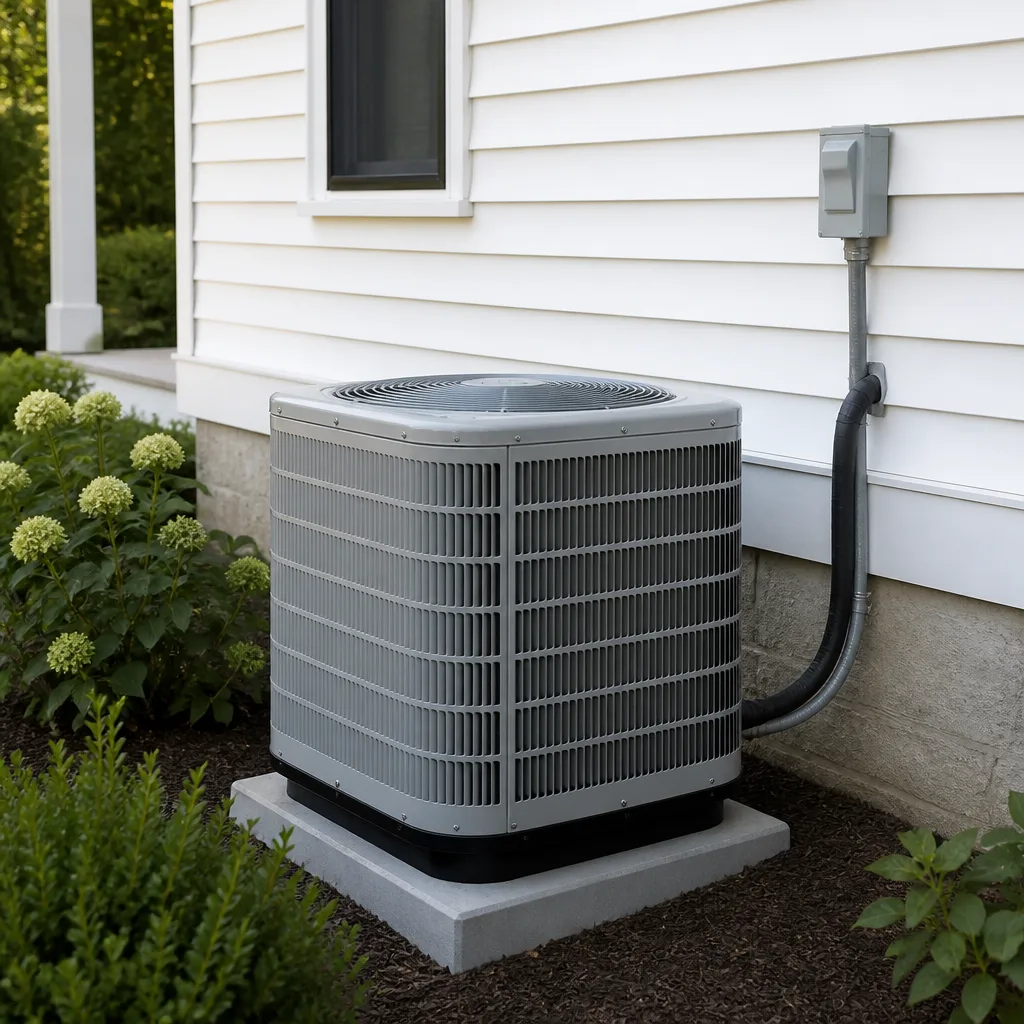 Carrier
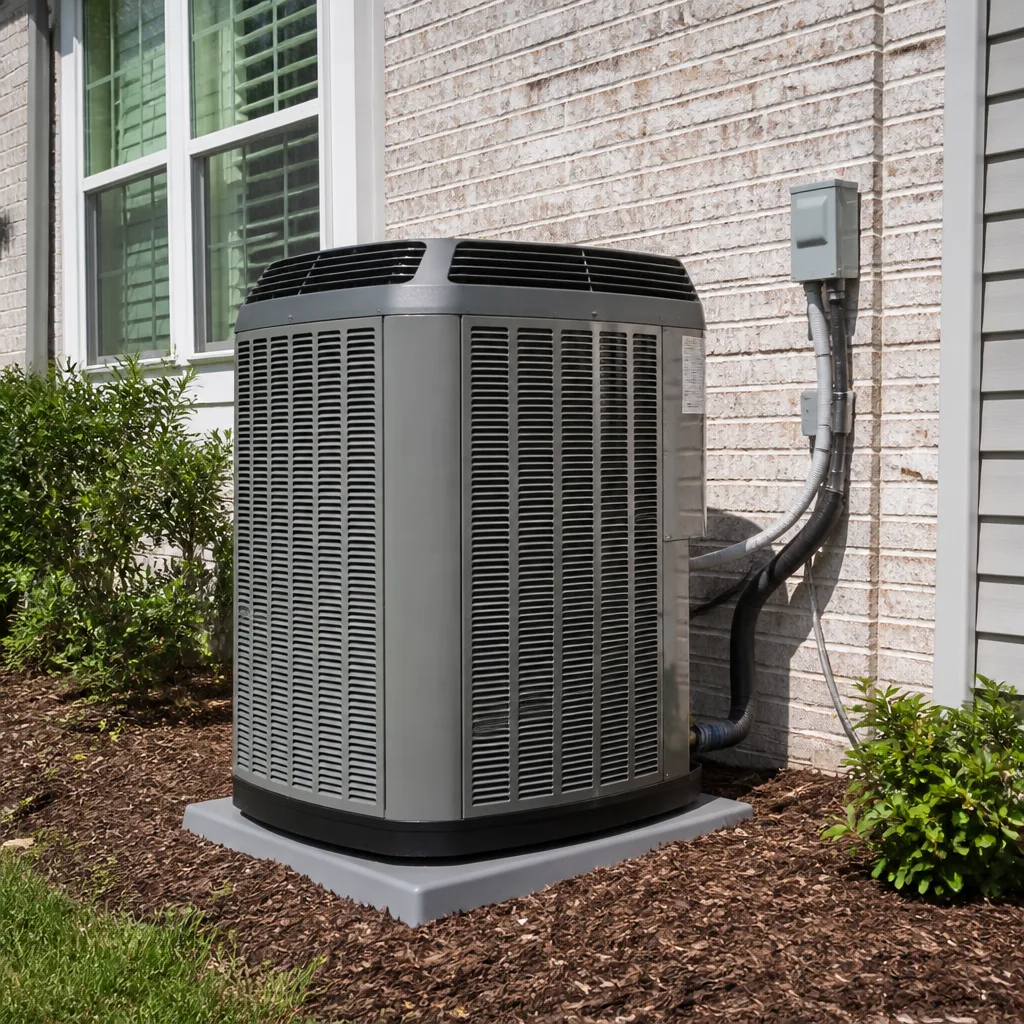 Trane
Trane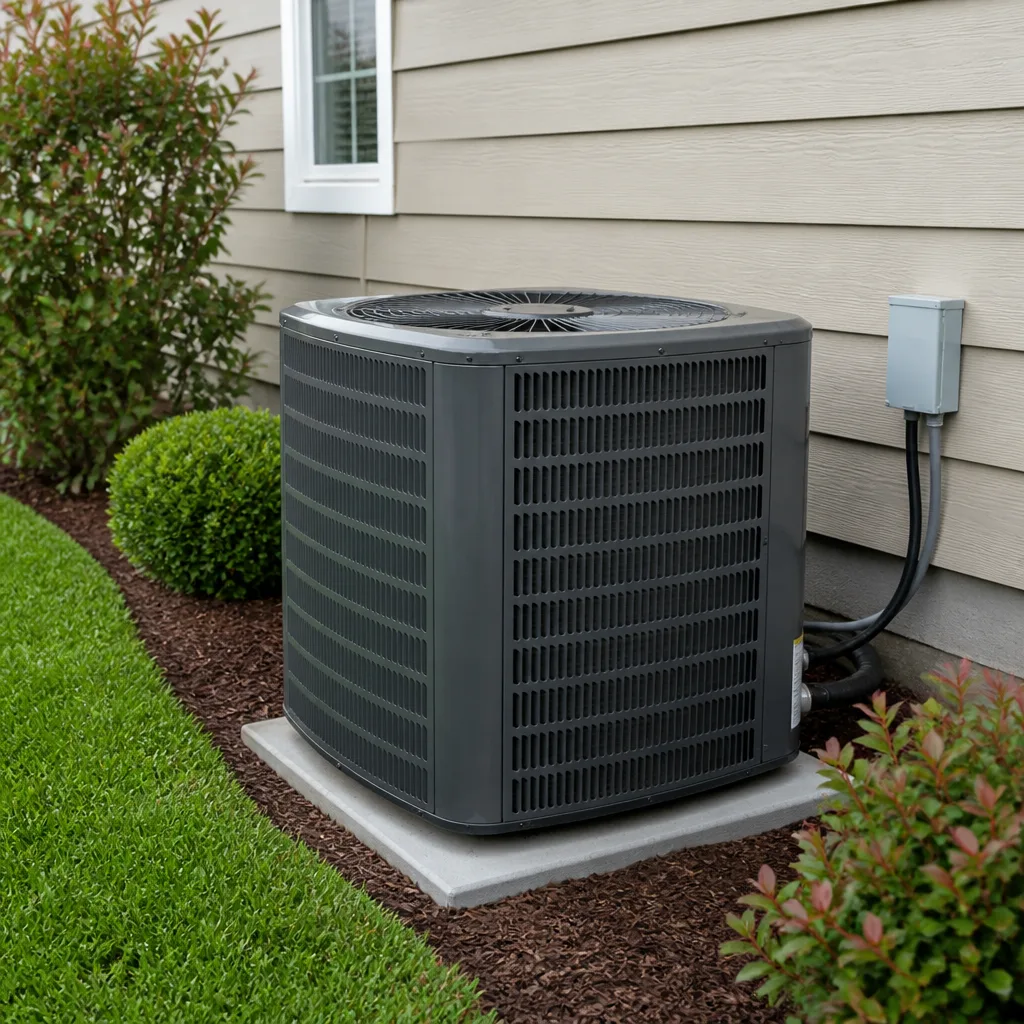 Goodman
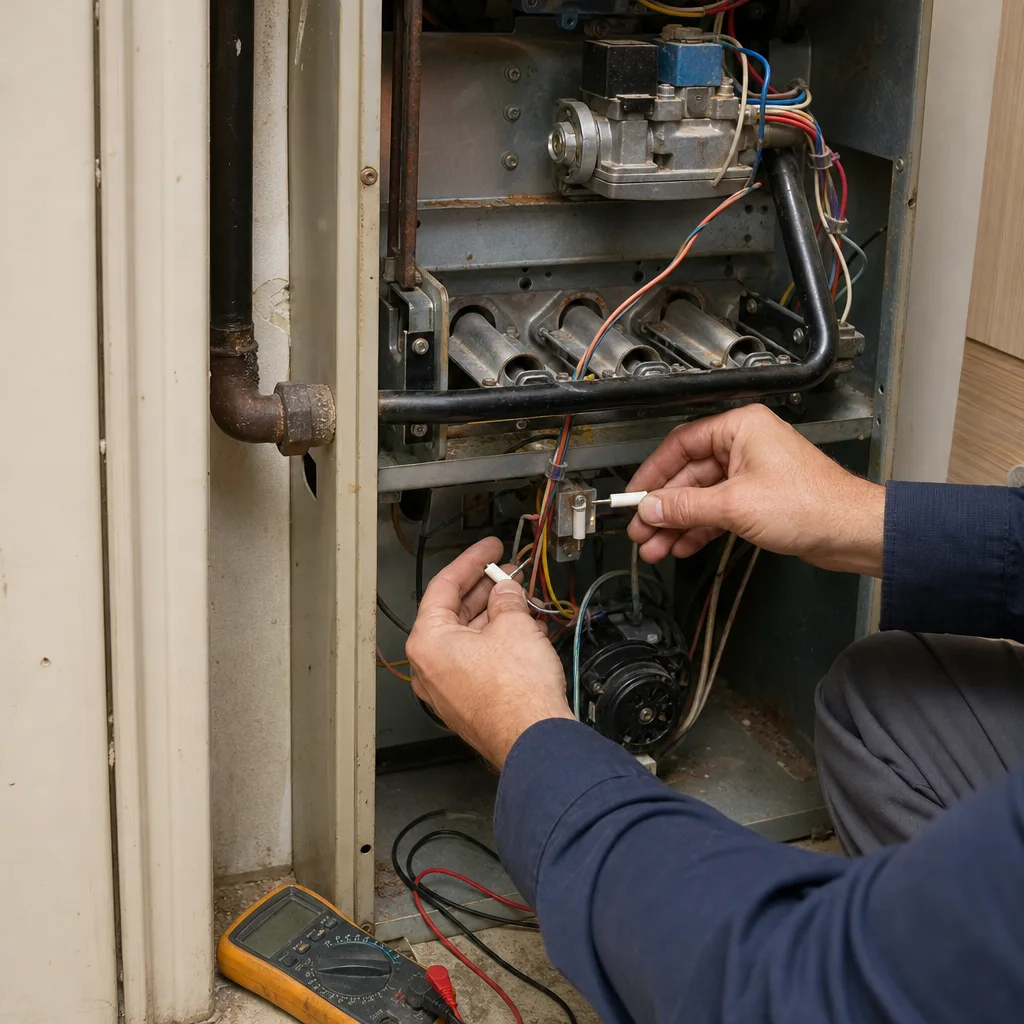
Seasonal tune-up and full diagnostic on your Carrier, Trane, or Goodman system - readings shown to you before any repair is proposed
Diagnosis first, numbers second - you approve the repair price before a single part goes in.
Get your free estimateDIY vs Professional HVAC: The Fresno Homeowner’s Decision Guide
Replacing your own air filter is legal, smart, and takes four minutes. Touching your refrigerant lines without an EPA 608 certification is a federal violation, not just a warranty issue. Most Fresno homeowners don’t know where one ends and the other begins, and that gray area costs money. This guide draws the line precisely: which HVAC tasks are genuinely safe for a homeowner to handle, which ones void your equipment warranty the moment you pick up a screwdriver, and why the Fresno climate makes the stakes higher than they would be in San Diego or Monterey. For how to hire a HVAC contractor in Fresno: a step-by-step guide, see our dedicated resource. You’ll get real dollar figures, the exact legal boundaries, and the five tasks that are actually worth doing yourself.
Quick Answer
In Fresno, DIY HVAC work is genuinely appropriate for about 15% of tasks: filter changes, thermostat battery swaps, drain line flushing, condensate pump checks, and keeping the outdoor unit clear of debris. Everything else, especially anything touching refrigerant, gas lines, or high-voltage electrical, legally requires a California C-20 contractor and voids most manufacturer warranties if attempted by a homeowner. The practical line is simple: if the repair involves refrigerant, combustion, or a capacitor, call a licensed professional. If it involves a filter, a hose, or a battery, you can probably handle it in under 30 minutes.
Styles & brands we work with
Table of Contents
- The Legal Boundary Map: What California and Federal Law Actually Permit
- Warranty Clauses That Die the Moment You Attempt a Repair
- Why DIY HVAC Risk Is Higher in Fresno Than Milder Climates
- The Five Tasks That Are Genuinely Safe for Fresno Homeowners
- Refrigerant: The Federal Line You Cannot Cross
- After a Failed DIY Attempt: How to Handle the Contractor Call
- Real Cost Comparison: DIY Savings vs. Professional Outcomes in Fresno
- Common Mistakes to Avoid
The Legal Boundary Map: What California and Federal Law Actually Permit
California is one of the strictest states in the country when it comes to HVAC work. The Contractors State License Board requires a C-20 warm-air heating, ventilating, and air-conditioning contractor license for any project where labor and materials exceed $500, but that dollar threshold is misleading. The practical reality is that almost every meaningful HVAC repair in Fresno requires a C-20 license because the work touches regulated systems.
Here’s the legal map in plain language. Federal law, specifically Section 608 of the Clean Air Act, requires EPA 608 certification to purchase, handle, or add refrigerant in any quantity. That means you cannot legally buy R-410A or R-454B refrigerant as a homeowner. Period. Retailers who sell to uncertified buyers face fines in the tens of thousands of dollars, so you won’t find it at Home Depot or Lowe’s. Any DIY video showing a homeowner adding refrigerant is showing a federal violation, regardless of what state they live in.
California adds another layer. Electrical work beyond replacing a light fixture or outlet requires a permit and a licensed electrician, part of the broader HVAC permits, codes & inspections in CA: what you need to know. HVAC systems pull 240 volts and 30 to 60 amps. A capacitor holds a charge even with the power off, which is why it’s called a capacitor in the first place. Gas furnaces fall under California’s plumbing and mechanical codes, which require a licensed contractor for anything beyond lighting the pilot and swapping a filter.
The five tasks covered later in this guide fall into the narrow category of “routine maintenance” that no agency considers regulated work. Everything else, and we mean everything else, sits on the wrong side of the line. We tell Fresno homeowners this every week, because by the time we get the call, the homeowner has often spent more on parts than our service call would have cost.
Warranty Clauses That Die the Moment You Attempt a Repair
Most Fresno homeowners don’t read their equipment warranty until something breaks, by which point the relevant clause has already been triggered. The three most common residential brands in the Fresno market, Carrier, Trane, and Lennox, all include similar language that voids coverage when unauthorized persons perform repairs.
Carrier’s warranty terms state that coverage applies only when the unit is “installed, operated, and maintained in accordance with the manufacturer’s instructions” and that “repairs must be performed by a licensed HVAC contractor.” The word “maintained” is the trap. A homeowner who opens the electrical panel and replaces a capacitor has performed an action the manufacturer defines as maintenance, doing so without a license, and that action becomes the justification for denying a future compressor warranty claim worth $1,500 to $3,000.
Trane’s warranty language is even more direct. Their standard residential agreement excludes coverage for “damage caused by improper installation, application, service, or modification by anyone other than a qualified HVAC technician.” Notice the word “anyone.” That includes you.
Lennox uses similar phrasing, excluding “labor or parts required as a result of unauthorized repairs.” Here’s the thing most guides don’t explain: manufacturers don’t always deny the claim outright. They ask the contractor to identify the cause of failure. If the technician notes evidence of homeowner work, like stripped screws on the control panel or a non-OEM capacitor, the manufacturer denies the parts claim and you pay full retail for a compressor that would have been free under warranty.
We’ve seen this exact scenario play out in Fresno’s newer developments, where 5-year-old systems fail because a compressor burned out after a homeowner installed the wrong microfarad capacitor. The $12 part became a $2,800 non-warranty repair. The savings never materialize in the way the DIY videos promise.
Why DIY HVAC Risk Is Higher in Fresno Than Milder Climates
Fresno’s climate is not like the coastal California weather that dominates many HVAC discussion forums. Fresno averages 108 days per year above 90°F, and that number has been climbing. In July and August, daytime highs routinely hit 105°F and overnight lows sometimes never drop below 80°F. Your air conditioner runs 16 to 20 hours a day during peak months.
This matters for DIY risk because of failure cascades. In a mild climate, a slightly undercharged system or a marginally wrong capacitor might limp along for weeks before anyone notices. In Fresno, that same condition becomes critical within 48 hours. An undercharged system causes the compressor to run hotter, which degrades the internal lubricant, which increases friction, which burns out the compressor. What starts as a small mistake compounds into a total system failure while you sleep through the hottest night of the year.
Fresno’s air quality is a second factor. The Central Valley’s particulate matter, dust from surrounding agriculture, and dry heat create a unique load on HVAC equipment. Coils foul faster here than they do in coastal cities. A homeowner who opens the system to “clean” the evaporator coil without properly sealing the refrigerant lines introduces moisture and contamination into a closed system. That contamination circulates through the compressor and shortens its life, even if the immediate fix appears to work.
The third factor is response time. When your AC fails in Fresno in July, every HVAC company in the county is running at capacity. A contractor’s availability is measured in hours, not days. A homeowner who spends a weekend trying to diagnose a problem, then gives up and calls on Monday, has just spent 72 hours without cooling during a 105°F stretch. That’s not just uncomfortable. For elderly residents, young children, and people with respiratory conditions, it’s a genuine health risk. Fresno’s heat-related hospitalizations spike every summer, and a working AC is the first line of defense.
The Five Tasks That Are Genuinely Safe for Fresno Homeowners
Here’s where DIY actually delivers value. These five tasks require no license, no permit, no special tools beyond what you already own, and no risk of voiding your warranty or injuring yourself. We recommend these to every homeowner in Fresno, because they genuinely extend equipment life and improve efficiency.
1. Replace the Air Filter (Monthly During Peak Season)
- Turn off the system at the thermostat. This is a precaution, not a requirement, but it’s good practice.
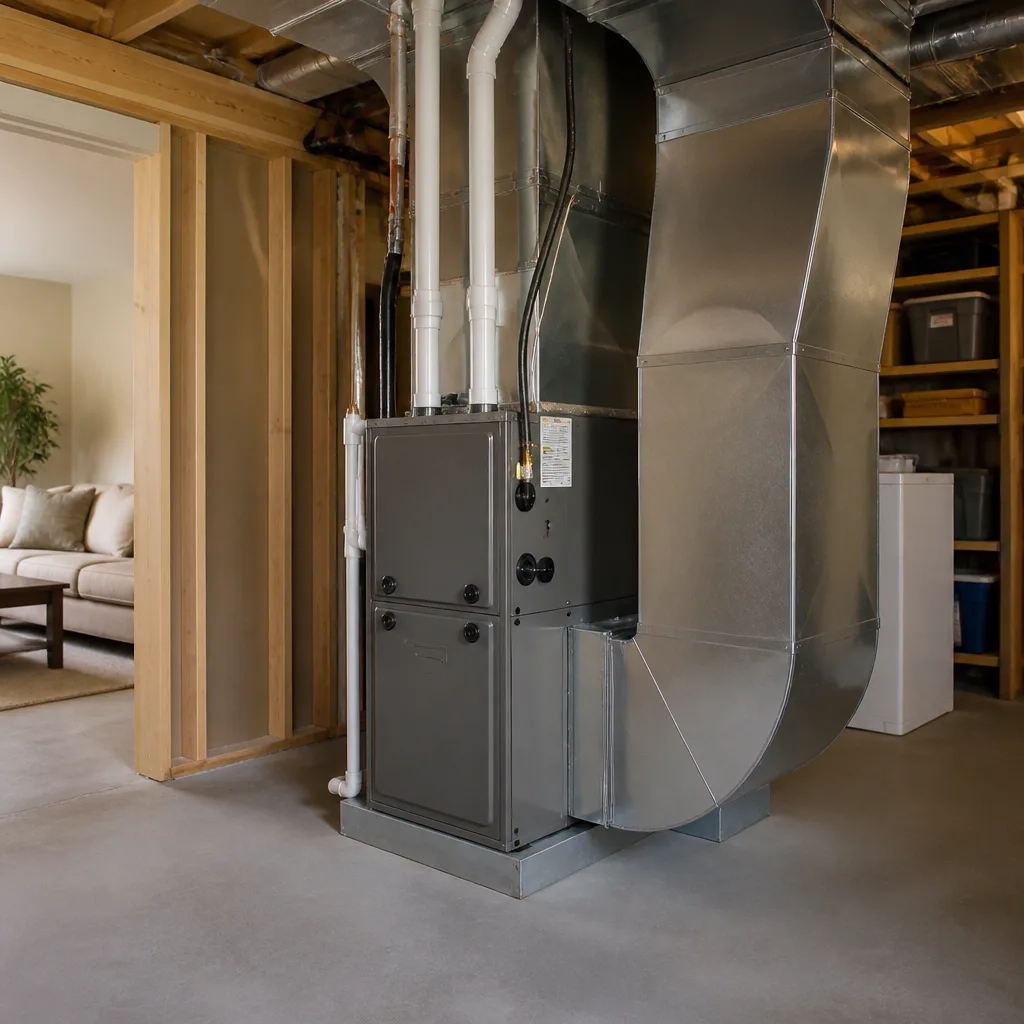
- Locate the filter. In most Fresno homes, the filter is in a wall return grille, in the furnace cabinet, or in the air handler.
- Slide the old filter out and note the arrow printed on the frame. The arrow points toward the unit, in the direction of airflow.
- Slide the new filter in with the arrow matching the old orientation.
- Turn the system back on. Total time: under five minutes.
During Fresno’s dust season, roughly April through October, check every 30 days. A clogged filter restricts airflow, which makes the evaporator coil run colder, which can freeze the coil into a block of ice, which stops cooling entirely. A $12 filter prevents a $400 service call.
2. Flush the Condensate Drain Line (Every Spring and Fall)
- Locate the drain line. It’s a PVC pipe, usually 3/4 inch, coming off the indoor unit or coil cabinet.
- Find the access point. Most Fresno installations have a small open tee fitting near the unit.
- Pour one cup of distilled white vinegar into the tee opening. Vinegar dissolves the algae and mineral buildup that forms in the line.
- Wait 30 minutes, then flush with a quart of warm water.
- Repeat every six months. If water backs up into the overflow pan, call a professional, because the clog is downstream and needs a wet-dry vacuum or compressed air.
A clogged condensate line in Fresno is common because our hard water leaves mineral deposits that combine with dust to create sludge. When the line clogs, the float switch shuts the system down, which presents as a “my AC won’t turn on” problem. Ten minutes of vinegar flushes twice a year prevents this entirely.
3. Keep the Outdoor Unit Clear of Debris (Monthly)
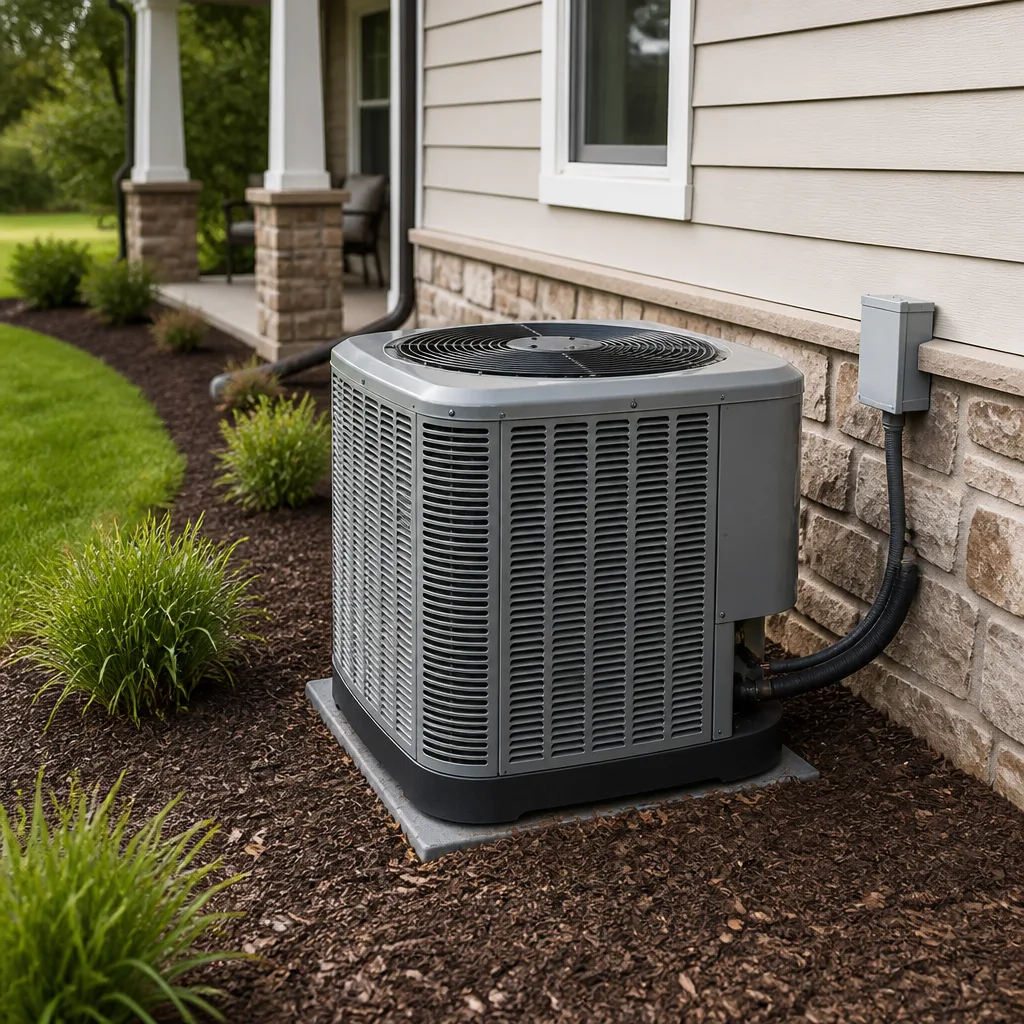
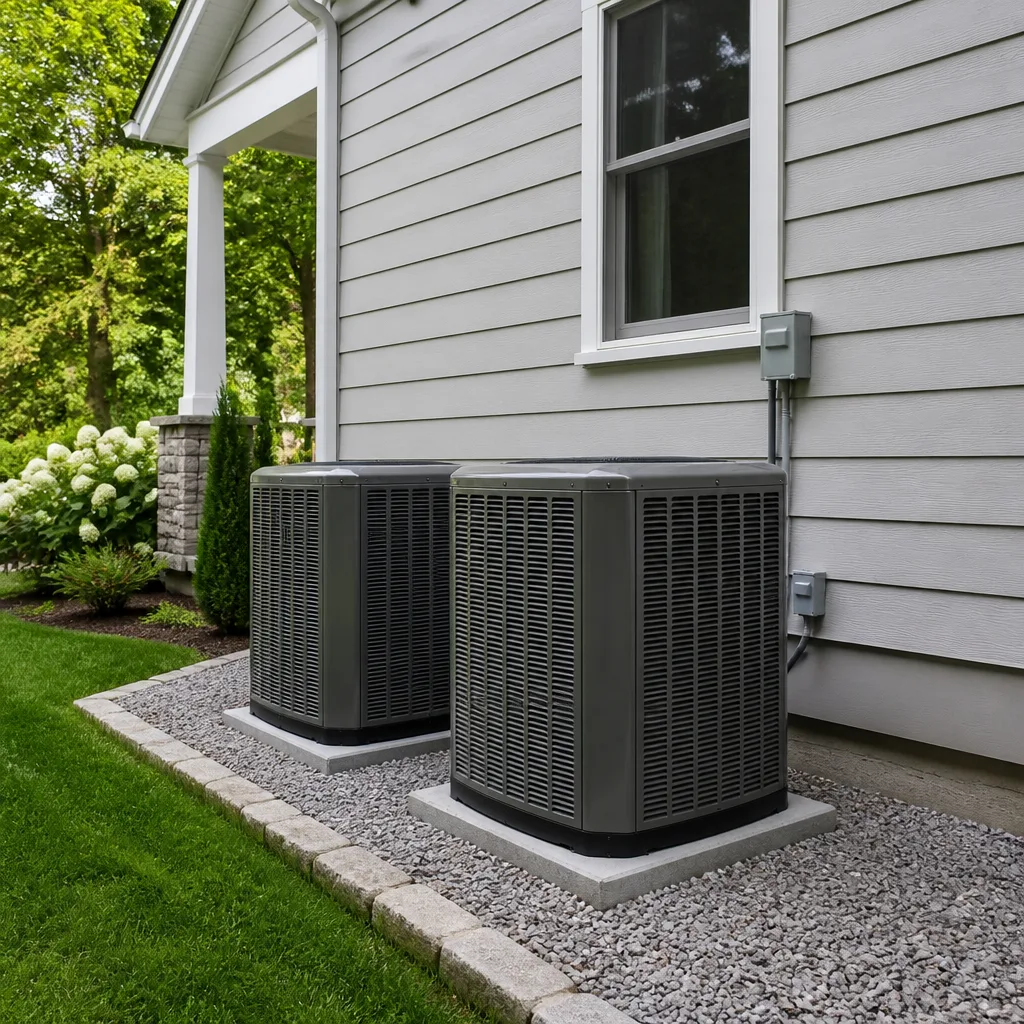
- Walk around the outdoor condenser and remove anything within 18 inches of it: leaves, grass clippings, storage boxes, children’s equipment.
- Trim any bushes or trees that encroach on that clearance. The unit needs airflow on all sides.
- Look between the coil fins. If you see cottonwood fuzz, construction dust, or agricultural debris stuck in the fins, rinse it off with a garden hose, not a pressure washer. A pressure washer bends the fins and permanently restricts airflow.
- Keep the unit shaded if possible without obstructing airflow. A shaded condenser runs slightly more efficiently, which matters in Fresno’s 105°F heat.
4. Test the Thermostat Batteries and Settings (Seasonally)
Most thermostat issues are not HVAC issues. Before calling a contractor, check the batteries if you have a battery-powered thermostat. Fresh batteries fix more “my AC won’t come on” problems in Fresno than any single repair. Also verify the thermostat is set to “cool” not “heat” or “off,” and that the fan switch is on “auto” rather than “on.” Confirm the setpoint is at least 3°F below the current room temperature. If the display is blank, replace the batteries. If the display works but the system doesn’t respond, that’s a real HVAC issue and time to call.
5. Change the Humidifier Pad (For Homes With Whole-House Humidifiers)
If your Fresno home has a whole-house humidifier attached to the furnace, the evaporative pad should be replaced annually, before the heating season. The pad is the water-absorbing material inside the humidifier cabinet. Over a season of use, it accumulates mineral scale from Fresno’s hard water. Replacement takes 10 minutes and a screwdriver. The part costs $20 to $40 at a local supply store. This is a homeowner-approved task because it does not touch the gas line, the electrical system, or the refrigerant circuit.
Refrigerant: The Federal Line You Cannot Cross
Every homeowner in Fresno should understand what refrigerant is and why it’s off-limits. Refrigerant is the fluid that moves heat from inside your home to outside. The system compresses it into a high-pressure gas, condenses it into a liquid, then lets it expand and absorb heat. That cycle is what makes 78°F inside possible when it’s 108°F outside.
Three facts about refrigerant that most DIY guides don’t state plainly:
- You cannot legally buy it. EPA Section 608 requires certification for purchase. No legitimate supplier will sell refrigerant to an uncertified homeowner, period.
- You cannot legally handle it. Adding, removing, or even intentionally venting refrigerant without certification is a federal violation with fines starting at $37,500 per day, per violation, under current EPA enforcement.
- A refrigerant recharge, which means refilling the fluid that moves heat out of your home, is a symptom fix, not a repair. If your system is low on refrigerant, there’s a leak somewhere. Certified technicians find the leak, repair it, pressure-test the system, and only then recharge. A homeowner who “tops off” refrigerant has no way to do any of that, and the leak returns.
This is the hard boundary in HVAC work. The refrigerant circuit is a sealed, pressurized system, and opening it without the tools, the training, and the certification is not a calculated risk. It’s a federal violation with real penalties, and it’s also the fastest way to destroy a compressor. Fresno’s summer heat means the system runs at high pressure and high temperature for months at a time. A compromised refrigerant circuit fails spectacularly under that load.
After a Failed DIY Attempt: How to Handle the Contractor Call
Maybe you tried a repair and it didn’t work. Maybe you watched a video, bought a part, installed it, and the system still won’t run, or it runs worse than before. This happens more often than any contractor will publicly admit, and the way you handle the follow-up call determines whether you pay a fair price or get taken advantage of.
Here’s how the call should go. You tell the contractor exactly what you did, in sequence, with honest detail. “I replaced the capacitor with a 45/5 microfarad from Amazon, the system ran for an hour, then the breaker tripped and it won’t restart.” That honesty serves you in two ways. First, it lets the technician start from the actual problem rather than spending billable time rediscovering it. Second, it establishes good faith, which matters because technicians see DIY repairs every week and they can identify them instantly.
The contractor’s quote should include three things: the diagnostic fee, which is typically $79 to $129 in Fresno; the specific repair proposed; and a written price for that repair before any work begins. If a company refuses to put the price in writing before starting work, that’s a red flag. Every reputable Fresno HVAC company provides written pricing. It’s not optional.
One point worth stating directly: a contractor who wants to charge you extra for “fixing your mistake” on top of the base repair is not automatically wrong. If your DIY attempt introduced a second problem, that second problem requires labor and parts to correct. A responsible contractor explains exactly what they’re correcting and why it’s separate from the original issue. We do this routinely. We show the homeowner what we found, explain what it will cost to correct, and put it in writing. If a contractor won’t explain the charges in plain language, that’s the moment to get a second quote.
Our AC Repair in Fresno work always starts with a written, no-hassle price before anything is opened up.
Real Cost Comparison: DIY Savings vs. Professional Outcomes in Fresno
The honest math on DIY HVAC work in Fresno looks like this. Some tasks genuinely save money. Most do not, and several cost dramatically more in the long run. For a full HVAC cost breakdown: the Fresno homeowner’s reference for 2026, see our detailed pricing guide.
Here’s a line-item comparison of common Fresno HVAC scenarios, based on what we see across the city’s neighborhoods, from the Tower District to Clovis foothills to newer construction along the 180 corridor:
| Task | DIY Cost | Professional Cost in Fresno | Outcome |
|---|---|---|---|
| Air filter replacement | $10 – $25 every 1 – 3 months | $75 – $120 service call (unnecessary for this task) | Clear DIY win |
| Condensate drain flush | $5 of vinegar, 30 minutes | $95 – $150 service call | Clear DIY win |
| Thermostat battery replacement | $5 – $10 for batteries | $95 service call (unnecessary if batteries fix it) | Clear DIY win |
| Capacitor replacement | $15 – $40 for part online | $180 – $350 parts and labor installed | DIY loses on risk: wrong capacitor burns out compressor |
| Contactor replacement | $25 – $60 for part online | $150 – $300 parts and labor installed | DIY loses: involves 240V electrical |
| Refrigerant recharge | Illegal to attempt | $300 – $700 including leak check and recharge | Not a legal DIY option |
| Condenser fan motor replacement | $80 – $200 for part | $350 – $700 parts and labor installed | DIY risky: wrong wiring or blade orientation causes failure |
| Compressor replacement | Never a viable DIY task | $1,800 – $3,500 including refrigerant and labor | Professional only |
The pattern holds across every line above the filter: DIY saves a small amount on parts only when nothing goes wrong, and the consequences of something going wrong in Fresno’s heat are severe, expensive, and usually hit during the worst possible week to be without AC. A capacitor that costs $30 online saves maybe $200 over professional installation. A wrong capacitor that causes a compressor failure costs $2,000-plus and voids the warranty. The expected value math fails for most repairs.
What’s different about professional work is the guarantee. Brandt HVAC Co Fresno’s home shows what a real guarantee looks like: our 365-Day Done Right Promise means if the repair fails within a year, we return at no charge. No argument, no additional fee. That guarantee has real dollar value, because a failed DIY repair comes with no warranty at all. The part may have a warranty, but your labor, your diagnosis time, and the system damage your mistake caused are all yours to absorb.
Common Mistakes to Avoid
- Replacing a capacitor with the wrong microfarad rating. The capacitor must match the compressor’s specification exactly. A capacitor rated too high or too low changes the compressor’s starting torque and running amperage. In Fresno’s heat, that mistake can kill a compressor within weeks. The part number is printed on the old capacitor, and it matters.
- Using a pressure washer to clean the outdoor coil. A pressure washer is a high-pressure water jet that folds the aluminum fins flat against the coil. Once the fins are bent, airflow drops permanently, and the system works harder and runs hotter. A garden hose at normal pressure is the maximum safe force.
- Adding refrigerant from a canister purchased online. Online marketplaces sometimes list refrigerant for sale. Buying it without EPA 608 certification is a federal violation. Using it without the proper manifold gauges and training usually overcharges the system, which is just as damaging as undercharging. This is not a gray area.
- Ignoring the breaker and repeatedly resetting it. A tripped breaker is a symptom, not a problem. Resetting it once is diagnostic. Resetting it repeatedly means current is arcing somewhere in the system, and every reset increases the chance of an electrical fire. If the breaker trips twice, stop touching it and call a professional.
- Skipping the filter because “it looked fine.” A filter that looks dirty is already 75% loaded. In Fresno’s dust, a filter can go from clean to fully loaded in 30 days during harvest season or construction season. The $12 you save by skipping a month becomes a $300 evaporator coil cleaning bill.
- Opening the electrical panel without disconnecting power at the breaker. The thermostat does not disconnect power to the air handler or condenser. Even with the system “off,” the capacitor holds a charge that can deliver a serious shock. Always kill the breaker for the HVAC circuit before touching any internal electrical component, and even then, treat the capacitor as live.
- Ignoring a refrigerant leak because the system “still cools okay.” In Fresno, a system losing refrigerant is working progressively harder every day. By the time the cooling performance noticeably drops, the compressor has been running under damaging conditions for weeks. If ice appears on the copper lines or the outdoor unit, the leak is already significant.
When to Call a Professional
Call a licensed HVAC professional in Fresno when you encounter any of these situations: refrigerant is involved in any way, including the presence of ice on the refrigerant lines or a hissing sound from the system; the system trips a breaker more than once; the outdoor unit makes a loud hum but the fan doesn’t spin, indicating a capacitor or motor failure; you smell anything unusual, whether burning electrical, natural gas, or refrigerant; or the system hasn’t cooled your home to the setpoint despite running continuously for hours. Gas furnace work is also professional territory. Carbon monoxide is colorless, odorless, and lethal. Any work on the heat exchanger, gas valve, burners, or flue requires a licensed, trained technician.
We’ve worked on thousands of Fresno systems, from Goodman units in older Clovis neighborhoods to Trane and Lennox installations in the newer north Fresno developments. The consistent pattern is that early professional intervention costs less than late intervention, every time. Furnace Repair in Fresno work follows the same principle: a minor issue caught in October is a $200 fix, while the same issue ignored until December becomes a $900 repair. Brandt HVAC Co Fresno offers free estimates for Fresno homeowners, call (559) 354-6878 and a live person answers, 24 hours a day, 7 days a week. No voicemail trees, no callbacks, no waiting for a system to call you back.
Frequently Asked Questions
California law permits homeowners to perform routine maintenance tasks like filter replacement, drain line flushing, and thermostat battery changes on their own AC systems. Repairs that involve refrigerant, gas lines, or 240-volt electrical components require a C-20 contractor license, and federal law requires EPA 608 certification for refrigerant handling. Attempting regulated work without the proper license is a legal violation, not just a warranty risk.
No. Federal law requires EPA 608 certification to purchase refrigerant in any quantity, and uncertified buyers cannot legally obtain R-410A or R-454B from legitimate suppliers. Online listings that claim to sell refrigerant to homeowners are selling illegally or the listing will be canceled when the seller verifies your certification status.
In most cases, yes. Major manufacturers like Carrier, Trane, and Lennox exclude warranty coverage for damage caused by unauthorized repairs or improper maintenance performed by anyone other than a qualified technician. Even a successful-looking repair can become the basis for a denied warranty claim if the manufacturer’s inspector finds evidence of homeowner work.
During Fresno’s hot season, roughly April through October, check your filter every 30 days and replace it when it visibly holds dust against the light. SoCal and coastal guidelines suggesting 90-day intervals don’t apply to Fresno’s dust load. A family with pets in a neighborhood with active construction may need monthly replacement through the summer.
A capacitor stores electrical energy and releases it in a burst to start the compressor and fan motors. Capacitors fail more often in Fresno than in milder climates because high ambient heat and continuous operation degrade the internal dielectric material faster. A failed capacitor is one of the most common summer AC failure causes in the Central Valley, and replacement is a standard professional repair typically priced between $180 and $350 in the Fresno market.
Use the 50% rule: if the repair cost is less than half the value of a 10-year-old system, repair it. If the system is over 12 years old, uses R-22 refrigerant, or has already required two major repairs in the same season, replacement is usually the better financial decision. A reputable Fresno contractor will show you the repair cost in writing and help you compare it honestly against replacement, without pressure to choose either path. AC Maintenance in Fresno plans help extend that decision window by catching failures before they cascade.
The Bottom Line
The DIY vs. professional HVAC decision for Fresno homeowners comes down to this: five tasks are genuinely safe and worth doing yourself. They are filter replacement, condensate drain flushing, debris clearance, thermostat battery swaps, and humidifier pad changes. Everything else carries legal exposure, warranty risk, or genuine physical danger, and the Fresno summer heat means the cost of a mistake compounds quickly. A $30 part installed incorrectly becomes a $3,000 compressor failure. A weekend spent diagnosing becomes a 105°F Monday with a family waiting for relief. The smart homeowner does the five safe tasks, calls a licensed professional for everything else, and gets the price in writing before any work begins. Explore our more guides & resources for year-round HVAC maintenance advice. That approach costs less over a decade of Fresno summers than the DIY alternative, and it keeps the warranty intact, the system efficient, and the household safe.
Written by Devin Marlowe, Owner at Brandt HVAC Co Fresno, serving Fresno since 2003.
See the difference
 Before
 After
After Before
 After
After Before
 After
After