
Last updated October 16, 2026
 AC repair
 Furnace & heating
 Heat pumps
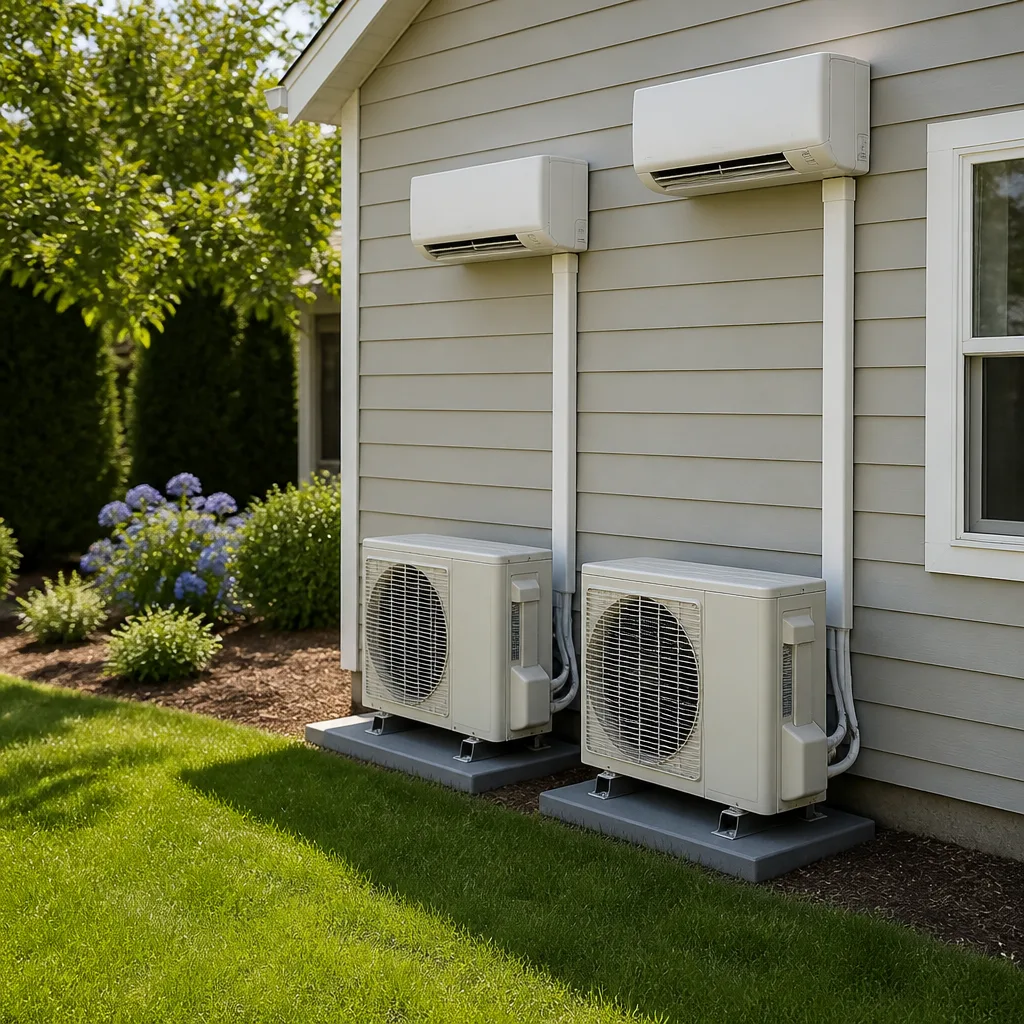 Ductless mini splits
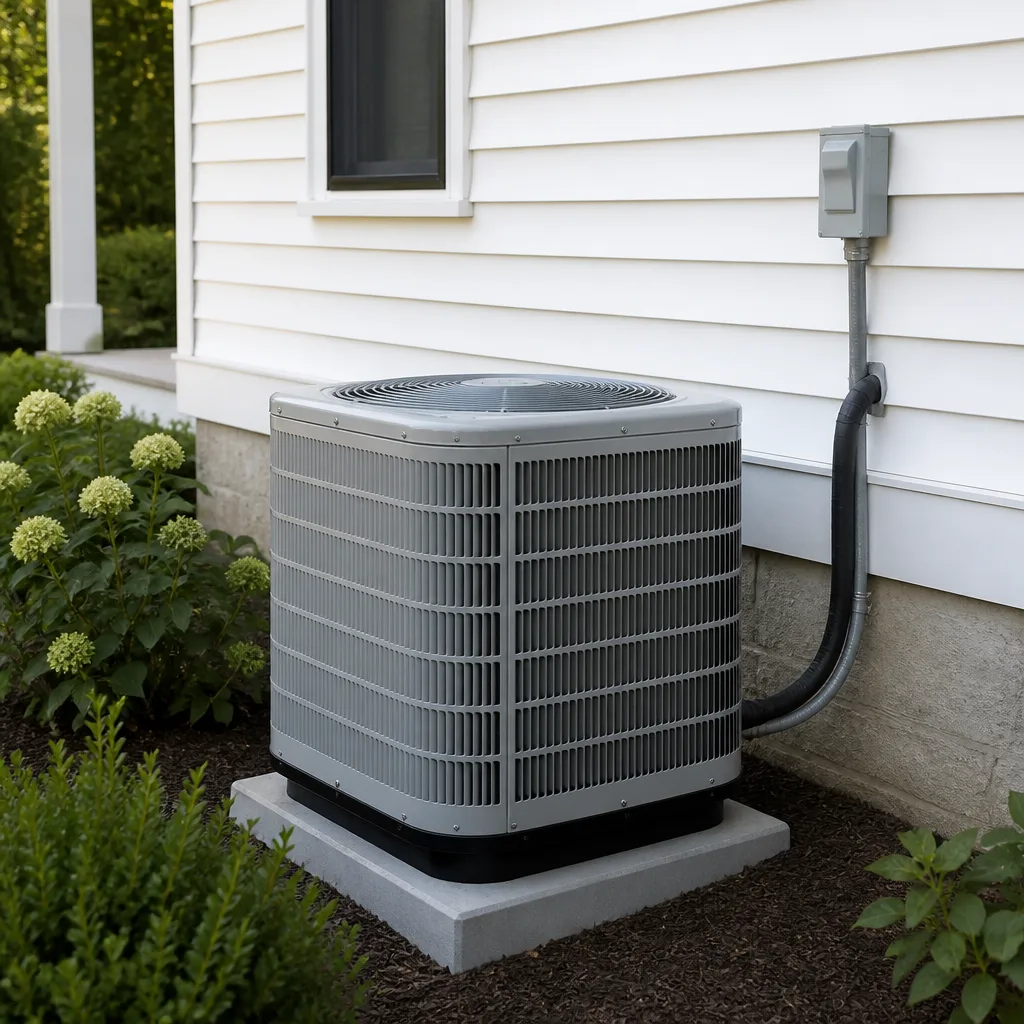 Carrier
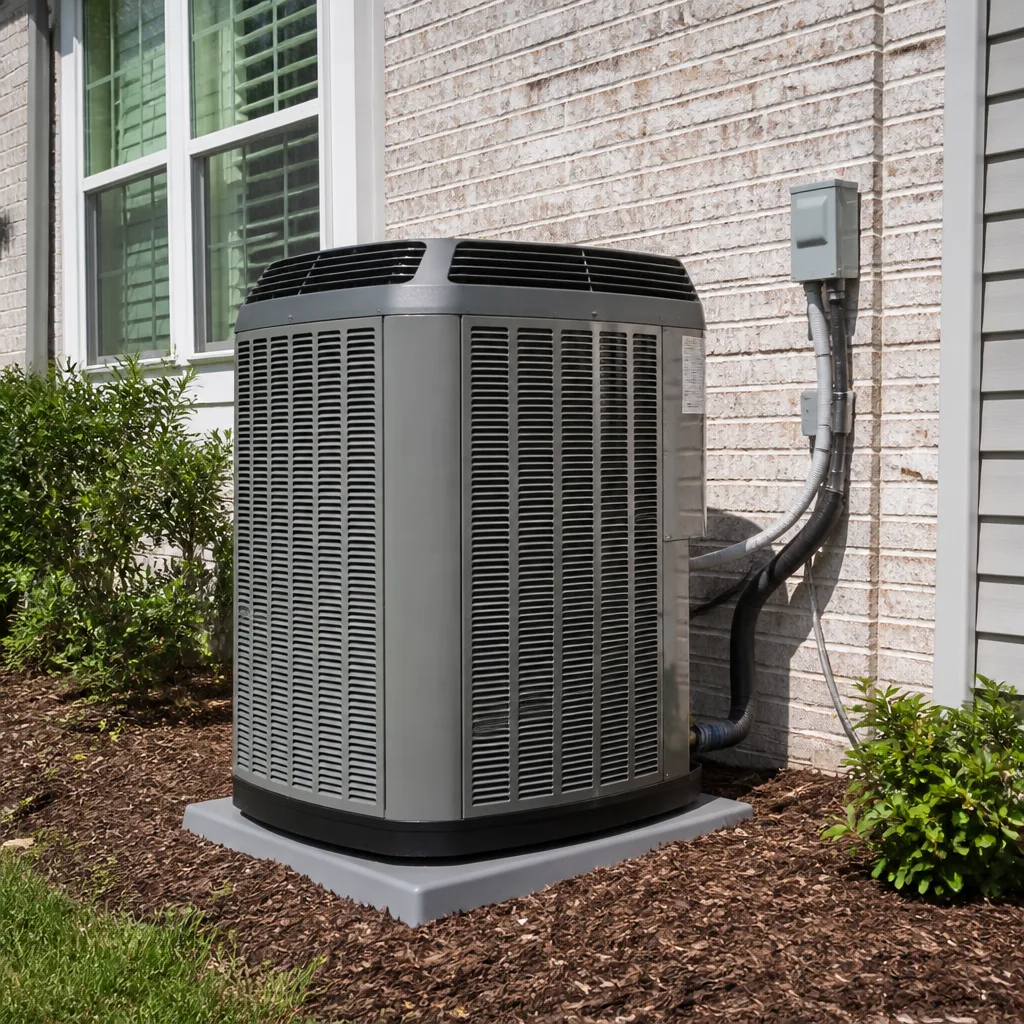 Trane
Trane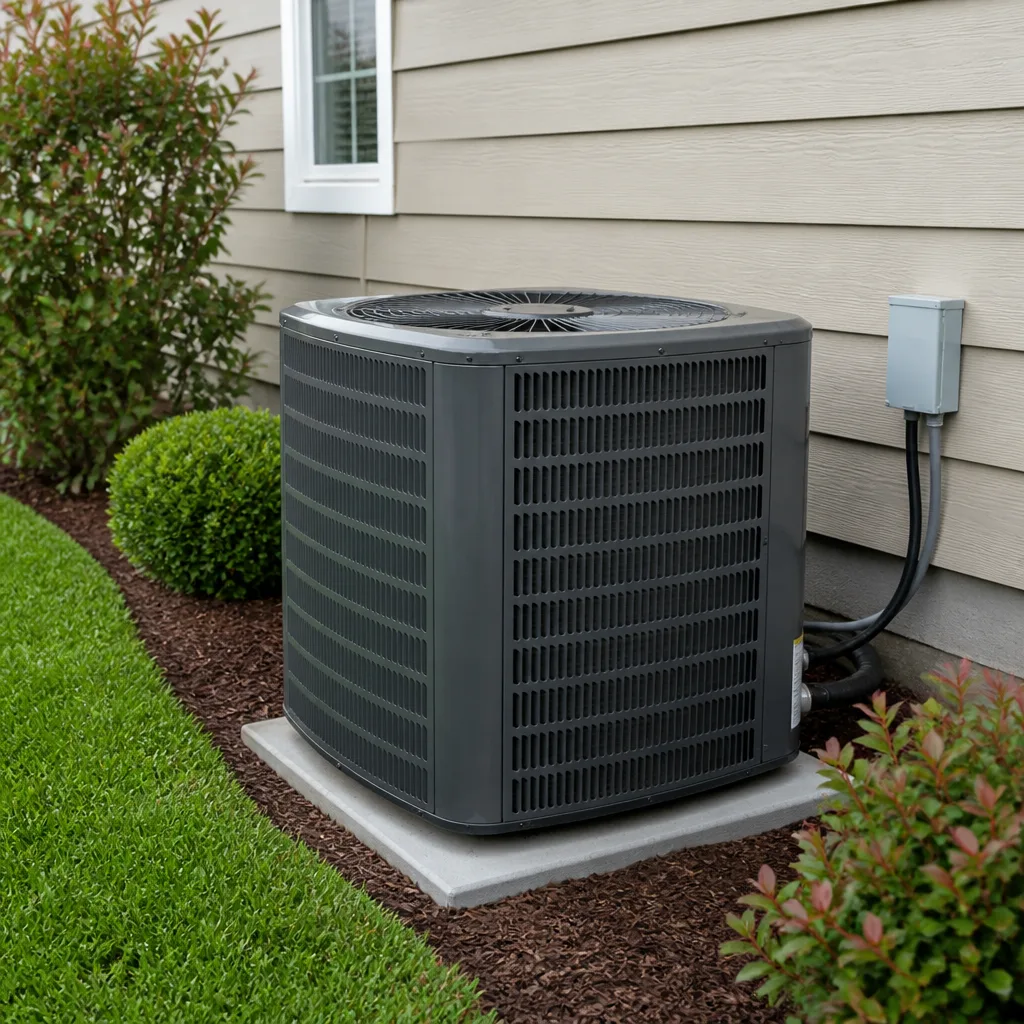 Goodman
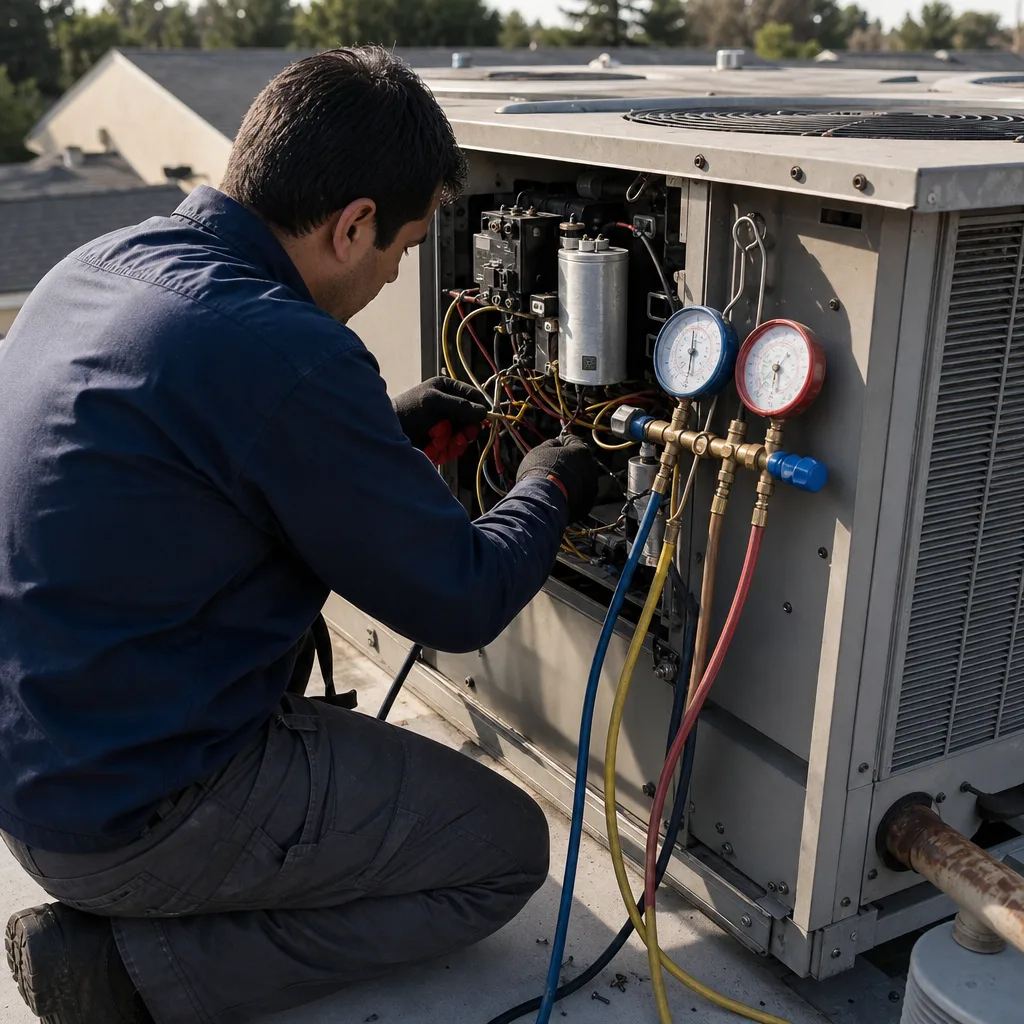
Seasonal tune-up and full diagnostic on your Carrier, Trane, or Goodman system - readings shown to you before any repair is proposed
Diagnosis first, numbers second - you approve the repair price before a single part goes in.
Get your free estimateHVAC Warning Signs: A Fresno Homeowner’s Reference Guide
A system that cycles on and off every 8 minutes in a Fresno July isn’t “working hard.” It’s short-cycling, and it means the unit will likely fail completely within weeks. It also means your indoor humidity is wrong right now, even if the air feels cool. This guide is built for how HVAC systems actually fail in Fresno: under dust load, extreme dry heat, and summer attic temperatures that regularly pass 140°F. For a broader look at system types and efficiency options, see The Complete Guide to HVAC in Fresno. We’ll walk through the warning signs that matter here specifically, what each one means mechanically, and when a symptom crosses from “watch it” to “shut it down and call today.”
Styles & brands we work with
Quick Answer
The HVAC warning signs that matter most in Fresno are: short-cycling (the system turning on and off every 10 minutes or less), weak airflow from vents, ice or frost on refrigerant lines, a thermostat reading that won’t match the room temperature, unexplained electric bill spikes, and any burning smell from the furnace in winter. In Fresno’s dust-heavy, extreme-heat climate, these symptoms develop faster and hit harder than national guides suggest. If you notice any combination of two or more, shut the system down and call a technician before the failure becomes a full replacement.
Table of Contents
- Short-Cycling: The Fresno Epidemic
- Refrigerant Leak vs. Dirty Coil: Tell Them Apart in 5 Minutes
- Weak Airflow: Why Fresno Attics Make It Worse
- Furnace Smells and Sounds: A Fresno Winter Diagnostic Guide
- Watch It vs. Shut It Down: Plain Language Thresholds
- The Electric Bill Warning Sign Nobody Talks About
- Age-Related Warning Signs: When Repair Stops Making Sense
- Common Mistakes to Avoid
- When to Call a Professional
- Frequently Asked Questions
- The Bottom Line
Short-Cycling: The Fresno Epidemic
Short-cycling means your air conditioner turns on, runs for a brief burst, shuts off, and repeats the cycle far too frequently. In Fresno, we see this in roughly one out of every four service calls during peak season, which is well above what national HVAC guides describe as typical. The reason is straightforward: many Fresno homes were built during rapid expansion periods, and the AC units installed were oversized for the square footage. Builders often sized units for worst-case scenarios, which sounds responsible, but an oversized unit cools the air so quickly that it satisfies the thermostat before completing a proper cooling cycle.
Here’s what that means for your home. A properly sized AC in Fresno heat should run for 15 to 20 minutes per cycle during peak afternoon temperatures. If yours is running for 8 minutes or less before shutting off, you have a short-cycling problem. The compressor, which is the heart of the system, is designed for long, steady runs. Every time it starts, it draws a surge of electricity and endures mechanical stress. Short bursts multiply the number of starts per day, which dramatically shortens the compressor’s lifespan and drives up your electric bill at the same time.
The second problem is humidity. Fresno is dry most of the year, but your home still generates indoor moisture from cooking, showers, and breathing. An AC that short-cycles doesn’t run long enough to pull that moisture out of the air. The result is a cool but clammy house, which feels uncomfortable at 72°F and can promote mold growth in hidden spaces. If your home feels “sticky” even when the thermostat reads cool, that’s a short-cycling symptom, not a thermostat setting problem.
Other causes of short-cycling in Fresno include a refrigerant charge that’s off, a dirty condenser coil struggling to reject heat, or a thermostat placed in direct afternoon sun. But the oversized-unit pattern is the one we see most often in neighborhoods like Woodward Park, Clovis, and northeast Fresno, where homes were built in the 1990s and early 2000s with little regard for heat-load calculations.
What Short-Cycling Sounds Like
You’ll hear the outdoor condenser kick on with a distinctive thump, run for a few minutes, then click off. Then a few minutes later, the same pattern. It’s a rhythm you can set a watch to. If you notice this, start counting the minutes between “on” events. Under 10 minutes consistently is a red flag. Under 8 minutes is a warning you should act on within the same week.
Our AC Repair in Fresno page covers short-cycling diagnostics in more depth. The short version: this is not a problem that heals itself, and waiting through one hot season usually turns a repairable issue into a compressor replacement.
Refrigerant Leak vs. Dirty Coil: Tell Them Apart in 5 Minutes
Here’s a diagnostic that saves Fresno homeowners real money, because the two problems look similar but cost very different amounts to fix. You can also use our AC Repair Maintenance Checklist for Fresno Homeowners to track symptoms before calling. A refrigerant leak means there’s a puncture or corrosion somewhere in the sealed system that holds the fluid that moves heat out of your home. Left unaddressed, it will eventually destroy the compressor. A dirty coil means the outdoor unit’s heat-rejection surface is caked with dust and debris, which restricts heat transfer and makes the system work harder. In Fresno, both are common. But you can often tell which one you’re dealing with before a technician arrives.
Step-by-Step: The 5-Minute Home Diagnostic
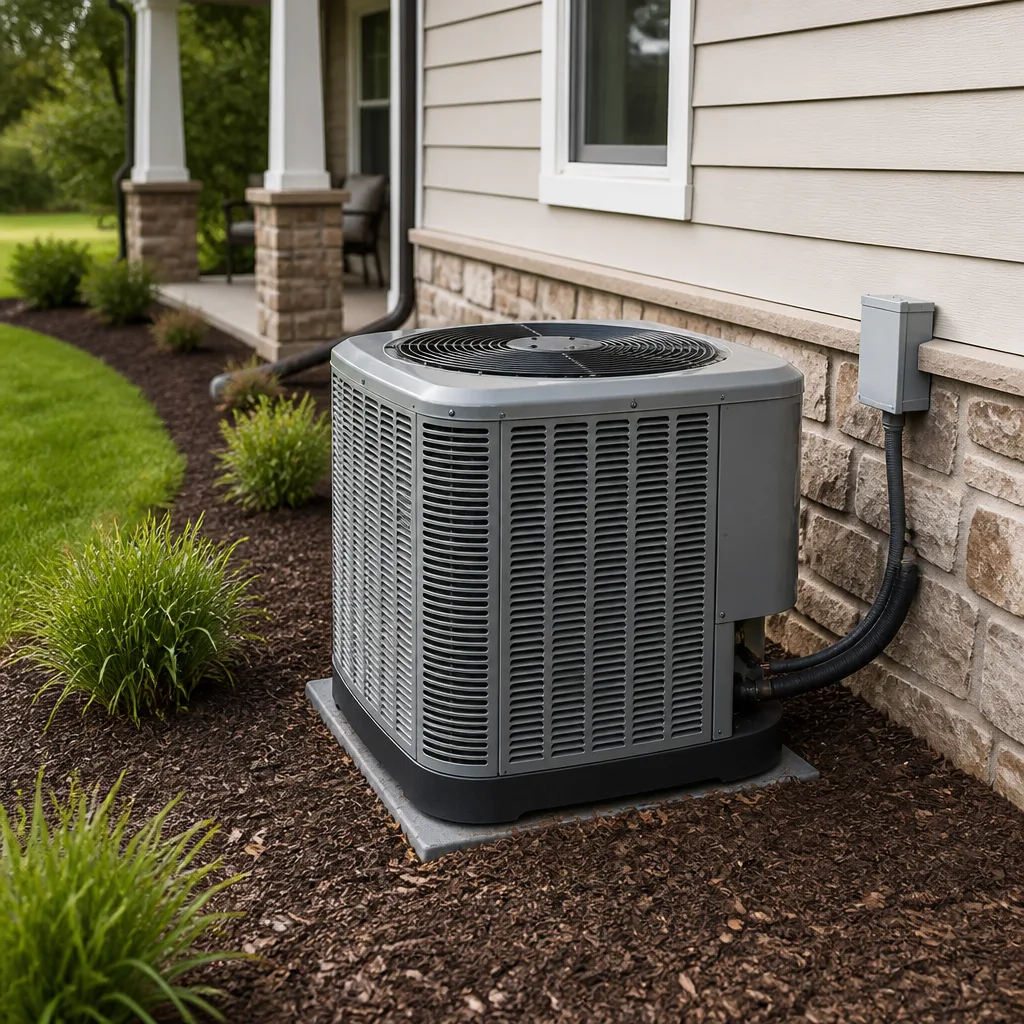
- Check the outdoor unit’s coil. Walk outside and look at the metal fins on the sides of your condenser. In Fresno, these fins collect dust, cottonwood fibers, and agricultural particulate matter. If you see a visible blanket of fuzz or dirt across more than 30% of the surface, that’s a dirty coil. This is a cleaning problem, not a leak problem.
- Look at the refrigerant lines. Follow the two copper lines running from the outdoor unit into the house. The larger line (the suction line) should be cool to the touch and may have light condensation. If you see ice or frost forming on either line, that’s a classic refrigerant leak symptom. A dirty coil rarely causes ice.
- Check the thermostat delta. Measure the temperature at a return vent (where air goes in) and at a supply vent (where air comes out). The difference should be 15 to 20°F. If it’s less than 10°F and the coil looks clean, that points toward a refrigerant leak. If the coil is visibly dirty and the delta is low, cleaning may solve the problem entirely.
- Listen at the indoor unit. A hissing or bubbling sound from the indoor evaporator coil or along the refrigerant line is the sound of refrigerant escaping or air mixing into the line. That’s a leak, no way around it.
- Check for oil stains. Refrigerant carries a small amount of compressor oil. If you see dark, greasy-looking spots on the copper lines or around the fittings at the outdoor unit, that’s oil from the system leaking out with the refrigerant. It’s a definitive leak indicator.
If the evidence points to a refrigerant leak, don’t keep running the system. A system low on refrigerant will run for long stretches without cooling properly, and the compressor, which depends on the refrigerant for lubrication and cooling, will overheat and fail. A compressor replacement in Fresno typically costs between $1,800 and $3,200 depending on the unit’s age and brand, which is several times more than a leak repair. If the evidence points to a dirty coil, a cleaning often restores performance the same day.
We’ve seen this exact diagnostic play out in Fresno’s Tower District, where older homes have mature trees shedding material directly onto condenser units. Homeowners there often think they need a new system when what they need is a coil cleaning. For more on this, our AC Maintenance in Fresno guide explains what a proper coil cleaning includes and how often it should be done in this climate.
Weak Airflow: Why Fresno Attics Make It Worse
National guides tell you that weak airflow means a clogged filter. Change the filter, they say, and the problem goes away. That advice is true often enough in moderate climates. But in Fresno, we’ve learned to look somewhere else first: the attic. Summer attic temperatures here routinely reach 140 to 160°F. That’s hot enough to soften, warp, and eventually collapse flexible ductwork, especially in homes where the original ducts were installed 15 or more years ago.
When a flex duct collapses, the airflow restriction is mechanical, not a matter of filtration. The inner liner of the duct separates or crushes, and the result is a room that never quite reaches the set temperature no matter how long the system runs. The AC is working, the air is cold at the unit, but it can’t get where it needs to go.
Fresno-Specific Airflow Warning Signs
- One room is consistently warmer than the rest. In a two-story Fresno home, the upstairs bedrooms far from the air handler are prime suspects. A collapsed duct to that room starves it of airflow.
- Air coming from the vent feels weak but cold. Cold but weak means the refrigerant side is working. The problem is in the delivery system, not the cooling system.
- You hear whistling or rattling from a specific vent. A collapsed duct creates back pressure, which can produce sounds at the vent register.
- The filter has been changed recently and nothing improved. If airflow is still weak after a filter change, the problem is downstream in the ducts, not the filter.
- Your energy bill rose without a change in usage. A collapsed duct forces the system to run longer and harder to try to satisfy the thermostat, which shows up on the bill.
If you suspect a duct problem in Fresno, here’s a simple test. On a hot afternoon, go into the attic for just a minute or two with a flashlight. Look for duct sections that appear pinched, sagging, or flattened. Feel along a duct run and check for spots that are soft and compressible rather than round and firm. Don’t stay up there long; attics in Fresno summer can be dangerous. But a quick visual check often confirms the issue.
Duct repair or replacement is a job for a professional. Flex duct replacement in the Fresno area typically runs $35 to $60 per linear foot, depending on accessibility and the diameter of the existing duct. That’s a range worth knowing before a technician arrives. A written estimate should spell out exactly how many feet of duct need replacement and what the total will be before work starts.
Furnace Smells and Sounds: A Fresno Winter Diagnostic Guide
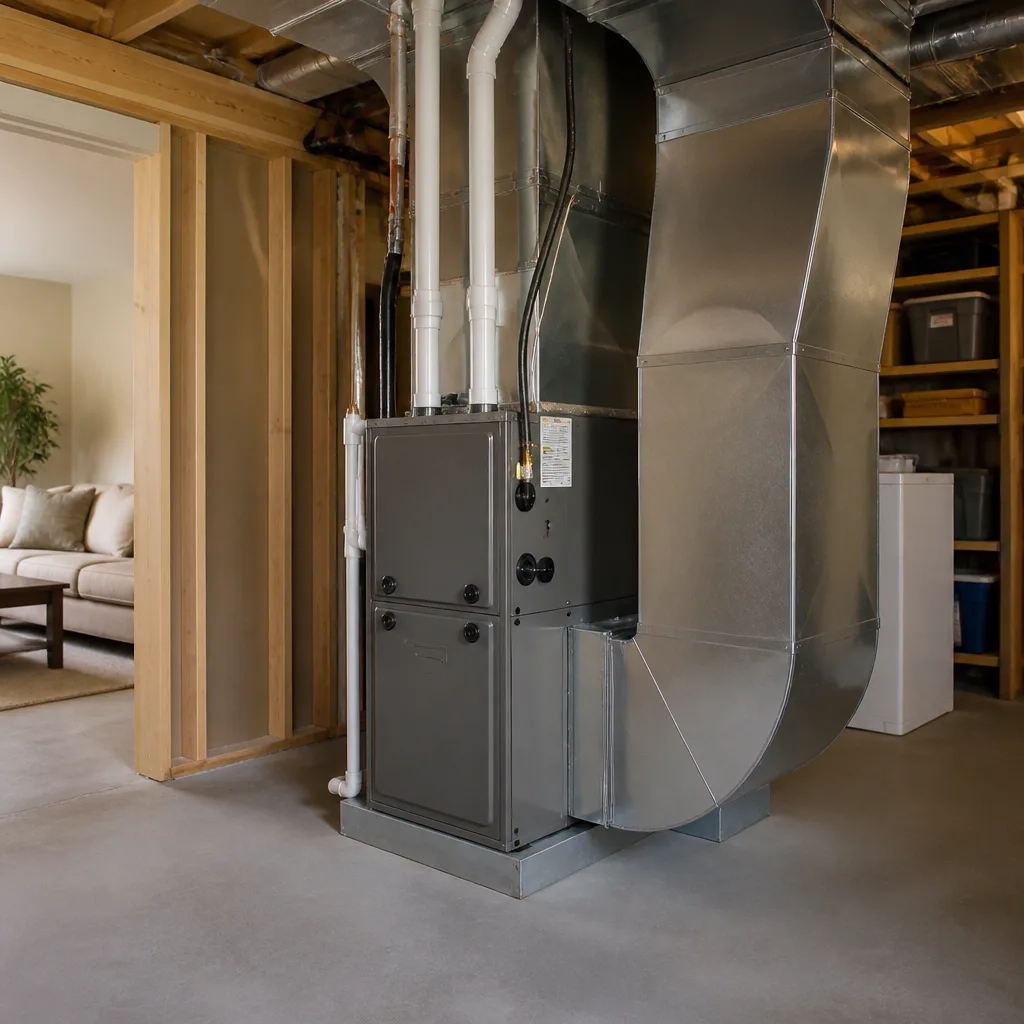
Fresno winters are mild by national standards, but the San Joaquin Valley still sees nighttime lows in the 30s and 40s from November through February. That’s furnace weather. The problem is that many Fresno homes run their furnaces only a few hours per day for just four or five months of the year. The rest of the time, the furnace sits dormant. That start-and-stop seasonal pattern, combined with Fresno’s winter fog, creates a specific set of warning signs that differ from what homeowners in colder climates experience.
Dust-Burn Smell: Normal on First Run, Concerning After
The first time you turn on the furnace in the fall, a burning smell is usually dust that settled on the heat exchanger during the idle months. It burns off within 30 to 60 minutes. That’s normal in Fresno and everywhere else. But if the smell persists beyond an hour, or if it returns every time the furnace fires up, that’s different. It could be a dirty heat exchanger, a failing blower motor, or something more serious. Any burning smell that smells like plastic or rubber rather than dust is a red flag, and it means the furnace should be shut down immediately.
The Fog-Winter Variable: Condensation and Corrosion
Fresno winter fog is a real factor in furnace health. Tule fog hangs in the valley for days at a time, and the humidity it brings can condense inside the furnace’s exhaust pathway, especially on older systems. Over years, that moisture contributes to rust and corrosion on the heat exchanger. A rusted heat exchanger can develop hairline cracks, which is a serious concern because it lets combustion gases, including carbon monoxide, mix with the air moving into your home. If you hear a rattling or popping sound from the furnace when the burners first light, that can indicate a heat exchanger expanding and contracting with a crack present. It’s a sound that warrants a professional inspection the same day.
Sound Guide: What You’re Hearing and What It Means
- A boom or thump when the burner lights. Delayed ignition. Gas builds up briefly before the igniter catches, causing a small explosion in the burn chamber. This is common in Fresno furnaces that have sat idle through a dusty summer. It needs a cleaning and adjustment, but if ignored, it can crack the heat exchanger.
- A rattling that stops after warm-up. Often a loose panel or a heat exchanger flexing. If the rattling is rhythmic and consistent, call a technician.
- A high-pitched squeal that changes pitch. A blower motor bearing failing. This is a replacement-warning sound. Furnace blower motor replacement in Fresno runs $400 to $900 parts and labor in most cases.
- A deep humming that doesn’t stop. The draft inducer motor may be failing. If the furnace won’t start and you hear this hum, the inducer has likely seized.
Any furnace that produces a burning smell beyond the first seasonal start, or any sound you haven’t heard in previous winters, deserves attention. Our Furnace Repair in Fresno page explains the repair process and what to expect in terms of timeline and cost.
Watch It vs. Shut It Down: Plain Language Thresholds
Most Fresno homeowners want to know when a symptom means “keep an eye on it” and when it means “turn it off and call today.” The following thresholds are based on what we see in the field here, not generic guidance.
Watch It: Monitor These Over Days
- A slightly longer run time than usual. If your AC runs 25 minutes instead of 18 on a 100°F day, that’s not necessarily a problem. If it’s running constantly on a 90°F day, that is.
- A faint, temporary smell from the vents. First seasonal furnace start is the prime example. If it clears within an hour, you’re fine.
- An electric bill 5% higher than the same month last year. This could reflect a rate increase or a slightly warmer month. Track it across two or three months before sounding the alarm.
- One room that’s 2 to 3 degrees warmer than the others. This is common in Fresno homes with marginal duct design. If it stays at that level and doesn’t worsen, it’s a comfort issue, not a system failure.
Shut It Down: Act the Same Day
- Any ice on the refrigerant lines or on the indoor coil. Ice means the system is not exchanging heat properly, and running it while frozen will damage the compressor. Shut it off and let it thaw, then call a technician.
- A burning smell that doesn’t stop after an hour of furnace use. Or any smell that is plastic-like or acrid. This could be a failing motor, a burning wire, or a damaged heat exchanger. Shut it down and leave it off.
- A carbon monoxide detector going off. There’s no interpretation needed here. Leave the house, call the gas company from outside, and do not re-enter until it has been cleared.
- The outdoor unit making a grinding or screeching sound. That’s metal on metal somewhere, likely the compressor or the fan motor. Every minute it runs is doing more damage.
- The system tripping its breaker more than once. A single trip could be a power surge. A second trip means an electrical fault in the system, and that’s a fire risk.
The pattern here is simple: if a symptom affects comfort, watch it. If a symptom affects safety or threatens the integrity of the equipment, shut it down. When in doubt, call and describe the symptom. A live person at Brandt HVAC Co Fresno home can help you decide whether it’s urgent or whether it can wait for a scheduled visit.
The Electric Bill Warning Sign Nobody Talks About
Before your AC fails, it almost always tells you on your electric bill. Fresno homeowners who have lived in the same house for more than two or three years know what a normal summer bill looks like. A system that’s developing problems, whether it’s a refrigerant leak, a failing capacitor, or a compressor running hot, draws more electricity than a healthy system moving the same amount of heat. The bill spike is the earliest warning sign, and it arrives weeks before a mechanical failure becomes obvious.
Here’s the specific pattern to watch. Compare your July bill this year to your July bill from last year. Adjust for the weather: if this July had more 100°F-plus days than last year, some increase is expected. But if the increase is more than 15% and the weather was comparable, something is wrong. A 15% to 20% increase in a Fresno summer bill, with no corresponding change in usage patterns, typically indicates a system that’s losing efficiency. By the time the increase reaches 25% or more, the underlying problem is usually serious enough that a visible symptom will appear within weeks anyway. The bill was your early warning, and you were charged for it.
Common causes of electric bill spikes in Fresno include a failing capacitor, which makes the compressor work harder on every start. A refrigerant leak, which forces the compressor to run longer to achieve the same cooling. A condenser coil that’s caked with Fresno dust, reducing its ability to reject heat and forcing the system to run longer and hotter. And short-cycling, which multiplies the number of high-draw compressor starts per day. All of these are diagnosable, and most are fixable before they escalate into a compressor failure that costs thousands.
Keep a simple log. Write down the kilowatt-hours from your bill each month for a year. That baseline becomes your diagnostic tool. When a technician asks what’s been happening, you’ll be able to say exactly when consumption started climbing, which often corresponds to when a problem began developing.
Age-Related Warning Signs: When Repair Stops Making Sense
HVAC systems don’t die suddenly. They decline over years, and the warning signs change depending on the unit’s age. In Fresno’s climate, a standard central air conditioner lasts 12 to 15 years with regular maintenance. A furnace lasts 15 to 20 years, sometimes longer because Central Valley winters are relatively mild. But Fresno’s dust and summer heat take a real toll on AC equipment specifically, and we see many AC units failing in the 10- to 12-year range when maintenance has been inconsistent. For more guides & resources on extending equipment life, visit our blog.
Warning Signs by Age Bracket
- Under 5 years. Any major symptom, short-cycling, ice, refrigerant leak, compressor noises, is almost certainly a repair situation, not a replacement. The unit is too young to have exhausted its useful life. Diagnose and fix the specific problem.
- 5 to 10 years. This is the decision zone. A $400 repair on a 7-year-old system that’s otherwise healthy is a good investment. A $1,500 repair on a 9-year-old system in a home where the AC has been neglected should prompt a conversation about replacement. The rule we use: if a single repair costs more than 25% of a new system’s price, and the unit is over 8 years old, replacement is worth considering.
- 10 to 15 years, AC specifically. In Fresno, this is when compressor failures become common. If the compressor goes at year 12, replacement is usually the right call. Putting a new compressor in a 12-year-old unit means you’re betting the rest of the system, the condenser coil, the evaporator coil, the blower, will hold up for several more years. In Fresno’s conditions, that’s a risky bet.
- 15+ years. Any repair that costs more than $500 should trigger a replacement discussion. The unit has already outlived its design life, and efficiency gains alone, even between older and newer units of the same nominal size, justify the investment in most Fresno homes.
Brand matters here too. A Carrier or Trane system that’s been maintained on schedule will typically outlive a Goodman or Rheem system installed and then ignored. That’s not a knock on any brand; it’s an observation about how different build qualities respond to Fresno’s particular mixture of dust, heat, and intermittent operation. We service all major brands, and we’ll give you a straight answer about whether a repair makes sense given your unit’s age and history. For a deeper look at the maintenance side, see our AC Maintenance in Fresno guide.
Common Mistakes to Avoid
- Ignoring a short-cycling pattern for more than one cooling season. Every short-cycle is a series of hard starts for your compressor. Fresno homeowners who let this go through one summer usually end the next summer with a compressor failure. The fix for short-cycling, whether it’s refrigerant, coils, or a sizing issue, is always cheaper in June than in August.
- Replacing the thermostat before diagnosing the system. A bad thermostat is a relatively rare cause of HVAC problems, but it’s the first thing many DIYers reach for. If the thermostat is over 10 years old or showing blanking displays, replace it. Otherwise, the symptom is usually in the system, not the control.
- Changing the filter but never looking at the coil. In Fresno, a clean filter doesn’t mean a clean coil. The filter catches air from inside the house. The coil catches whatever blows across it from outside. That’s dust, cottonwood, harvest particulate, and everything else the valley produces. A coil cleaning once a year is not optional here.
- Setting the thermostat dramatically lower to compensate for weak cooling. If the system can’t reach 78°F, setting it to 72°F won’t help. It will just run longer, waste electricity, and accelerate whatever failure is developing. Address the airflow or refrigerant problem instead.
- Relying on a handyman for AC electrical issues. AC electrical faults are not the same as a faulty light switch. Compressors, capacitors, and contactors operate at lethal voltages, and the system’s grounding and wiring matter. This is work that requires a licensed HVAC technician.
- Leaving the system running while it’s frozen. When ice forms on the coil or refrigerant lines, running the system doesn’t cool the house; it overheats the compressor. The correct move is to shut it off, let it thaw completely, and then call for service.
When to Call a Professional
Any of the “shut it down” symptoms from above means a professional should look at the system before it runs again. That includes persistent burning smells, suspected refrigerant leaks, breaker trips, ice on the coil, and any carbon monoxide detector activation. Beyond those, call a professional when a symptom has persisted for more than a week despite basic home care, when the electric bill spike is unexplained and sustained, or when you’re not certain whether a symptom is serious. A good rule for Fresno homeowners: if you’ve noticed something unusual twice in the same week, it’s worth a call. Brandt HVAC Co Fresno offers free estimates in Fresno. Call (559) 354-6878 and describe what you’re seeing. We’ll give you a straight answer about whether it needs attention now or whether it can wait.
Frequently Asked Questions
The most common HVAC warning sign we see in Fresno is short-cycling, where the system turns on and off every 10 minutes or less. It’s driven by the combination of oversized units in older homes, dust-heavy condenser coils, and extreme summer heat, and it’s a primary contributor to premature compressor failure. If you notice this pattern, call (559) 354-6878 and we’ll diagnose the cause before it escalates.
An AC low on refrigerant will produce weak cooling, long run times, and often ice on the suction line or indoor coil. The temperature difference between your return and supply vents will drop below 15°F. A hissing sound at the indoor unit is another strong indicator. Refrigerant doesn’t get “used up” over time; low refrigerant means there’s a leak somewhere, and that leak needs to be found and repaired before the system is recharged.
An AC that runs constantly without reaching the set temperature usually has one of three problems: a refrigerant leak reducing cooling capacity, a condenser coil so dirty it can’t reject heat, or a collapsed or leaking duct delivering cooled air into the attic instead of the rooms. In Fresno, collapsed attic ducts are more common than national guides suggest because summer attic temperatures soften and deform flex duct over time.
At 12 years old in Fresno’s climate, an AC that’s developing symptoms should be evaluated for replacement rather than repeatedly repaired. The calculation depends on the repair cost, the system’s maintenance history, and your plans for the home. If a single repair exceeds 25% of a new system’s cost and the unit is over 10 years old, replacement makes more financial sense in most cases. We can give you a written estimate for both the repair and a replacement so you can decide with clear numbers.
A carbon monoxide detector alarm during or after furnace operation is a direct warning that combustion gases are entering your living space. The most common furnace-related cause is a cracked heat exchanger, which can happen in Fresno furnaces that have experienced moisture and corrosion from winter fog. If the detector sounds, leave the house, call your gas utility from outside, and don’t return until a professional has cleared the system.
Most AC repairs in Fresno run between $180 and $600, with common items like capacitor replacement in the $180 to $280 range and contactor replacement in the $150 to $250 range. More involved repairs like a leaking evaporator coil replacement typically run $800 to $1,500. Call (559) 354-6878 for an exact quote on your specific system. Estimates are free, and you’ll get the price in writing before any work starts.
The Bottom Line
The warning signs that matter in Fresno are specific to this valley: short-cycling from oversized units and dust-caked coils, collapsed ducts from 150°F attics, refrigerant leaks presenting as ice in the middle of a 105°F summer, and furnaces corroding from winter fog. Each of these produces symptoms you can recognize before they become failures. Watch for the patterns, track your electric bill against last year, and learn the difference between a symptom that can wait and one that can’t. When you need a straight answer about what you’re seeing, call (559) 354-6878. We’ll tell you what’s wrong, what it costs to fix, and whether to fix it or replace it. In writing, before any work starts.
Written by Devin Marlowe, Owner at Brandt HVAC Co Fresno, serving Fresno since 2003.
See the difference
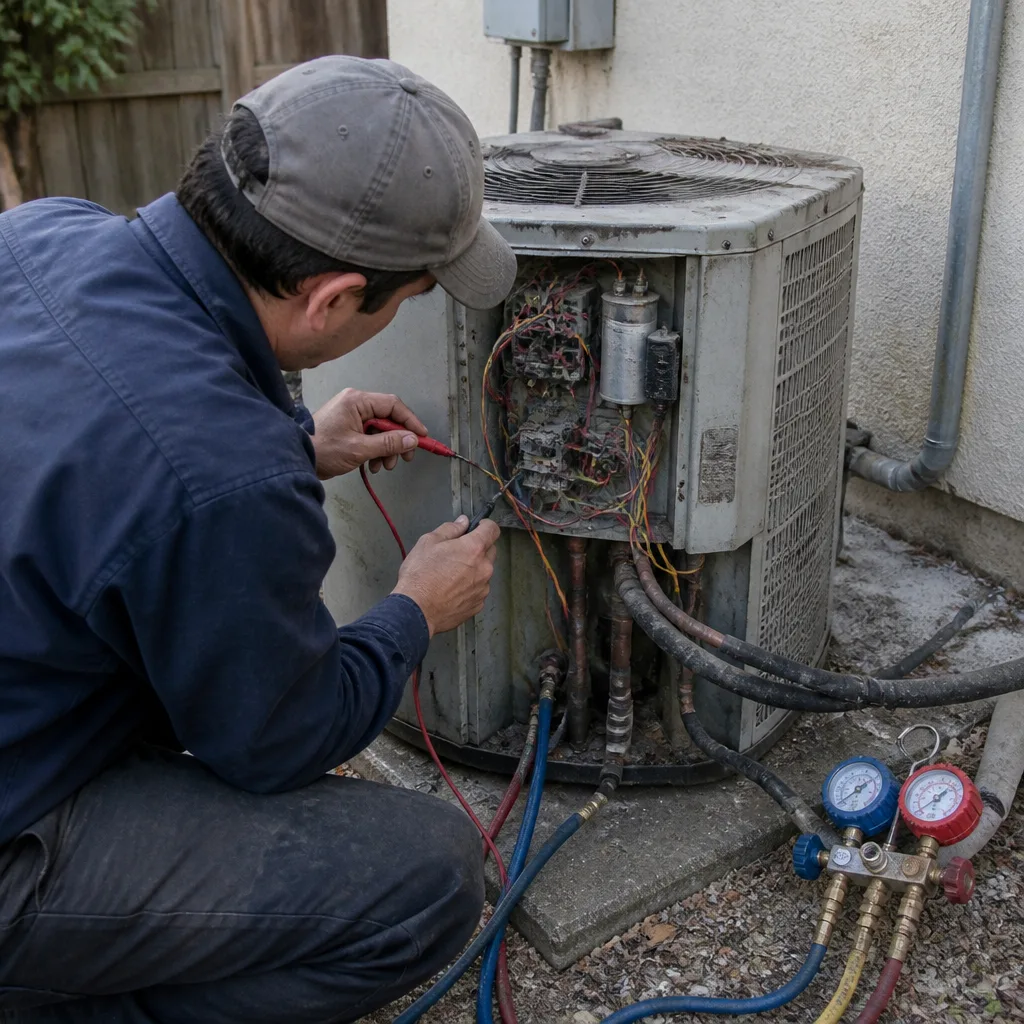 Before
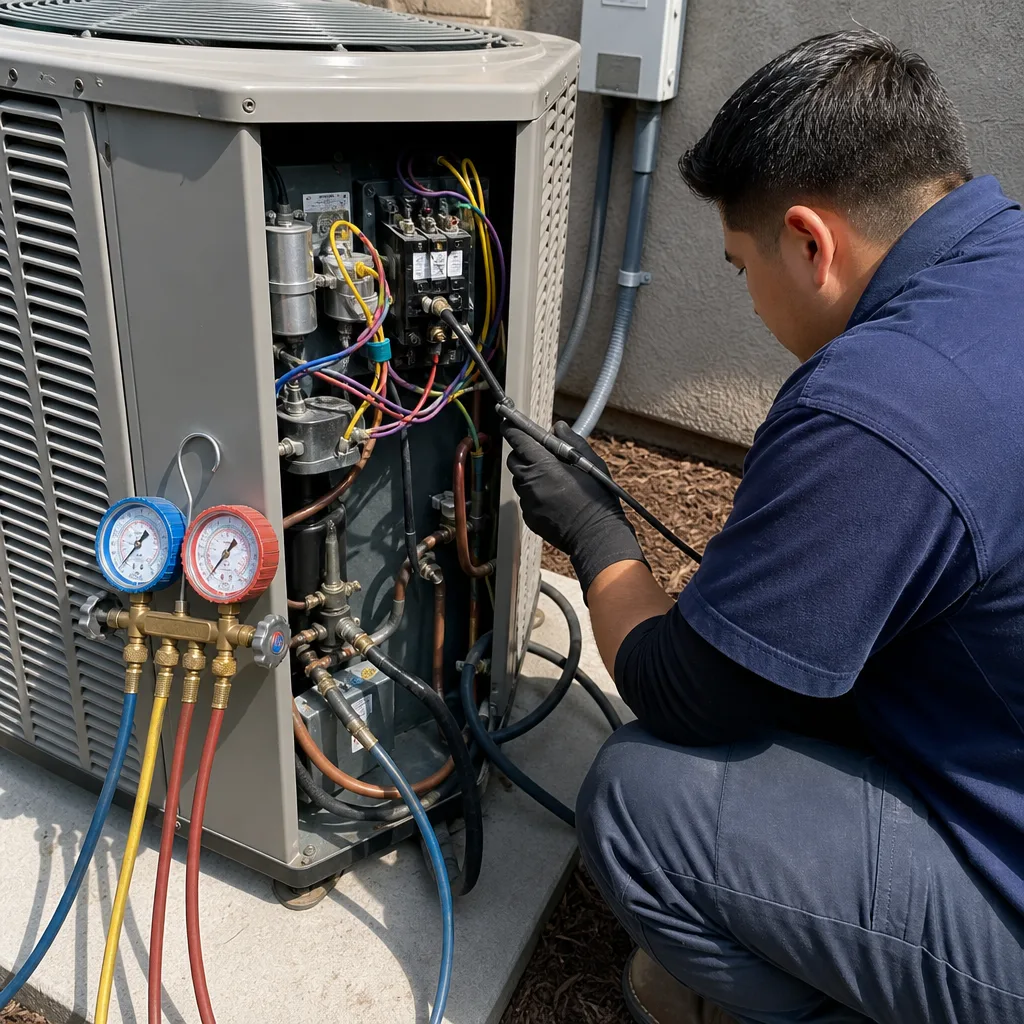 After
After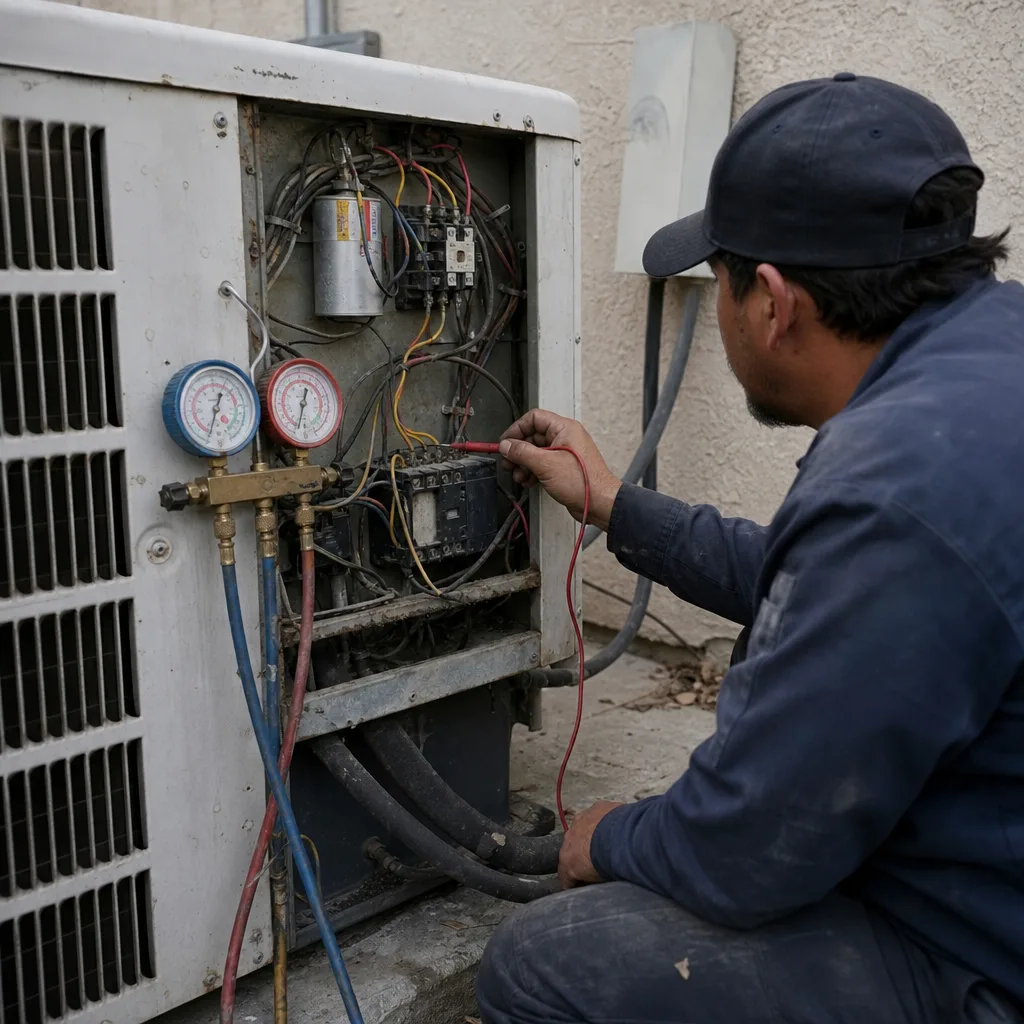 Before
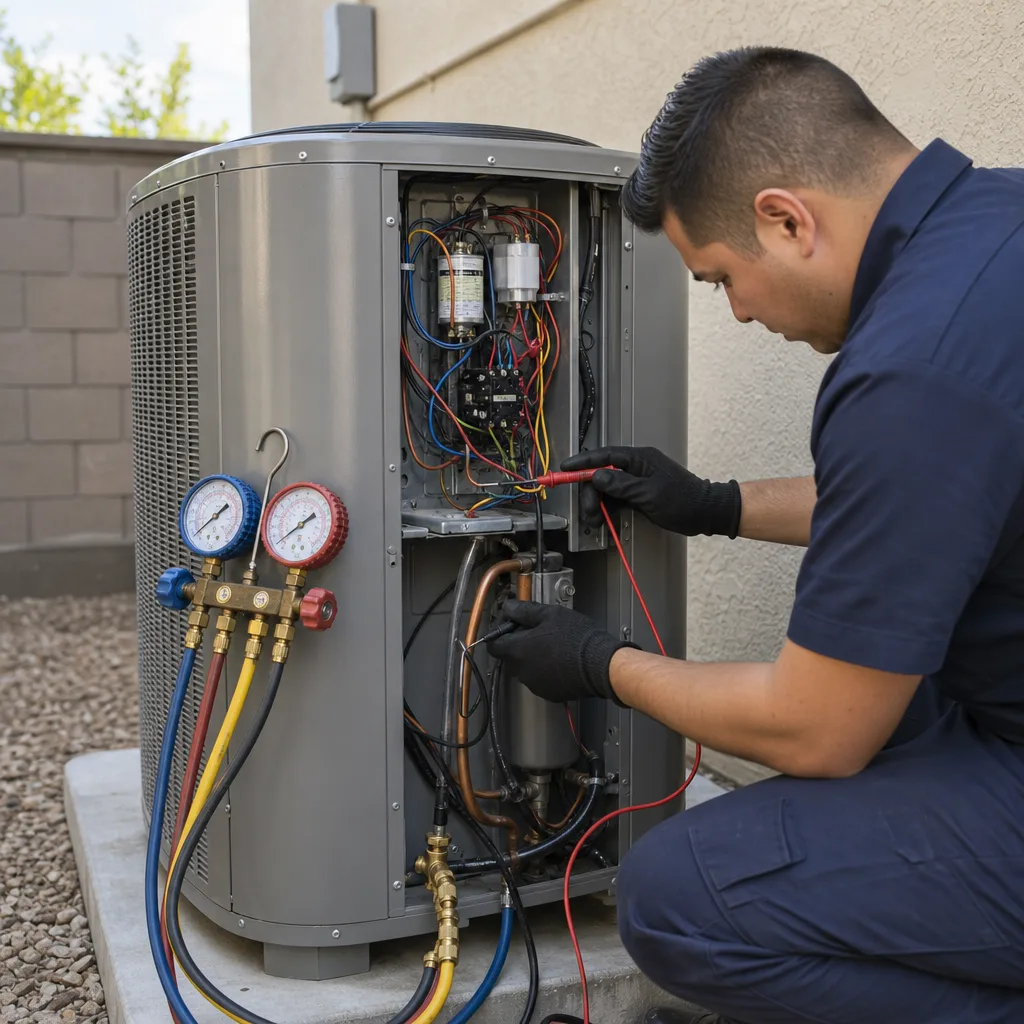 After
After Before
 After
After