
Last updated October 16, 2026
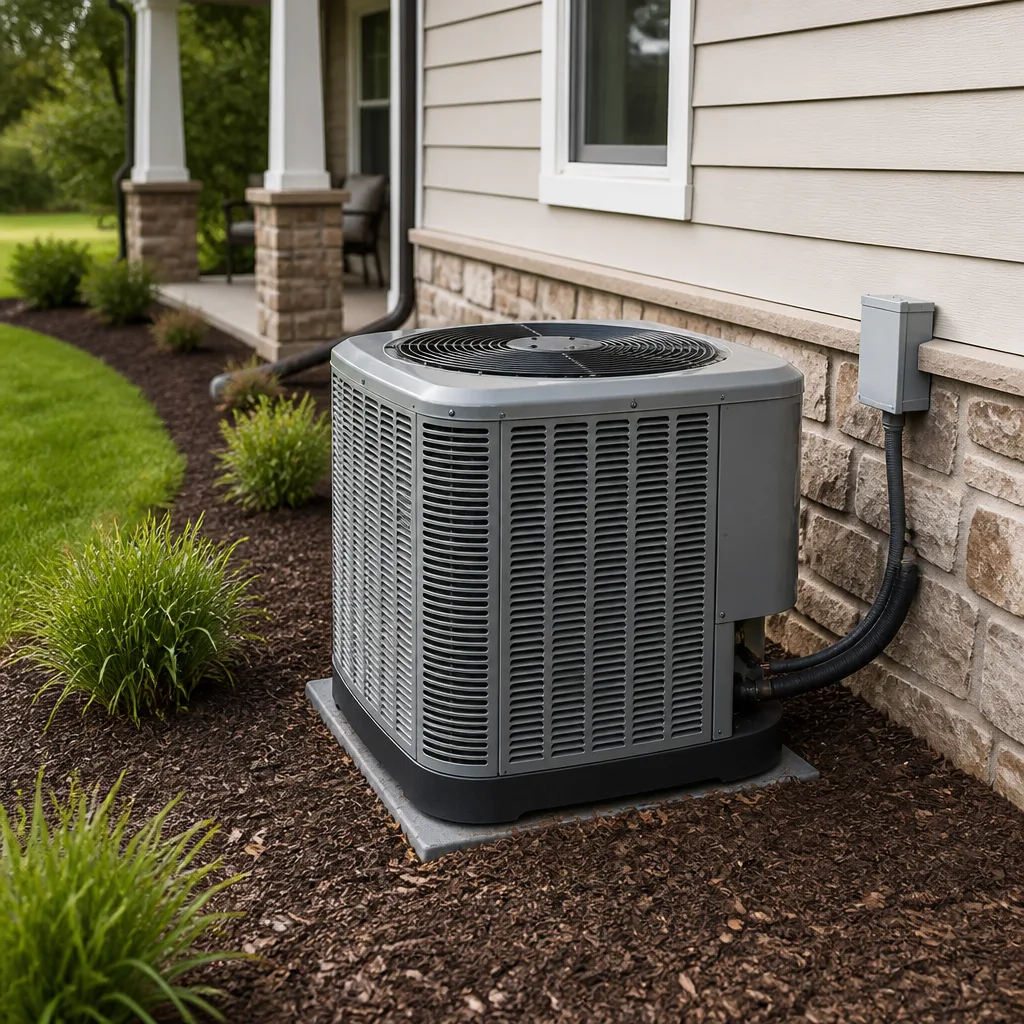 AC repair
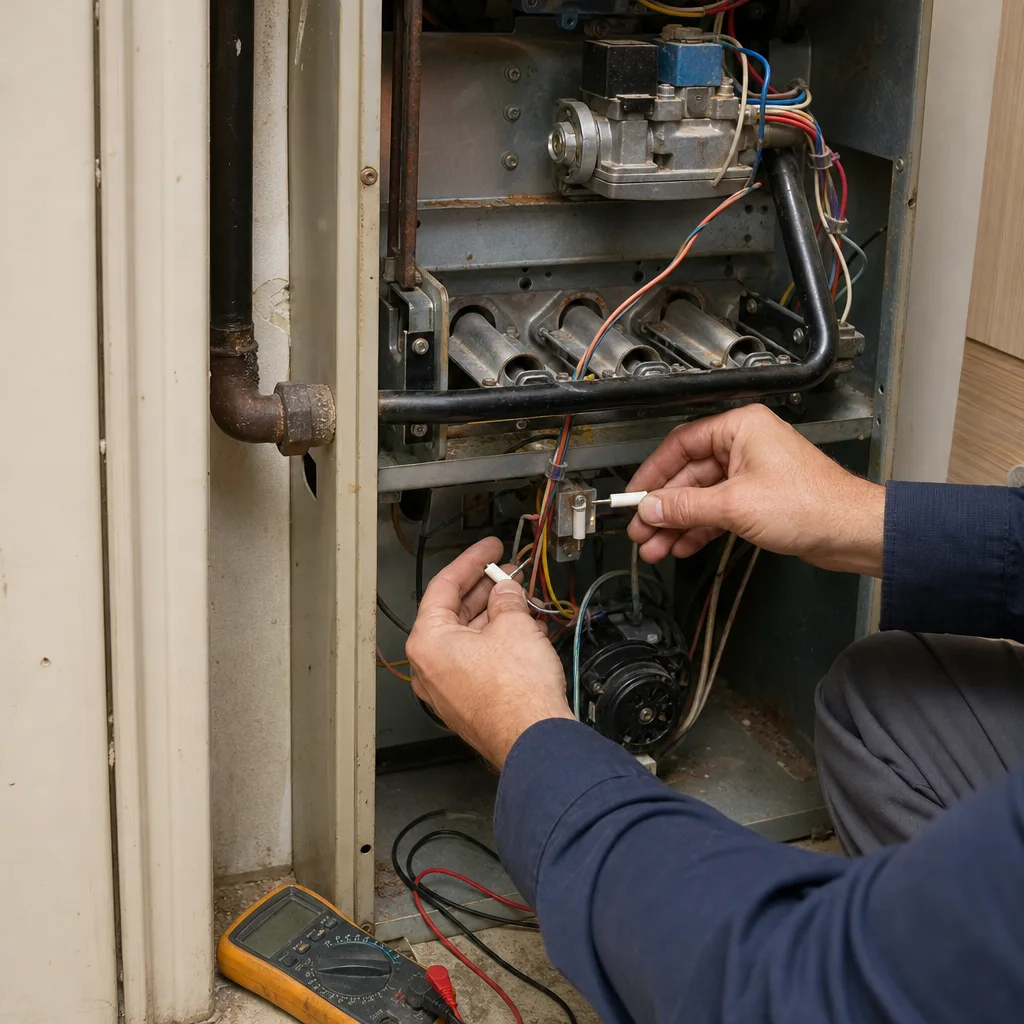
 Furnace & heating
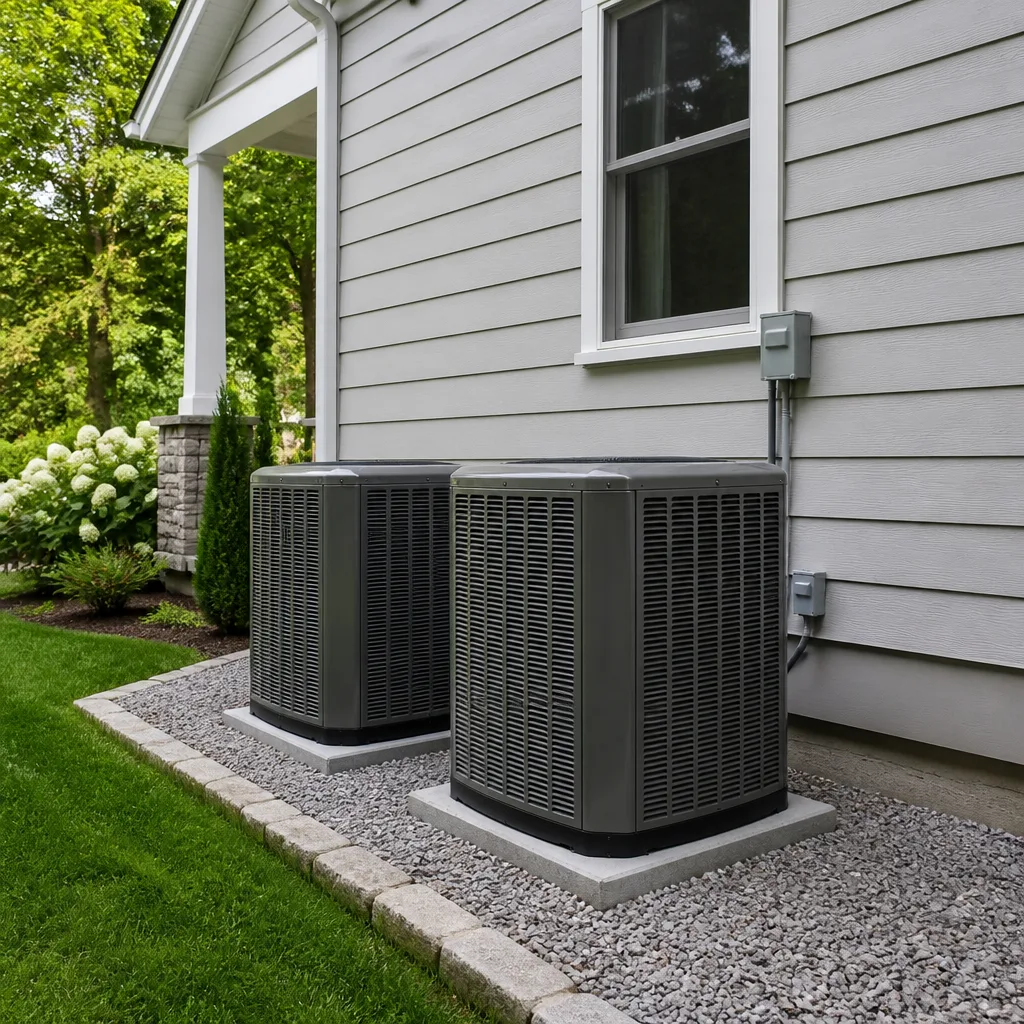 Heat pumps
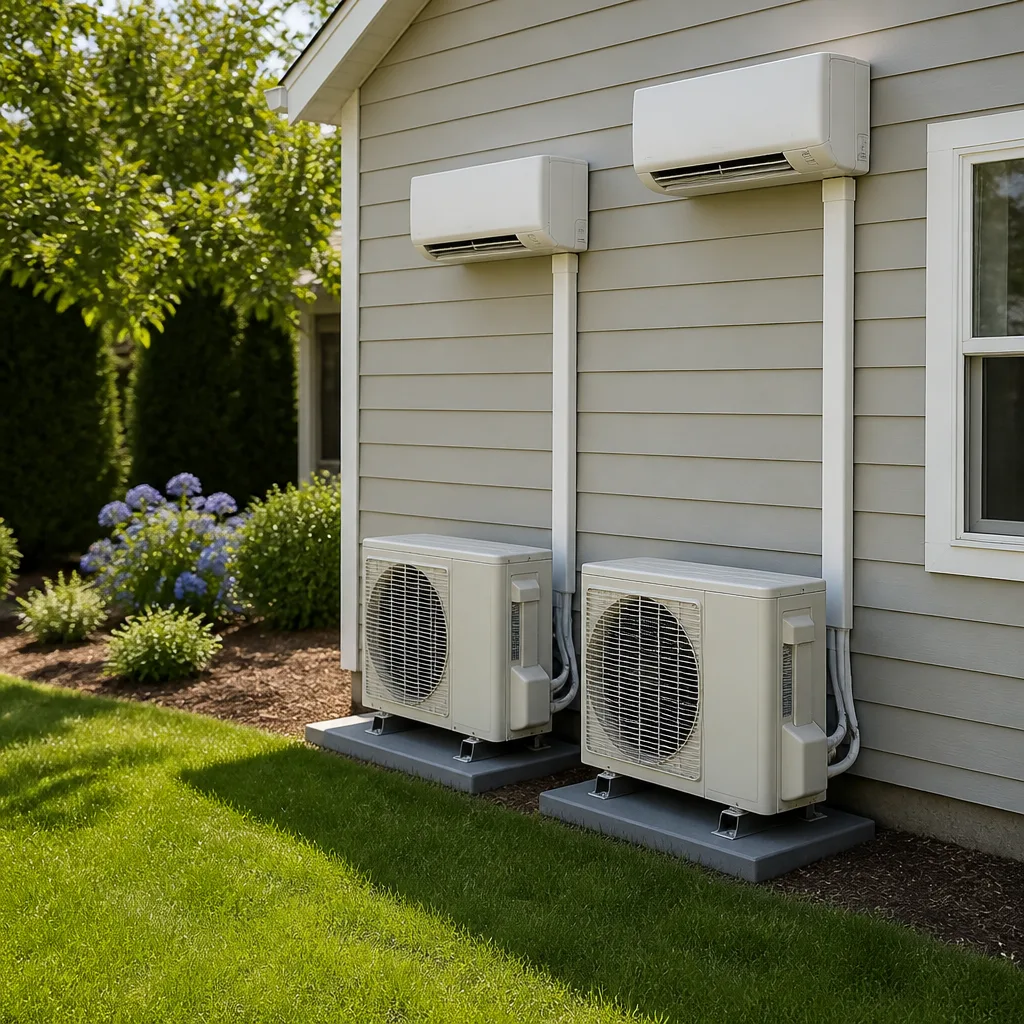 Ductless mini splits
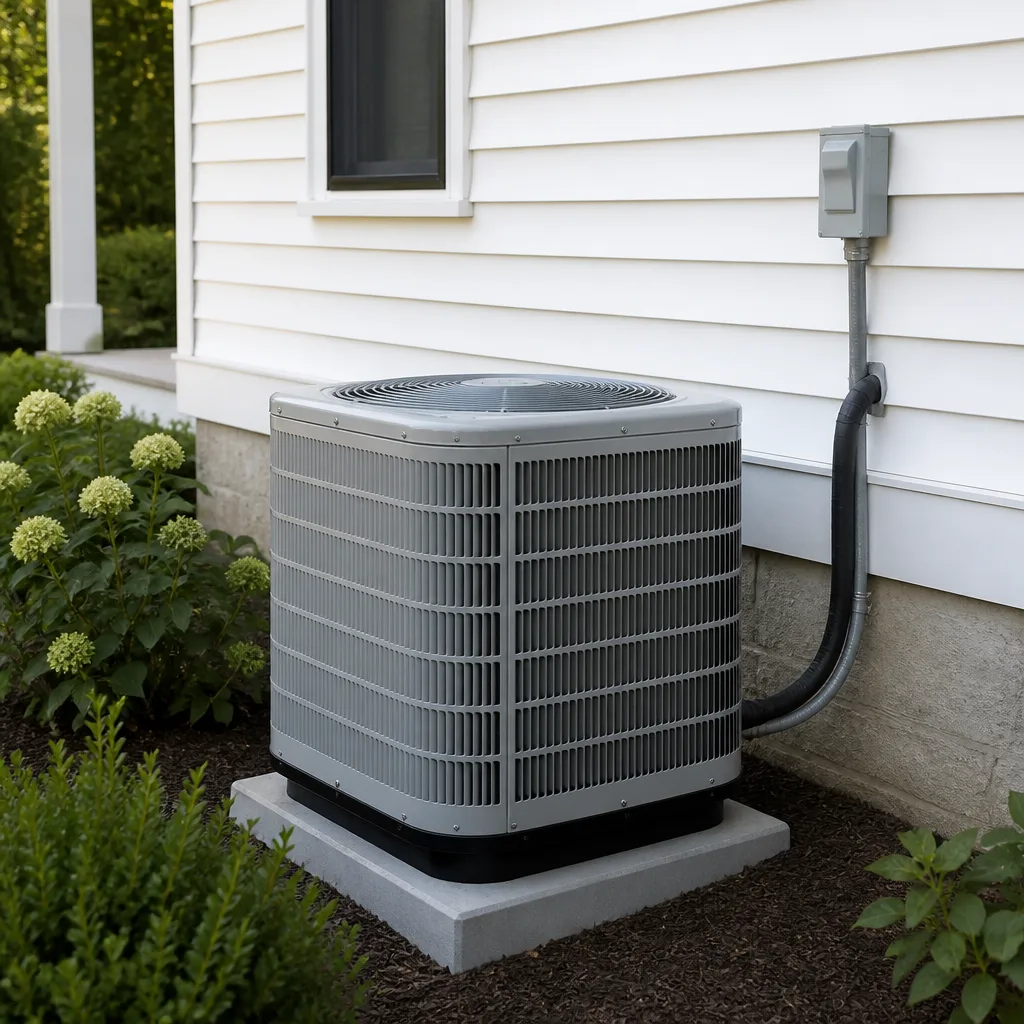 Carrier
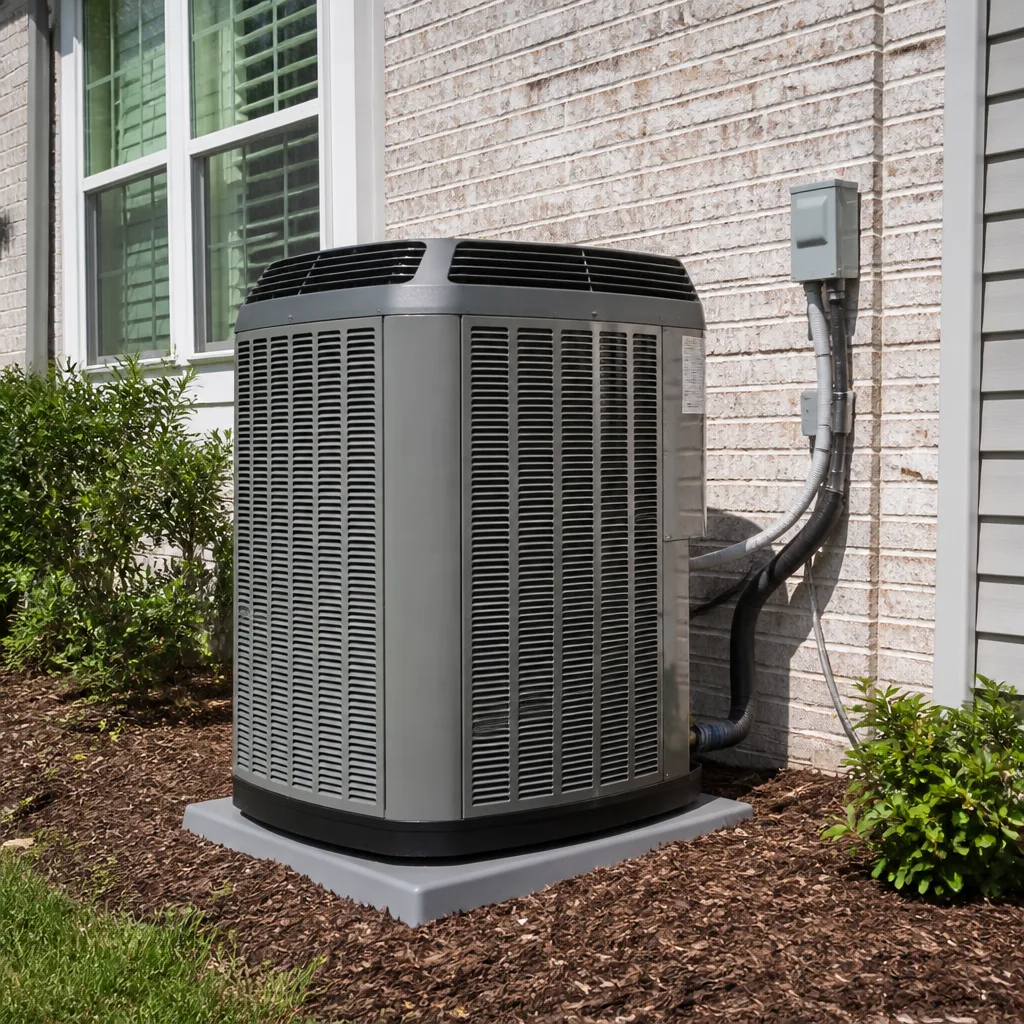 Trane
Trane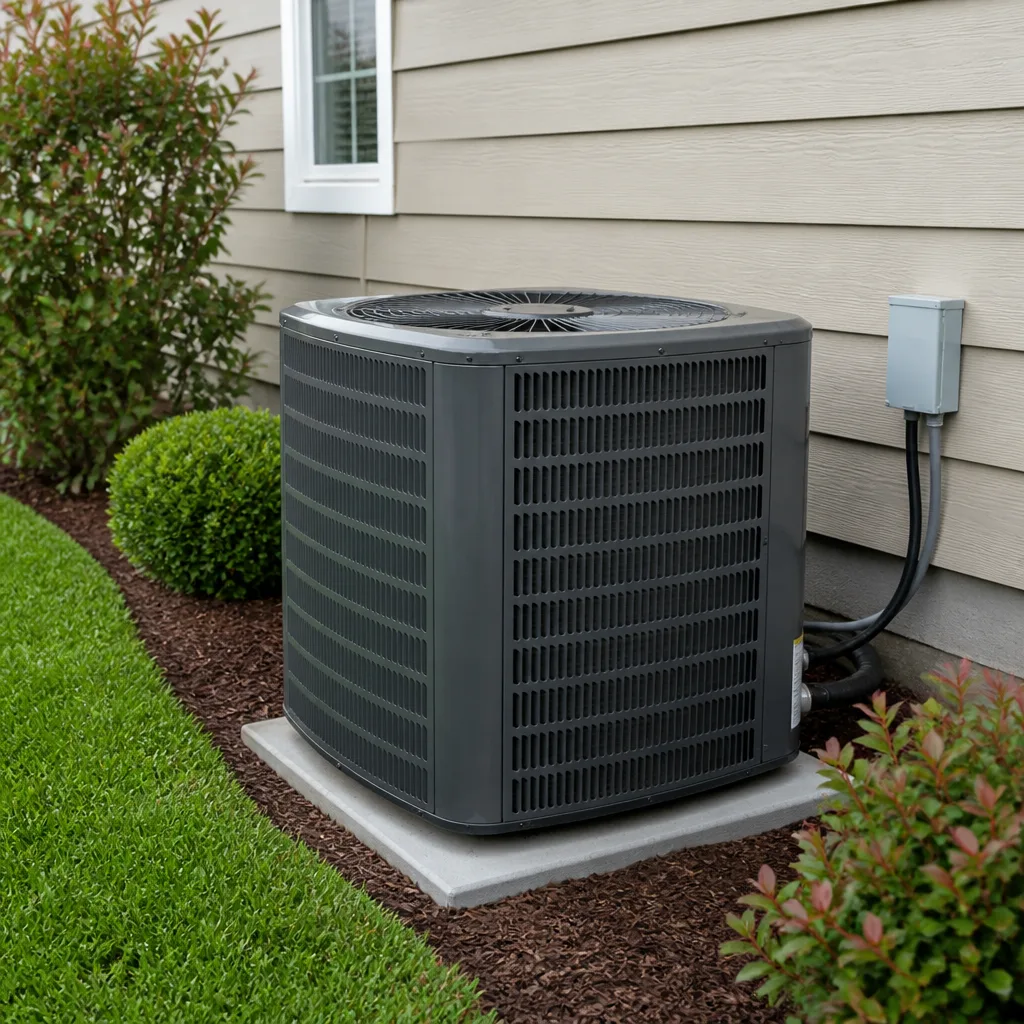 Goodman
Seasonal tune-up and full diagnostic on your Carrier, Trane, or Goodman system - readings shown to you before any repair is proposed
Diagnosis first, numbers second - you approve the repair price before a single part goes in.
Get your free estimateHVAC Cost Breakdown: The Fresno Homeowner’s Reference for 2026
The national average cost for an AC replacement gets quoted at around $5,500, but that number is nearly meaningless in Fresno, where systems must be sized for 108°F summer days and routinely log 2,800+ hours of runtime per year. The meaningful question isn’t what you pay on install day. It’s what you pay over ten years in energy, repairs, and early replacement when a unit was never sized or priced correctly for the Central Valley climate. This guide gives Fresno homeowners real numbers: what repairs actually cost here, how PG&E rate structures change the math on efficiency upgrades, and how to read a written quote so the price doesn’t change after work begins. For more, see our HVAC Warning Signs: A Fresno Homeowner’s Reference Guide.
Quick Answer
HVAC costs in Fresno in 2026 break down like this: a standard repair runs $180 – $450, high-demand summer dispatch calls often add $80 – $120, and a full system replacement ranges from $9,000 – $16,500 installed depending on efficiency tier and home size. The biggest long-term cost lever for Fresno homeowners isn’t the initial install price, it’s the SEER rating you choose: going from SEER 16 to SEER 20 on a 1,600 – 2,200 square foot home saves roughly $1,900 – $2,600 in PG&E charges over ten years at current Fresno TOU rates. Every legitimate written quote in California must include a full breakdown of parts, labor, permits, and a payment schedule before any work begins.
Styles & brands we work with
Table of Contents
- What Common HVAC Repairs Actually Cost in Fresno
- Why Dispatch Fees Spike During Fresno Summers
- SEER 16 vs. SEER 20: Real Fresno Energy Math, Not Marketing
- What a Legally Enforceable Written Quote Must Include in California
- How to Calculate Total Cost of Ownership in Fresno
- Fixed-Price Repairs vs. Diagnostic-Required Repairs
- What a Full System Replacement Costs in Fresno in 2026
- Common Mistakes to Avoid
- When to Call a Professional
- Frequently Asked Questions
What Common HVAC Repairs Actually Cost in Fresno
Fresno repair pricing follows a pattern we’ve seen across thousands of service calls: the parts that fail most often are also the most affordable to replace, while the components that last longest carry the steepest price tags. A capacitor replacement, the most common AC failure in the Central Valley, runs $150 – $280 including the service call. A contactor, the electrical switch that turns your condenser on and off, costs $120 – $240 to replace. A condensate drain line flush, which prevents the water backups that are especially common in Fresno’s hard-water homes, typically lands between $90 – $180.
Here’s a practical breakdown of the repair prices Fresno homeowners should expect in 2026, parts and labor included:
- Capacitor replacement: $150 – $280 – the most frequent failure on Fresno condensers, especially after heat waves
- Contactor replacement: $120 – $240 – electrical wear from constant cycling in long cooling seasons
- Condensate drain flush and treatment: $90 – $180 – prevents the algal growth that thrives in warm, humid evaporator coils
- Thermostat replacement (basic programmable): $140 – $290 – smart thermostats add $50 – $120 to the parts cost
- Refrigerant leak repair and recharge: $350 – $850 – final price depends on leak location and how much refrigerant was lost
- Blower motor replacement: $400 – $750 – variable-speed motors run higher than single-speed
- Condenser fan motor replacement: $325 – $575 – common in Fresno after consecutive 100°F+ weeks
- Compressor replacement: $1,800 – $3,200 – often not worth it on a unit older than 8 – 10 years
One thing to know before you call anyone for AC repair in Fresno: a reputable company will give you a written price before any work starts. Not an estimate that expands. A written price. At Brandt HVAC Co Fresno, every repair includes a written guarantee stating exactly what’s covered and for how long, because a repair without a guarantee is just a guess you’re paying for.
Why Dispatch Fees Spike During Fresno Summers
Fresno’s HVAC labor market is seasonal in a way that most pricing guides ignore. From June through August, when daytime temperatures routinely exceed 100°F and every service van in the county is running from 7 AM to 10 PM, dispatch fees and minimums climb. A service call that costs $75 – $95 in March or November will often run $90 – $140 during a July heat wave. That’s not price gouging, it’s the reality of supply and demand in a market where 40% of the year’s total service calls compress into 90 days.
The practical implications for a Fresno homeowner are concrete:
- Off-season maintenance (Oct – Feb and March – May) is the cheapest time to catch problems. A pre-summer capacitor check costs less than an emergency July replacement, because you’re paying a single service fee instead of a peak dispatch fee plus parts.
- Same-day service during a heat wave will cost more. If your AC dies on a 106°F afternoon, you are competing with every other homeowner in the 93720 and 93711 zip codes whose unit also just failed. That urgency is real and it’s priced accordingly.
- Emergency after-hours calls add $50 – $100 on top of standard rates. This is standard across Fresno HVAC companies, not a brand-specific policy.
If you want to avoid peak pricing entirely, the smart move is a spring maintenance visit. A flat-rate AC maintenance in Fresno appointment in April or early May costs less than a single emergency dispatch in August, and it typically catches the capacitor, contactor, or drain line issues that would otherwise fail mid-summer.
SEER 16 vs. SEER 20: Real Fresno Energy Math, Not Marketing
SEER stands for Seasonal Energy Efficiency Ratio, and it measures how much cooling you get per watt of electricity. Higher SEER means lower operating cost. But the way national marketing materials present SEER savings rarely matches Fresno reality, because Fresno’s cooling season is dramatically longer than the national average used in those comparisons.
Here’s the actual math for a typical 1,800-square-foot Fresno home with a 3-ton system running 2,800 cooling hours per year, which is a realistic runtime for the Central Valley:
- SEER 16 system: Uses approximately 6,560 kWh per cooling season. At Fresno’s average PG&E combined rate of roughly $0.38 – $0.42 per kWh (which includes TOU peak surcharges), that’s $2,490 – $2,750 per year in cooling costs.
- SEER 20 system: Uses approximately 5,250 kWh per cooling season. At the same PG&E rates, that’s $1,995 – $2,205 per year.
- Annual savings: $495 – $545 per year.
- Ten-year savings: $4,950 – $5,450, before accounting for PG&E rate increases, which historically trend upward 4 – 7% annually.
So the real cost difference between SEER 16 and SEER 20 equipment over a decade in Fresno is substantial. A SEER 20 system typically costs $1,800 – $3,000 more upfront than a comparable SEER 16 unit from the same manufacturer, like a Trane or Lennox. But the operating savings exceed that premium somewhere around year four or five, and every year after that is net positive cash flow.
One more Fresno-specific factor: PG&E’s TOU (Time of Use) rate structure penalizes electricity used between 4 PM and 9 PM, exactly when your AC is working hardest on a hot afternoon. High-SEER variable-speed systems save even more under TOU billing because they ramp down during peak hours instead of cycling full-blast, which is what a single-stage SEER 16 unit does.
What a Legally Enforceable Written Quote Must Include in California
California’s Contractors State License Board (CSLB) has specific rules about what a written home improvement contract must contain, and HVAC replacements fall under those rules. A written quote that is missing any of these items is not a contract you should sign.
- Contractor’s full business name and CSLB license number. If the license number is missing or the name doesn’t match what’s on the CSLB website, walk away. Verify it at cslb.ca.gov.
- Complete description of the work. This must include equipment model numbers, SEER ratings, system tonnage, and a written statement of what is and is not included (e.g., “includes new refrigerant lines and disconnect box, does not include drywall repair”).
- A total price, in writing, for the entire job. Not an estimate. A price. California law requires the contract to state the total dollar amount before work begins.
- A payment schedule. For home improvement contracts, the down payment cannot exceed 10% of the total or $1,000, whichever is less. Any contractor asking for more upfront is violating state law.
- A start date and a completion date. Both must be written. Vague language like “ASAP” or “when parts arrive” is a red flag.
- A notice of your right to cancel. California gives homeowners a 3-day right to cancel for most home improvement contracts, and the contract must state this in writing.
At Brandt HVAC Co Fresno, every job begins with a written price, no exceptions. No work starts before you see the full cost in writing and agree to it. That’s not a sales tactic; in California, it’s the legal minimum, and any company that can’t produce a written line-item quote before starting work is not one you want touching your system.
How to Calculate Total Cost of Ownership in Fresno
The purchase price of an HVAC system is the smallest number that matters. Over a 12 – 15 year equipment lifespan in Fresno, energy costs dwarf the install price by a factor of three to four. Here’s how to run the real numbers.
Step 1: Estimate your annual cooling hours
Fresno homes typically run AC between late April and early October, so seasonal HVAC care matters more here than in most climates. A realistic cooling season is 150 – 170 days, with average daily runtime of 10 – 16 hours during the peak months. That works out to 2,000 – 3,000 cooling hours per year depending on your home’s insulation and your temperature preferences.
Step 2: Calculate annual energy cost
Multiply your system’s kWh usage per hour by your estimated annual runtime, then multiply by PG&E’s blended rate. A SEER 14 system uses about 1.0 kWh per hour per ton of cooling. A 3-ton SEER 14 system uses roughly 3.0 kWh per hour. At 2,500 hours per year and $0.40 per kWh blended, that’s $3,000 per year. The same home with a SEER 18 system uses about 2.3 kWh per hour, costing roughly $2,300 per year, a $700 annual difference.
Step 3: Add expected repair costs
Systems older than 8 years in Fresno tend to need $200 – $600 in repairs annually. Systems under 5 years rarely need anything beyond a capacitor. Budget $150 per year as a maintenance and repair reserve, scaling up to $400 after year 8.
Step 4: Factor in replacement cost
Divide your system’s total installed cost by its expected lifespan. A $12,000 system expected to last 14 years costs about $857 per year in amortized equipment cost.
Add all four numbers together and you have a true annual cost of ownership. For most Fresno homes, the difference between a bare-minimum SEER 14 replacement and a properly sized SEER 18 – 20 system is $600 – $900 per year in energy savings alone, which usually makes the higher-efficiency unit the cheaper choice by year five or six.
Fixed-Price Repairs vs. Diagnostic-Required Repairs
Some HVAC failures have a known, predictable cost before a technician ever arrives at your door. Others require a diagnostic visit to locate the failure point before any honest price can be given. Knowing which is which protects you from both lowball quotes that expand later and inflated flat prices for jobs that should require investigation.
Repairs with fixed, predictable costs:
- Capacitor replacement: The part costs $15 – $40 wholesale, and labor is 30 – 45 minutes. Any company charging more than $300 for a standard capacitor replacement on a residential condenser is overcharging.
- Contactor replacement: A $20 – $50 part with a straightforward 30-minute install. Total cost should stay under $250.
- Condensate drain line flush: A simple service with no parts cost. $90 – $180 is fair.
- Thermostat replacement: The thermostat itself is $40 – $200 depending on features, and installation is 20 – 30 minutes for a standard wired unit.
Repairs that require a diagnostic before honest pricing:
- Refrigerant leaks: A leak could be in the evaporator coil, the condenser coil, the line set, or a Schrader valve. Each location carries a completely different repair cost, and the only way to know is with an electronic leak detector and possibly dye testing.
- Compressor failures: A compressor that trips the breaker could have failed from electrical damage, refrigerant loss, or mechanical wear. Replacing the compressor without fixing the root cause guarantees a repeat failure.
- Control board failures: The symptoms of a dead control board overlap with at least a half-dozen other electrical issues. A qualified tech needs to trace voltage through the system before concluding the board is the problem.
- Airflow problems: Low airflow could be a dirty filter, a failing blower motor, collapsed ductwork, or an oversized system. Guessing wrong means paying for a fix that doesn’t fix anything.
If a company gives you a fixed quote for a refrigerant leak over the phone without having located the leak, that’s not a bargain. That’s a number designed to get a tech in your door, and the real price comes later. A company that tells you “we need to diagnose this first” is being honest about how HVAC systems actually work.
What a Full System Replacement Costs in Fresno in 2026
System replacement pricing in Fresno breaks into three tiers. The tier you need depends on your home’s square footage, your insulation quality, and how long you plan to stay in the house.
Budget tier: $9,000 – $11,500
A 3-ton SEER 14 or SEER 15 system from Goodman or Rheem, typically single-stage, with a basic programmable thermostat. This is the cheapest option to get cold air flowing, but expect higher operating costs and more noise. For a rental property or a house you plan to sell within three years, this tier makes sense.
Mid tier: $12,000 – $14,500
A 3 – 4 ton SEER 16 – 18 system from Trane, Lennox, or Goodman’s premium lines, usually two-stage, with a smart thermostat included. This is where most Fresno homeowners should be shopping if they plan to stay in the home for five or more years. The efficiency pays for the premium over time, and two-stage systems are significantly quieter and better at humidity control.
Premium tier: $15,000 – $18,000+
A variable-speed SEER 19 – 22 system, typically from Trane or Lennox, with inverter-driven compressors and full smart-home integration. Highest comfort, lowest operating cost, and the longest average lifespan when maintained. For a 2,000+ square foot Fresno home with a long-term owner, this is the financially rational choice over a 12 – 15 year ownership period.
Every one of these prices should include permits, city inspection coordination, and a load calculation. If a contractor gives you a replacement price without having performed a Manual J load calculation, they are guessing at sizing, and a wrongly sized system is a problem you’ll pay for in comfort and energy costs for as long as that unit runs. We perform load calculations on every replacement, and we service all major brands including Trane, Lennox, Goodman, and Rheem.
Common Mistakes to Avoid
- Choosing a system based on install price alone. A $9,000 SEER 14 unit might save you $3,000 upfront compared to a SEER 18, but it will cost $600 – $900 more per year to run in Fresno. After five years, the “cheaper” system has cost you more.
- Skipping the written quote. In California, a verbal estimate is worthless. If a contractor won’t put the full price, scope, and payment schedule in writing before starting, find another contractor. The CSLB exists specifically to protect you from this.
- Signing a contract without verifying the license number. California’s CSLB website lets you check a contractor’s license status, insurance, and complaint history in under five minutes. Not doing this is how homeowners end up with unlicensed operators doing unpermitted work.
- Replacing a compressor on a 10+ year old system. Spending $2,500 on a compressor for a unit that’s already past its expected lifespan in Fresno’s punishing climate is usually throwing good money after bad. The smarter move is usually applying that money toward a replacement.
- Ignoring seasonal maintenance and then paying emergency rates. A $99 – $149 maintenance visit in April catches the capacitor that would have failed in July. The same repair in August costs two to three times as much once you add the peak-season dispatch fee.
- Replacing an outdoor unit without replacing the indoor coil. Mixing a new outdoor condenser with an old indoor coil creates a mismatched system that never achieves its rated efficiency and often fails early. A proper replacement changes both.
When to Call a Professional
Call a professional if your system is blowing warm air on a Fresno summer day, if you hear unusual grinding or screeching from the condenser, if your breaker trips repeatedly, or if you notice refrigerant ice forming on the copper lines. These are not DIY scenarios, and high-voltage electrical components are genuinely dangerous to work around. A trained technician can diagnose the issue safely and give you a written price before any work begins. Brandt HVAC Co Fresno offers free estimates in Fresno – call (559) 354-6878 and a live person will answer, day or night. We don’t use voicemail queues, automated phone trees, or callback systems. When you call, you talk to a person.
For a deeper look at what happens during a repair visit, see our guide to furnace repair in Fresno, which covers the same written-price and written-guarantee standards we apply to every job.
Frequently Asked Questions
A full system replacement in Fresno runs $9,000 – $18,000 installed, depending on efficiency tier, brand, and home size. A budget Goodman or Rheem SEER 14 system starts around $9,000, while a variable-speed Trane or Lennox SEER 20+ system in a larger home can exceed $18,000. Most Fresno homeowners fall in the $12,000 – $14,500 range for a properly sized mid-efficiency system. Call (559) 354-6878 for a free estimate with a written price before any work begins.
Fresno’s HVAC costs run higher than national averages because of three factors: systems must be sized for sustained 105°F+ temperatures, the cooling season runs 5 – 6 months and drives 2,500+ hours of annual runtime, and PG&E’s electricity rates are among the highest in the continental US. These conditions shorten equipment lifespans and make efficiency upgrades pay off faster than they would in milder climates.
Repair if the system is under 8 years old and the repair costs less than $800. Replace if the system is over 10 years old, the compressor has failed, or the repair would cost more than 30% of a new system’s price. In Fresno’s climate, a 12 – 15 year old system is already at the end of its expected lifespan, and investing in major repairs on a unit that age is typically money lost.
The cheapest time to schedule a replacement in Fresno is October through February, when demand drops and install crews have open schedules. Some manufacturers also run seasonal rebates during these months. You’ll likely pay 5 – 10% less and get a faster installation date than you would during the summer peak.
Capacitor replacement in Fresno typically runs $150 – $280 parts and labor included, but the total can reach $350 – $400 if you call during a July heat wave when peak dispatch fees apply. The part itself is inexpensive; you’re paying mostly for the service call and the technician’s time. This is the most common AC repair in Fresno, and it’s one of the few repairs with a genuinely predictable price.
Yes. We provide free estimates for system replacements and maintenance visits, and every job, from a capacitor swap to a full system changeout, includes a written price before any work starts. Call (559) 354-6878 and a live person answers, 24 hours a day, 7 days a week. No voicemail, no automated phone tree, no waiting for a callback.
The Bottom Line
HVAC pricing in Fresno is a local market, not a national one. Systems here run harder and longer than they do almost anywhere else in the country, which means efficiency upgrades pay back faster, peak-season repairs cost more, and the cheapest install rarely ends up being the cheapest system to own. The realistic numbers to remember: $150 – $450 for most repairs, $9,000 – $18,000 for a replacement, and $500+ per year in energy savings when you move from SEER 16 to SEER 20. The single most important protection available to any Fresno homeowner is a written price before work starts, with a written guarantee on every repair. That’s the standard at Brandt HVAC Co Fresno home, and it’s the minimum California law expects from anyone working on your house.
Written by Devin Marlowe, Owner at Brandt HVAC Co Fresno, serving Fresno since 2003. Browse our more guides & resources.
See the difference
 Before
 After
After Before
 After
After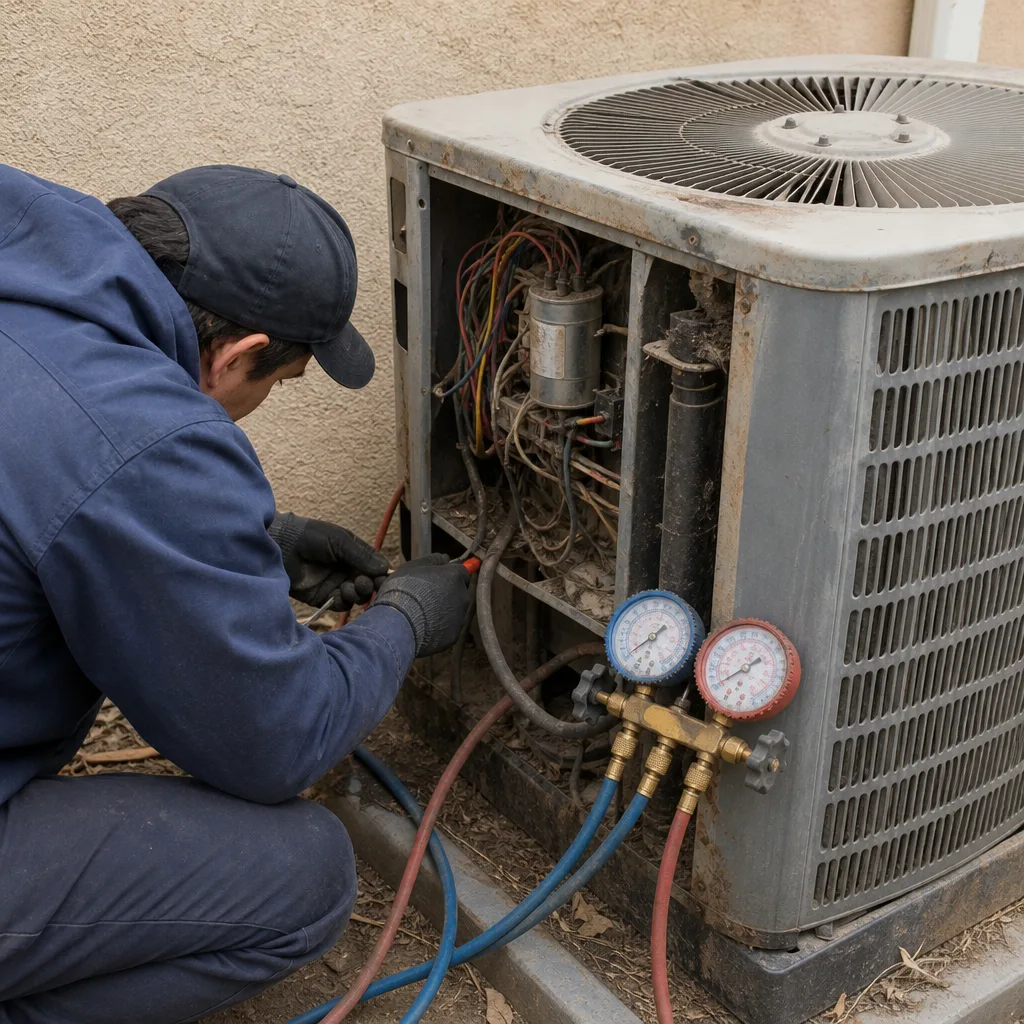 Before
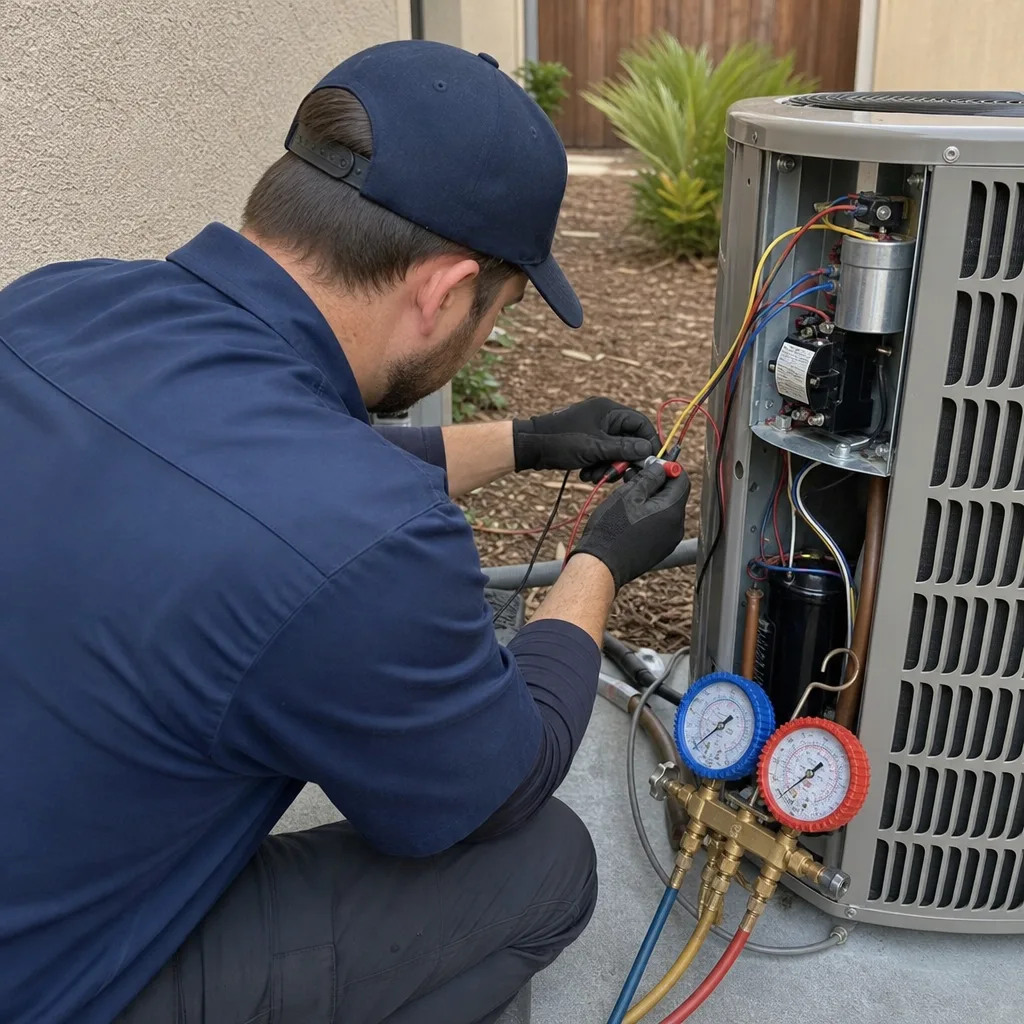 After
After