
Last updated October 16, 2026
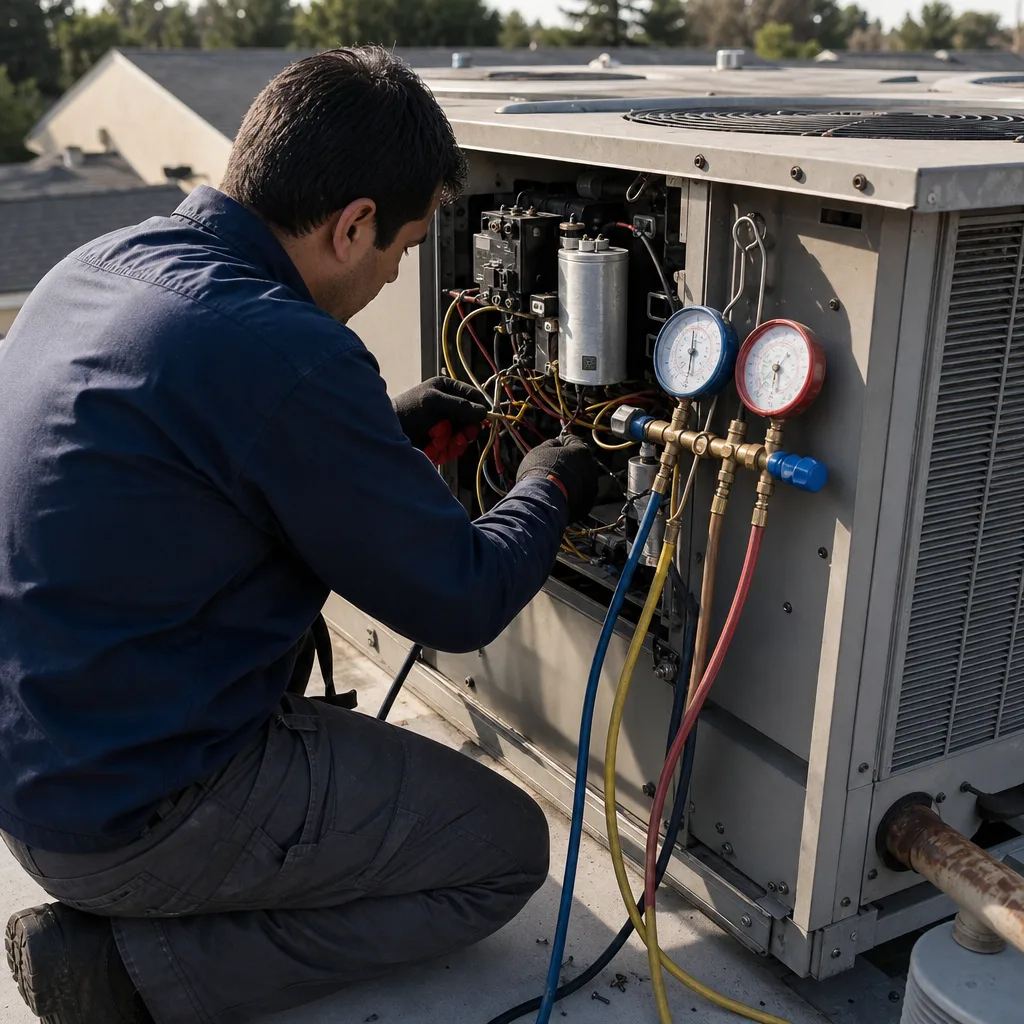
 AC repair
 Furnace & heating
 Heat pumps
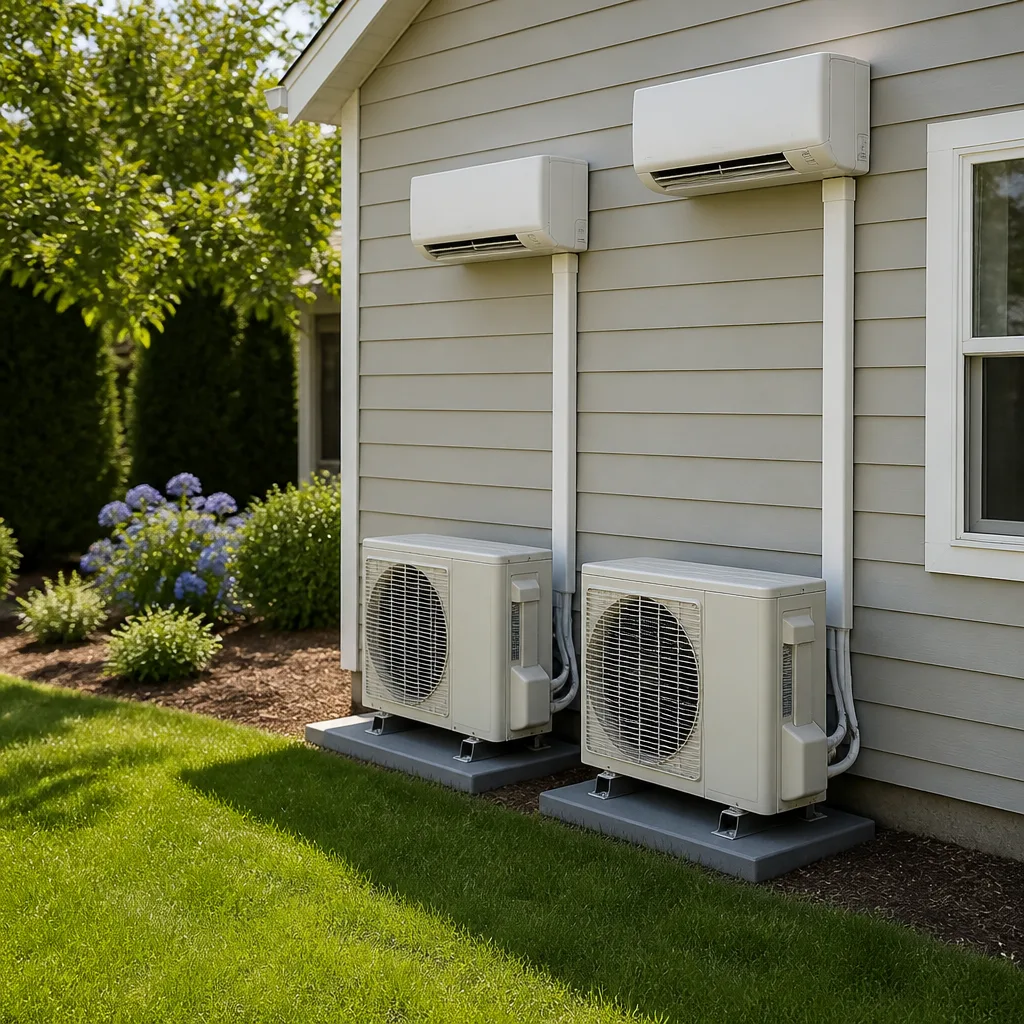 Ductless mini splits
 Carrier
 Trane
Trane Goodman
Seasonal tune-up and full diagnostic on your Carrier, Trane, or Goodman system - readings shown to you before any repair is proposed
Diagnosis first, numbers second - you approve the repair price before a single part goes in.
Get your free estimateHow to Hire a HVAC Contractor in Fresno: A Step-by-Step Guide
Here is a number that should stop you cold: a 2023 CSLB enforcement report found that unlicensed contractor activity in the Central Valley spikes sharply during summer heat emergencies, exactly when Fresno homeowners are most desperate and least likely to check credentials. When your AC dies on a 105-degree July afternoon, the instinct is to call the first number that promises same-day service. That instinct is how people get burned, sometimes literally. This guide walks you through every step of hiring an HVAC contractor in Fresno the right way: verifying licenses, understanding what bonded and insured actually protects you against, reading estimates so you don’t sign an open check, and confirming the person at your door is exactly who the company said they were sending.
Quick Answer
To hire an HVAC contractor in Fresno, verify their California C-20 HVAC license on the CSLB website, confirm they carry general liability insurance and a bond, get a written flat-rate estimate before any work begins, and ask for the technician’s name and photo before they arrive at your door. A trustworthy contractor will hand you all four without hesitation. If any of these steps meets resistance, that is your signal to call someone else.
Styles & brands we work with
Table of Contents
- How to Verify a California HVAC License in Under 90 Seconds
- What ‘Bonded and Insured’ Actually Means for a Fresno Homeowner
- The Four Questions to Ask Before a Technician Walks Through Your Door
- How to Read a Written Estimate: Flat-Rate vs. Open-Ended
- Red Flags Specific to Heat-Emergency Dispatch in Fresno
- What a Written Guarantee Should Look Like, and Why You Need One
- A Step-by-Step Hiring Process: From First Call to Finished Job
- Common Mistakes to Avoid
- When to Call a Professional
- Frequently Asked Questions
How to Verify a California HVAC License in Under 90 Seconds
California requires any contractor performing HVAC work on a residential property to hold a C-20 Warm-Air Heating, Ventilating and Air-Conditioning Contractor license issued by the Contractors State License Board, or CSLB, as detailed in our guide to HVAC Permits, Codes & Inspections in CA: What You Need to Know. Not a general contractor license, not a handyman permit. The C-20 classification is specific, and it is the one you want to see. A general B license does not authorize HVAC work, and a plumbing C-36 license does not either. Here is the 90-second process we recommend to every Fresno homeowner:
- Go to the CSLB license lookup page at cslb.ca.gov. It is free and works on a phone.
- Ask the contractor for their license number. Not their business name only. The number. If they won’t give it, the conversation is over.
- Type the number into the CSLB lookup. Confirm the classification says C-20. Confirm the license status says Active. Confirm the business name matches what they told you on the phone.
- Check the license expiration date. An expired license is the same as no license in the eyes of the state.
- Look at the workers’ compensation section. If a contractor has employees and no workers’ comp, and one of those employees gets hurt in your Fresno attic, you could be pulled into a claim.
In our experience, honest contractors in Fresno expect this check. They are used to it. The ones who get defensive or tell you checking is unnecessary are doing you a favor, because they just disqualified themselves. A C-20 license also means the contractor has passed a trade exam and a law exam, carries the required bond, and has at least four years of journeyman-level experience verified by the state. That is the floor, not the ceiling. Homeowners who use our Brandt HVAC Co Fresno home guide know that every recommendation we make starts with this step because nothing else matters if the person is not legally allowed to touch your system.
What ‘Bonded and Insured’ Actually Means for a Fresno Homeowner
Contractors toss the phrase bonded and insured around because it sounds reassuring, but most homeowners never ask what it protects. It protects you, and in specific ways that matter a lot in Fresno, where summer heat routinely pushes AC systems to failure and attic work means technicians in tight, hot, physically demanding conditions.
The bond is a $25,000 contractor’s bond required by the state of California for every licensed contractor. It is not an insurance policy for your equipment. It is a pool of money set aside to compensate a homeowner if a contractor violates state contracting law and causes you a financial loss, and you win a judgment against them. If a contractor takes a deposit and disappears, or does work so far outside code that it has to be redone, the bond may cover part of your loss, up to the bond amount. It is a safety net, not a warranty.
General liability insurance is what covers accidental damage to your property. If a technician drops a furnace on your tile floor or accidentally cuts a refrigerant line and water floods your hallway, the contractor’s liability policy pays for repairs. Without it, you may be fighting to recover damages from a company with no assets to collect against. Ask to see a certificate of insurance with your name added as a certificate holder. Any contractor who can produce one on request is operating like a professional.
Workers’ compensation insurance is the one homeowners forget about, and it is the one that can hurt most. If a technician is hurt on your Fresno property, their medical expenses and lost wages fall to workers’ comp. If the contractor does not carry it, the injured worker may have no choice but to pursue a claim against your homeowner’s policy. Before anyone climbs into your attic or onto your roof, ask: do you carry workers’ comp for your employees? The answer should be yes, and it should be verifiable.
Every technician we send to a Fresno home is background-checked and identity-verified under our Threshold Verified standard, because a warm smile and clean shirt do not mean a person is who they say they are. We tell you the name and show you the photo before the visit, and the technician shows a photo ID badge at the door. This is what certainty looks like in practice.
The Four Questions to Ask Before a Technician Walks Through Your Door
You have verified the license. You have confirmed the insurance. Now the person is standing on your porch, and the instinct to open the door is strong, especially if your house is 92 degrees inside. Slow down. There are four questions to ask before that door opens, and none of them are rude to ask. A professional expects them.
- “What is your name, and did the company send me a photo of you before you arrived?” This sounds simple, and it is. But it stops the most common identity problem we see: a subcontractor showing up who was never introduced to the homeowner. At Brandt HVAC, every customer receives the technician’s name and photo before the visit. If someone shows up at a Fresno door who was not sent in advance, under our Threshold Verified standard that visit is on us and we make it right. No exceptions.
- “Can I see your photo ID badge?” Not a business card. A photo ID tied to the company. A business card is something anyone can print at a UPS store. A company-issued badge with a face and a name is a different thing.
- “Are you an employee of the company I called, or a subcontractor?” There is nothing wrong with a subcontractor who is properly licensed, insured, and introduced in advance. The problem is a subcontractor who appears without warning. You have a right to know who is in your home and who is ultimately responsible for the work.
- “Will you walk me through the problem and the price before any work starts?” A technician who is in a hurry to start pulling parts off a unit without explaining what they are doing and what it will cost is a red flag. The answer to this question should always be yes, and the explanation should be clear enough that you could repeat it to a neighbor.
These four questions matter more in Fresno than almost anywhere else in California because the summer heat pushes so many homeowners into emergency-hire mode. When it is 108 degrees and the house is uninhabitable, the natural defensive instincts shut down. We have built our entire approach around the idea that you should never have to choose between speed and safety.
How to Read a Written Estimate: Flat-Rate vs. Open-Ended
The estimate itself is where honest contractors separate themselves from the rest, and the difference comes down to one word: flat-rate versus open-ended. Here is how to tell which one you are holding, in about 30 seconds.
A flat-rate quote gives you one number for the complete job, parts and labor included, before work starts. Not a range, not an estimate that can drift. A number. If the job is a furnace igniter replacement, a flat-rate quote says something like: igniter replacement, parts and labor, $285. Done. If the job takes longer than expected, you pay $285. If the technician needs a second trip for a part, you still pay $285. That is how flat-rate pricing works, and it is the only way we quote at Brandt HVAC. A written price before any work starts, always, on every job, with no exceptions. If you are comparing HVAC contractors in Fresno, this single difference should carry more weight than any slogan.
An open-ended quote is written as time and materials, or hourly plus parts, or some other formula that leaves the final number unknown. On a simple repair this might work out fine. On a complex diagnostic job with a system that has multiple failures, open-ended pricing gives the contractor an incentive to work slowly and you no protection against a bill that arrives at double the original guess. A verbal quote is not a quote. It is a statement of intention. If a contractor will not put the number in writing before starting, tell them no thanks.
A third thing to check on a written estimate: does it list the specific parts, the specific repair, and the specific guarantee period? A line that just says AC repair, $400 tells you nothing. Ask for detail. A real estimate for a Fresno home names the part, the diagnosis, and the warranty. You would not buy a car with a sticker that just said vehicle, and you should not buy an HVAC repair with one that says repair.
Red Flags Specific to Heat-Emergency Dispatch in Fresno
Fresno summers are brutal, and every HVAC company in the Central Valley knows it. The average high in July sits above 98 degrees, and triple-digit stretches of ten days or more are common from June through early September. When your AC fails in that window, you are not shopping. You are surviving. Unlicensed operators know this, and they build their entire business model around it. Here are the red flags we see most often in Fresno heat-emergency situations:
- Verbal-only quotes. A technician who says the price out loud but never writes it down. After the work is done, the number changes. You have no record of what was promised.
- Unmarked vehicles. A legitimate HVAC company invests in branded trucks. An unmarked van that shows up twenty minutes after your frantic call tells a story you should listen to.
- No pre-arrival technician introduction. You called a company, but you have no idea who is coming. No name, no photo, no ETA text. When the doorbell rings, a stranger is there and you are supposed to just let them in.
- Pressure to decide immediately. A contractor who warns you the price is only good for the next hour, or that another customer is waiting for the same part. Real flat-rate pricing does not expire in an afternoon.
- No written guarantee. If a repair is not guaranteed in writing, you are paying twice when it fails. Heat-emergency work fails more often than most repairs, because the system was already running at its limit when the problem appeared.
- A quote that seems suspiciously low. One of the oldest plays in the book: a $79 diagnostic that turns into a $1,700 repair for a problem that may not exist. Cheap entry, expensive exit.
None of this means every low-priced contractor is dishonest. But it does mean you should apply the same verification steps on the hottest day of the year that you would on the mildest. The heat does not suspend the rules. It is exactly when the rules protect you most.
What a Written Guarantee Should Look Like, and Why You Need One
A guarantee that is not written down is a compliment, not a contract. When a Fresno HVAC contractor says we guarantee our work but won’t put it in writing, you are relying on memory and goodwill. Memory fades and goodwill is not enforceable. Here is what a real written guarantee includes, and what you should look for before you sign anything.
The scope: what exactly is covered. Does the guarantee cover the part that was replaced, the labor to replace it again, or both? A furnace igniter that fails in month two should mean a new igniter and the labor to install it, at no charge. A vague guarantee that covers nothing specific covers nothing.
The duration: how long it lasts. Thirty days is standard in parts of the industry, and it tells you something about the contractor’s confidence. At Brandt HVAC, every repair carries a written guarantee that spells out exactly what it covers and for how long. If a repair fails within the guarantee period, the return visit is free, no argument, no additional charge. That is the 365-Day Done Right Promise, and it is not a marketing phrase. It is a statement of how the repair will be handled if it does not hold up. A contractor who will not guarantee their work for at least a full year is telling you, in the clearest possible terms, that they do not expect it to last either.
The remedy: what happens if the repair fails. A guarantee that promises to come back and look at the problem is not a guarantee. The written remedy should state a free return visit, a free re-repair, and no additional charges for parts or labor within the stated period. If the guarantee has exclusions that gut it, such as excludes all compressor failures or excludes all refrigerant leaks, ask why. Some exclusions are legitimate, such as damage from a power surge unrelated to the repair. But a guarantee full of carve-outs is a guarantee in name only.
How it interacts with the manufacturer’s warranty. Good contractors register the equipment or part warranty for you and explain how the manufacturer’s coverage overlaps with their own workmanship guarantee. The manufacturer covers defects in the part. The contractor covers the quality of the installation. You want both in writing.
A written guarantee is the difference between a contractor who stands behind their work and one who is hoping you will not call back. In our experience serving Fresno homeowners, the ones who ask for the guarantee in writing are the ones who never need it, because the conversation itself filters out the wrong contractors before any work begins.
A Step-by-Step Hiring Process: From First Call to Finished Job
This is the full process, in order, for hiring an HVAC contractor in Fresno. It works for routine maintenance, complex repairs, and full system replacements alike. Print it, save it, or just keep it open on your phone when you start making calls.
- Gather your system details. Write down the brand, the model number if you can find it, and the age of your system. This information is on a sticker on the indoor air handler and the outdoor condenser unit. It helps the contractor prepare, and it signals to them that you are an informed customer. We service all major residential brands, including Lennox, Goodman, Rheem, and York, so the brand rarely matters for the repair itself, but the age and model inform the diagnostic.
- Make initial calls during business hours if you can. Emergency calls at 2 a.m. are sometimes unavoidable, but if you have a non-emergency issue, calling during normal hours gives you the full attention of the team and lets you compare contractors without the clock running. That said, a live person should answer the phone whenever you call, including nights, weekends, and holidays. At Brandt HVAC, our phones are staffed by a live person 24 hours a day, 7 days a week. You will not get a voicemail tree.
- Ask for the license number on the first call. Do this before you even give your address. A legitimate contractor recites it from memory or pulls it up in seconds. Then run the CSLB lookup. If every check passes, move to step four.
- Request a written diagnostic fee and a service window. Know what the visit costs and when the technician will arrive. A company that cannot tell you either has an operations problem, and that problem will become your problem.
- Get the technician’s name and photo before dispatch. When you book the visit, the company should tell you who is coming. At Brandt HVAC, we send the technician’s name and photo before every visit, and the technician carries a photo ID badge shown at the door. This is our Threshold Verified standard in action.
- Be home for the diagnostic, and ask questions. You do not need to stand over the technician’s shoulder, but you should be present, and you should understand the diagnosis well enough to explain it. A good technician will walk you through what they found, what caused it, and what the fix involves.
- Review the written estimate before approving any work. Flat-rate number, specific parts, specific labor, written guarantee period. If the estimate is verbal or the number is unspecified, stop and call another contractor. No work should ever begin without your written approval of a written price.
- Pay after the work is complete, not before. A deposit on a major system replacement is normal, but full payment before a repair is completed is not. Confirm the system is running before you hand over a check or run a card.
- Get the written guarantee in hand. Before the technician leaves, you should have a warranty document that states what is covered, for how long, and what happens if it fails. If the contractor says they will email it later, do not pay until the email arrives.
This process takes fifteen extra minutes total, spread across the job. It is the difference between a repair you never think about again and a repair you regret for a year. If you would like to walk through this process with a Fresno contractor who follows it on every single job, our team is available at (559) 354-6878.
Common Mistakes to Avoid
- Hiring the first contractor you call during a heat emergency without running a license check. Desperation in a Fresno July is exactly what unlicensed operators count on. The CSLB lookup takes ninety seconds and it is the single most important thing you can do.
- Accepting a verbal quote. A spoken number is worth the paper it is printed on, which is none. If a contractor will not write down the price before starting work, you have no recourse when the bill arrives higher.
- Assuming “insured” covers workers. General liability insurance covers your property. It does not cover an injured technician. Ask specifically about workers’ compensation coverage before anyone works in your home.
- Letting a technician into your home without a pre-arrival introduction. If you do not know the name and face of the person coming to your door, you cannot confirm the person standing there is the one the company sent. This is a security gap, not just a service gap.
- Choosing the lowest price without comparing what it includes. A $79 diagnostic is not a deal if the follow-up repair is $400 more than the competitor’s flat-rate quote. Compare total job cost, not entry price.
- Paying in full before the job is finished and tested. Once the money is gone, the leverage is gone. Test the system. Check the airflow. Confirm the repair holds. Then pay.
- Ignoring the age and condition of the system when deciding repair vs. replace. A $1,200 repair on a 19-year-old AC unit in Fresno’s climate may be throwing good money after bad. Ask the contractor to explain the system’s remaining life, and get a second opinion if it is close.
When to Call a Professional
Some HVAC issues are DIY solvable: changing a filter, clearing debris from around the outdoor unit, checking that a breaker has not tripped. Others are not, and you will know the difference by how quickly the problem escalates. If your AC is blowing warm air during a Fresno heat wave and the thermostat is set correctly, that is a refrigerant, compressor, or electrical issue, not a filter issue. If your furnace is short-cycling, making a burning smell, or throwing a flame rollout, you are dealing with combustion and you should shut it down and call a professional immediately. If you hear a loud buzzing from the condenser or the blower motor, stop running the system. Continuing to run a failing component almost always turns a $300 repair into a $1,500 replacement. AC Repair in Fresno is not a place for guesswork when the heat index is over 100, and Furnace Repair in Fresno involves gas and electrical components that demand training. Brandt HVAC Co Fresno offers free estimates in Fresno, and you can call (559) 354-6878 to talk through what you are seeing before anyone even visits.
Frequently Asked Questions
Check the CSLB website at cslb.ca.gov and search by the contractor’s license number. The license must be active, the classification must be C-20 for HVAC work, and the business name on the license should match the business you called. This check takes less than two minutes and is free.
Most common residential HVAC repairs in Fresno run between $150 and $850, depending on the part and the system. A capacitor replacement typically lands around $180 to $350 parts and labor included, while a blower motor replacement may run $450 to $800. A condenser fan motor sits in the $300 to $550 range. These are flat-rate ranges, not time-and-materials estimates, and your exact price should be written down before the work begins.
If your system is more than 12 years old and the repair costs more than a third of a new system, replacement is usually the better financial call, especially in Fresno where AC units work harder than they do in most of the country. A good contractor will give you the repair cost, the system’s remaining life estimate, and the replacement cost, then let you decide without pressure.
The C-20 classification is the California contractor license specifically for warm-air heating, ventilating, and air conditioning work. It requires a state exam, a law exam, at least four years of verified journeyman experience, a contractor’s bond, and a clean background review. If the license you are handed says anything other than C-20, the person is not licensed to do HVAC work in California.
Yes, but speed should not come at the expense of verification. A reputable Fresno HVAC company can dispatch same-day for emergencies while still giving you the technician’s name and photo in advance, a written price before work starts, and a written guarantee on the repair. If a company offers next-hour service but balks at those three things, call someone else. Our team at Brandt HVAC answers live 24/7 at (559) 354-6878, including during summer heat emergencies, and every technician is introduced before arrival.
Most full system replacements and new installations in Fresno require a city permit, and your contractor should handle the permit filing as part of the job. Repairs and part replacements generally do not require a permit. Ask your contractor up front whether the work requires a permit, and if they tell you a full replacement does not, call the city of Fresno building department to verify, because that is not correct. To keep older systems from needing that big replacement sooner than necessary, AC Maintenance in Fresno is a smart annual habit and our team can help with that too.
The Bottom Line
Hiring an HVAC contractor in Fresno is a trust decision before it is a price decision, and the process in this guide exists to make the trust verifiable. Check the license, confirm the insurance, demand a written flat-rate price, get the technician’s identity before they arrive, and require a written guarantee that names what it covers and for how long. Every one of these steps is free, takes minutes, and will protect you from the worst of what the industry can throw at a desperate homeowner in the middle of a Fresno heat wave. Trust is not a vibe. It is a process. Follow it, and the contractor you hire will have earned the door you open. For more guides & resources on protecting your home, visit our blog. For a free estimate from a team that follows this process on every job, call Brandt HVAC Co Fresno at (559) 354-6878.
Written by Devin Marlowe, Owner at Brandt HVAC Co Fresno, serving Fresno since 2003.
See the difference
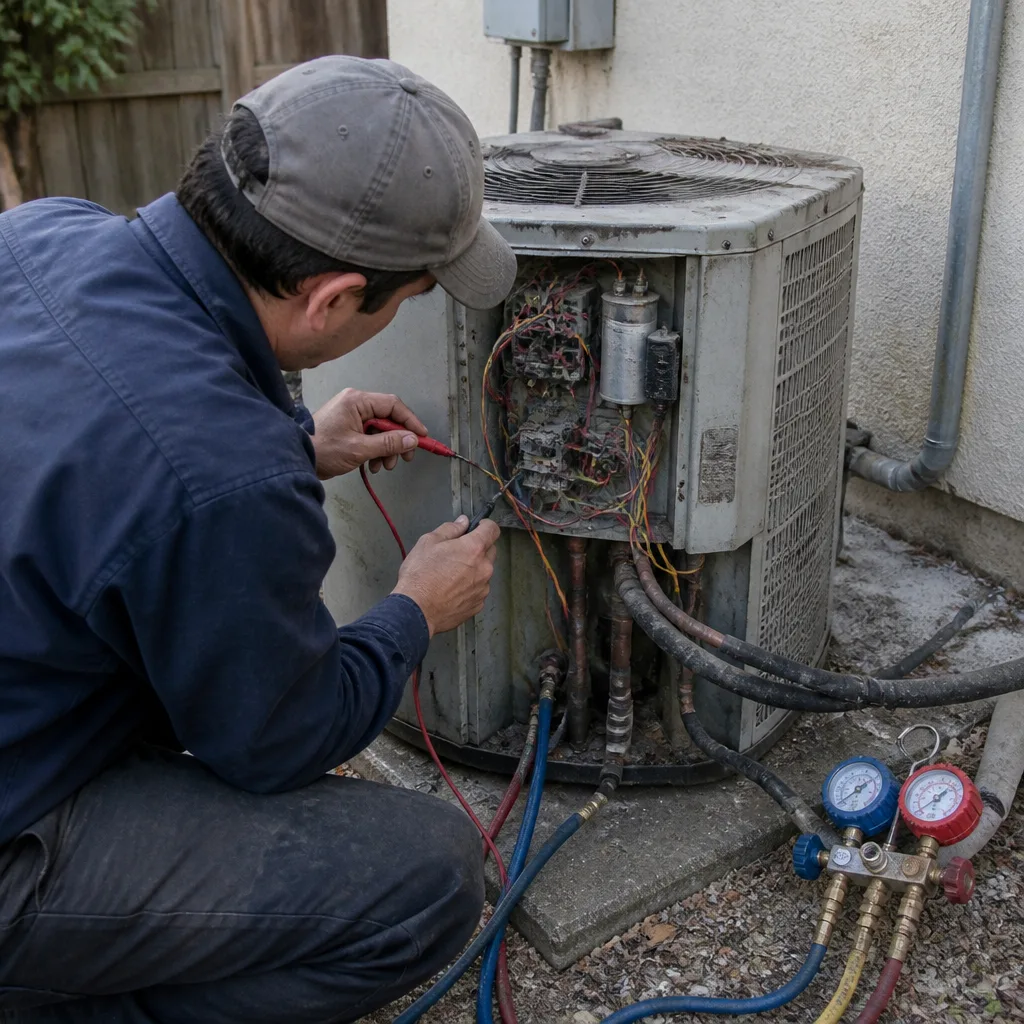 Before
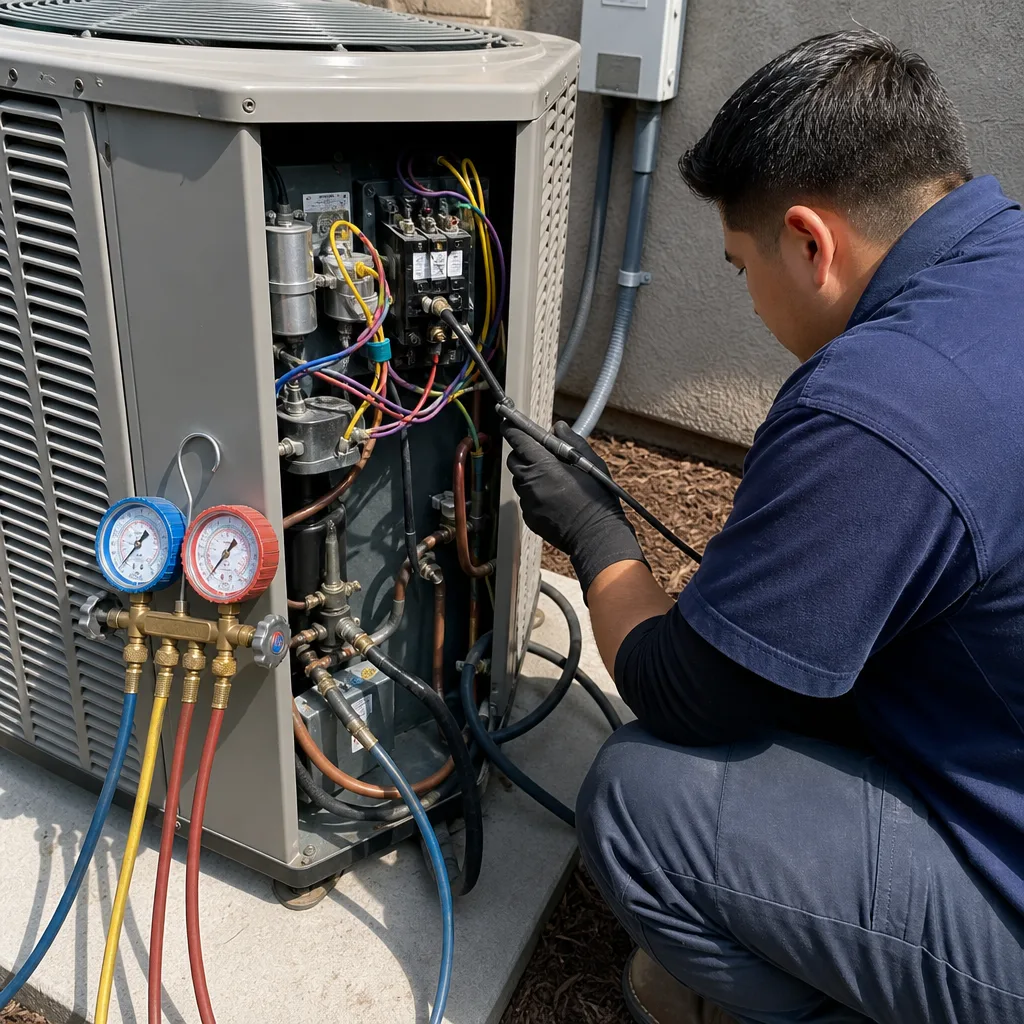 After
After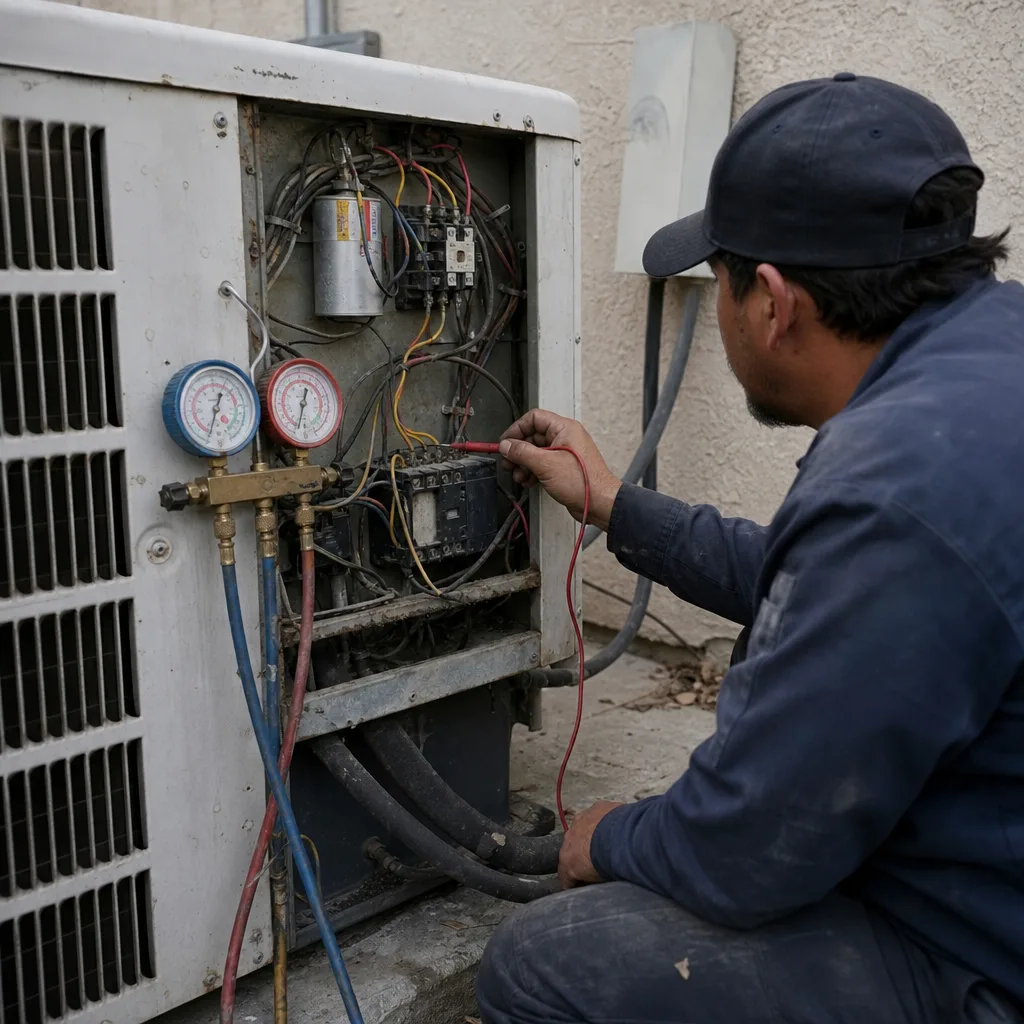 Before
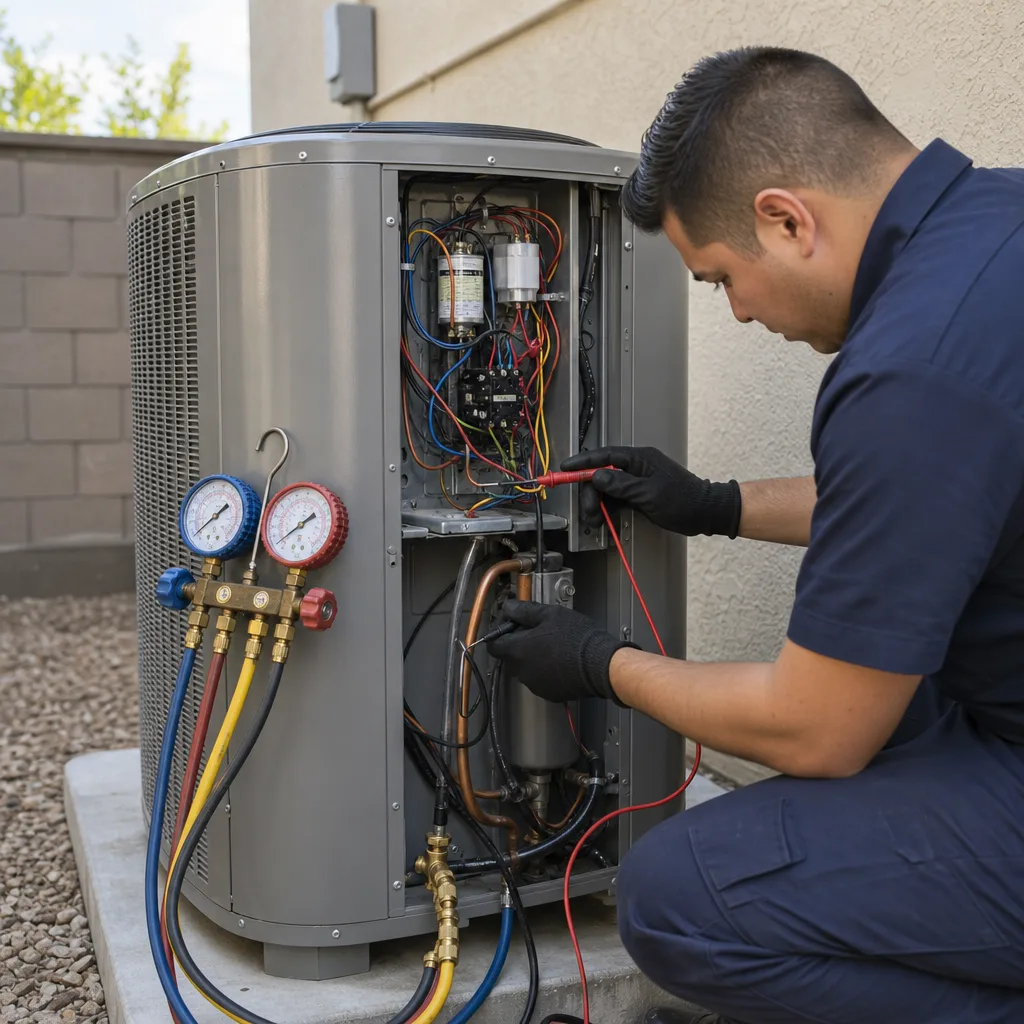 After
After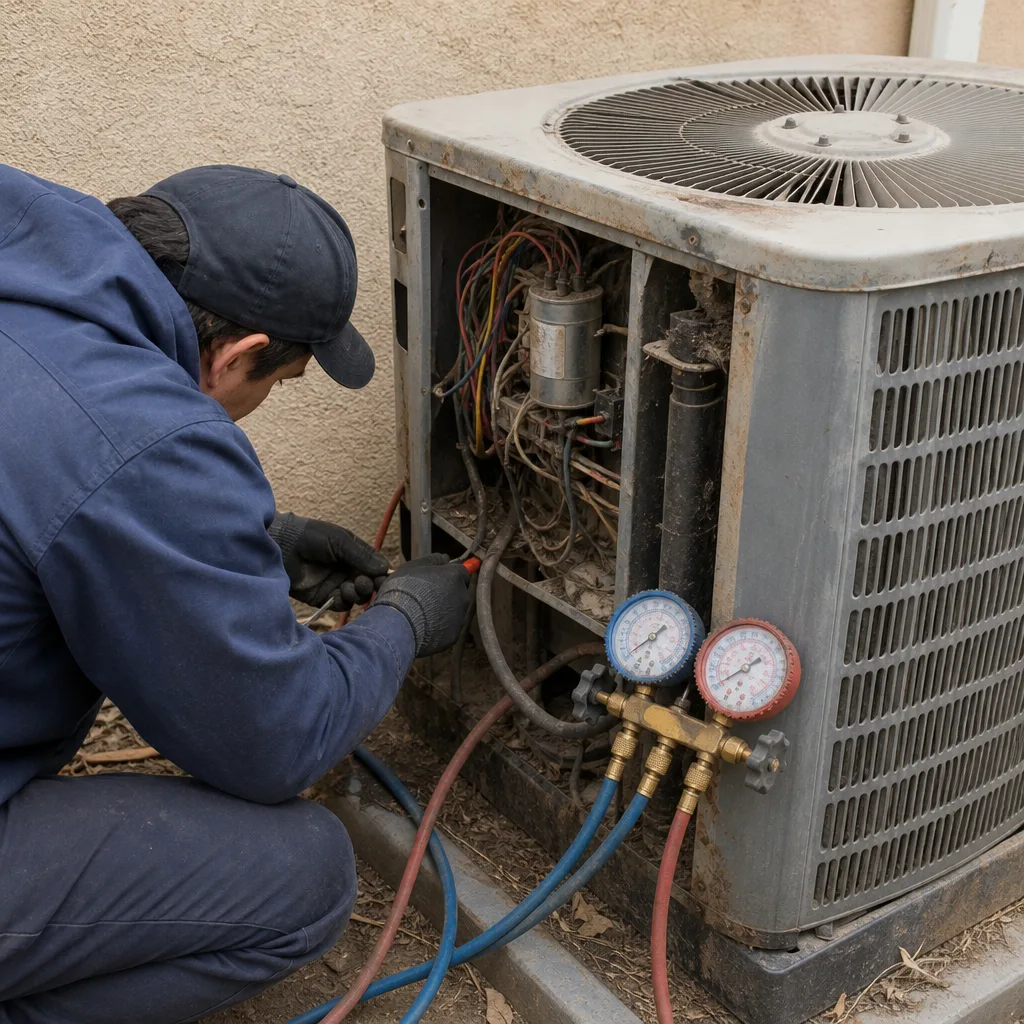 Before
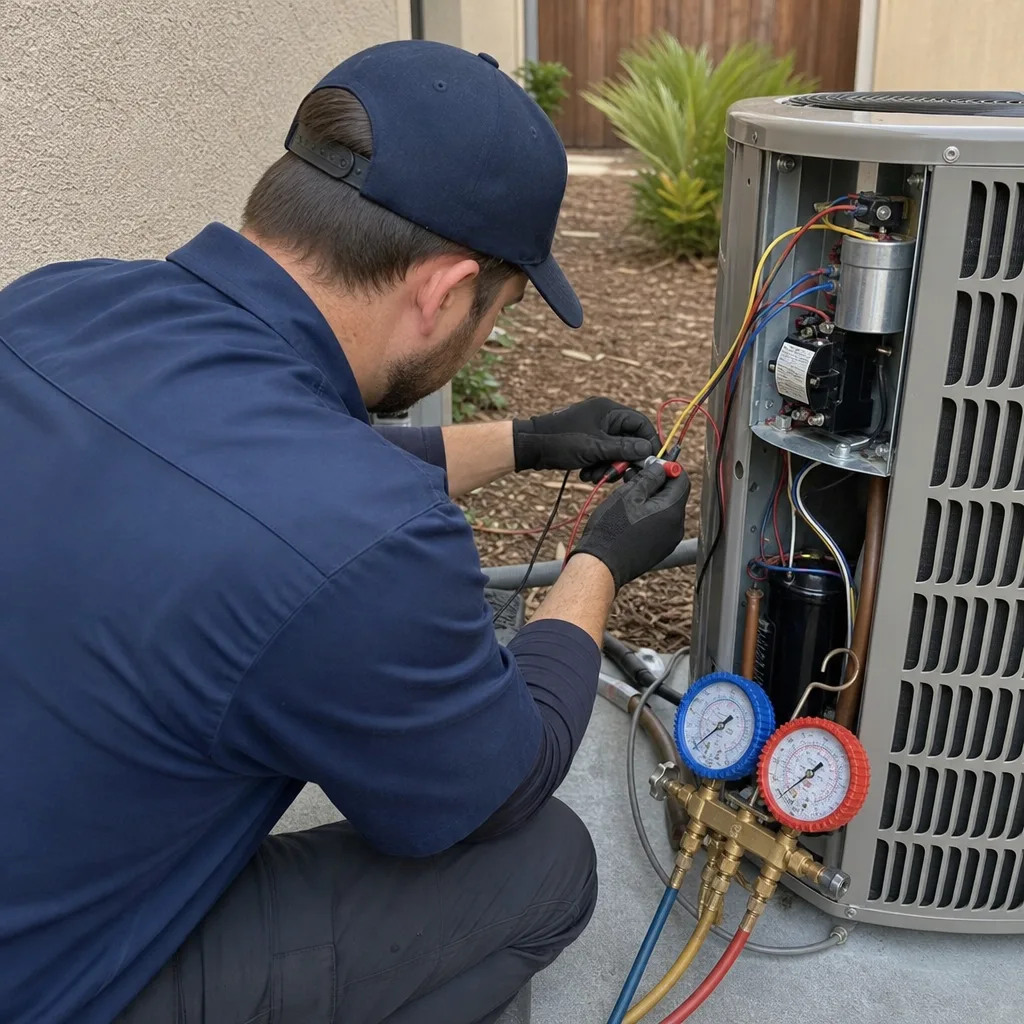 After
After