
 Trane
Trane AC repair
 Furnace & heating
 Heat pumps
 Ductless mini splits
 Carrier
 Goodman
Seasonal tune-up and full diagnostic on your Carrier, Trane, or Goodman system - readings shown to you before any repair is proposed
Diagnosis first, numbers second - you approve the repair price before a single part goes in.
Get your free estimateTrane Capacitor Replacement: The Fresno Owner’s Guide
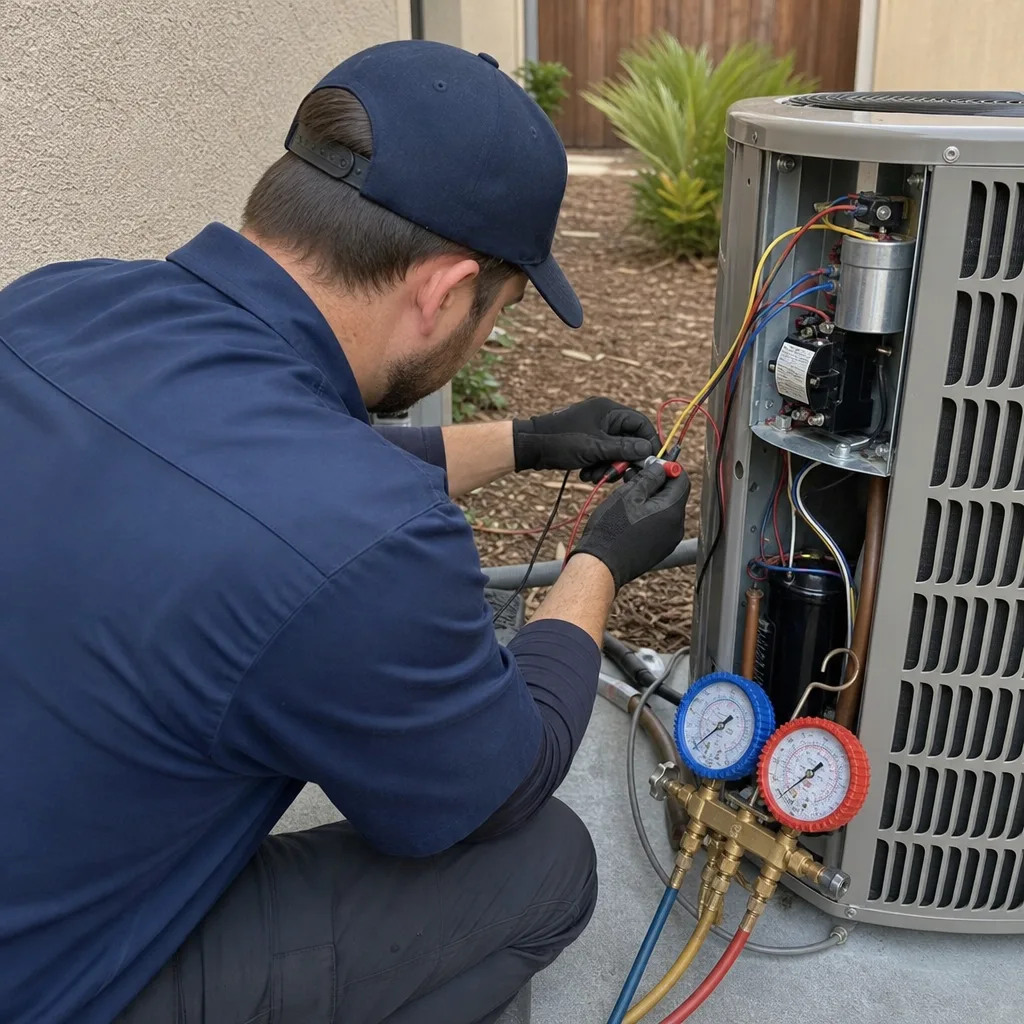
A Trane capacitor replacement in Fresno typically runs $150 – $320 installed, parts and labor included, and we can usually get it done the same day you call. The capacitor is the small cylinder inside your condenser or air handler that stores the electrical charge needed to start the compressor and fan motor. When it fails, which happens a lot in Fresno heat, the most common story we hear is this: the outdoor unit hums but the fan won’t spin, or the system tries to start and then clicks off a few seconds later.
Capacitors are rated in microfarads (μF) and voltage. Trane units, especially the XR and XL series, tend to use dual-run capacitors (one can, two ratings) rather than separate start and run capacitors. The wrong rating won’t just fail to start the motor; it can cook the compressor windings over a Fresno summer. That’s the main reason we match the part to the model plate on the unit rather than guessing from a photo on a homeowner’s phone.
We’re an independent service provider, not affiliated with Trane, but we stock Trane-compatible capacitors on our trucks alongside Carrier and Lennox parts, so most Fresno calls are resolved in one visit.
Which Trane Models This Applies To
We replace capacitors across the Trane residential lineup: XR13, XR14, XR15, XR16, XL14i, XL15i, XL16i, XL18i, XL20i, and the newer XV series, plus Trane packaged units and heat pumps. The part number on the capacitor itself matters more than the model number on the unit. Trane often sources capacitors from suppliers like AmRad, Genteq, or Titan, and the label on the side of the can shows the microfarad rating (for example 45/5 μF or 35/5 μF) and voltage (usually 370V or 440V).
Here’s the compatibility gotcha we see in Fresno every week: a technician replaces a 370V capacitor with a 440V one, which is fine electrically, but when they grab a 35/5 and the system calls for a 45/5, the fan will run slow and the compressor will overheat. The label on your existing capacitor is the reference. Pull it off, lay it flat, and read the numbers printed on the side. If the label is sun-bleached or illegible, which happens after a few Fresno summers on a west-facing condenser, we read the motor data plate instead and cross-reference it against Trane’s published specs.
On the OEM versus aftermarket question for Trane specifically: an OEM Trane capacitor carries the Trane part number and usually lands at the higher end of the price range. A quality aftermarket capacitor from AmRad or Titan, with the same μF and voltage ratings, performs identically and often carries a better manufacturer warranty. We’re happy to install either, and we’ll show you the difference in writing before we do anything.
Styles & brands we work with
Signs Your Trane Capacitor Replacement Is Failing
- Outdoor unit hums but the fan doesn’t turn. This is the classic capacitor failure. The compressor or fan motor is getting voltage but not enough starting torque. The hum is the motor telling you it’s stuck.
- System short-cycles or clicks on and off. The capacitor can’t hold a charge long enough to keep the motor running. In Fresno, this often shows up first on a hot afternoon when the system has been running hard all day.
- The fan spins slowly or only when nudged with a stick. A capacitor that’s lost some of its microfarad rating still delivers partial voltage. The motor runs at reduced speed, which cuts airflow and raises your energy bill.
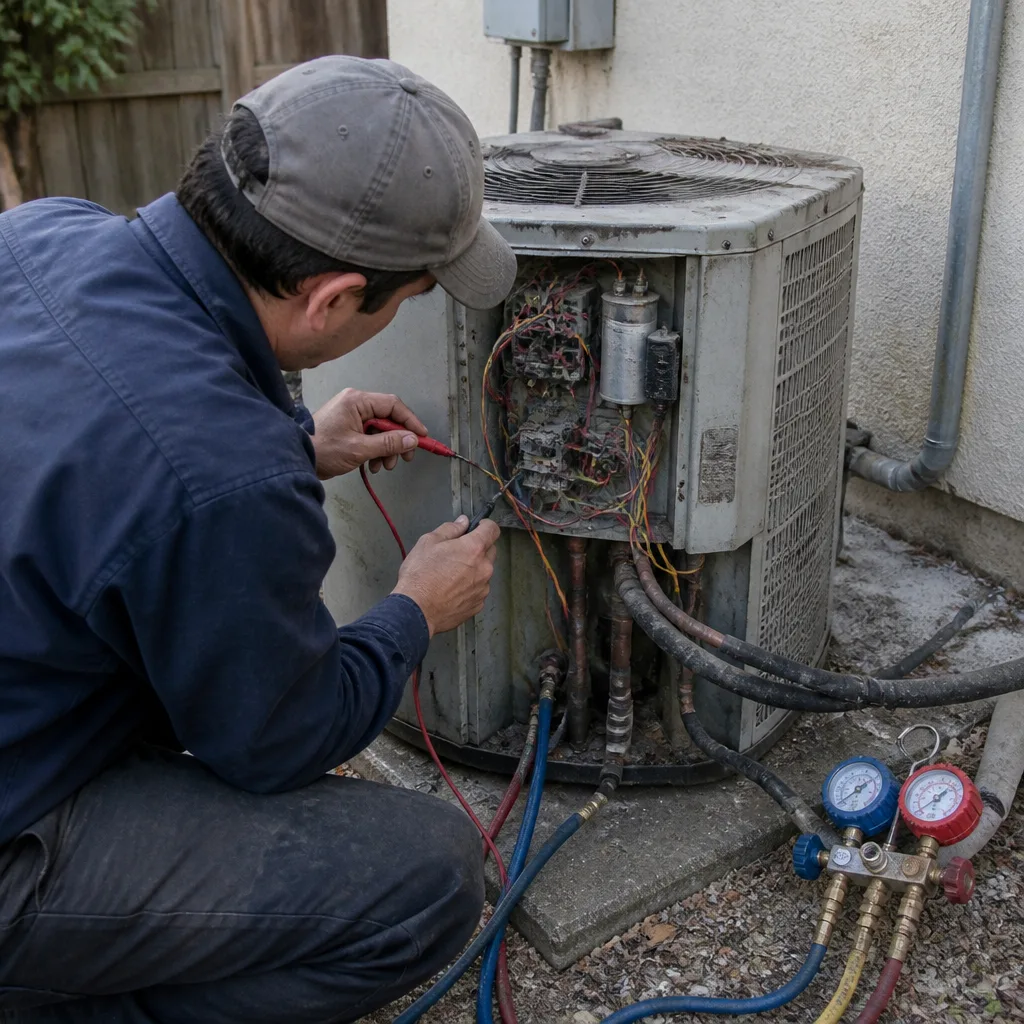
- Bulging, leaking, or split capacitor case. Open the service panel (power off at the breaker first) and look at the capacitor. A swollen top or oily residue around the terminals means it’s done. Fresno heat accelerates this; capacitors here don’t last as long as they do in milder climates.
- Hard-start kit was added years ago and now the unit struggles anyway. Trane units that have been fitted with a start-assist component can mask a failing capacitor for a while. When the assist is working but the system still labors to start, the capacitor underneath is usually weak.
See the difference
 Before
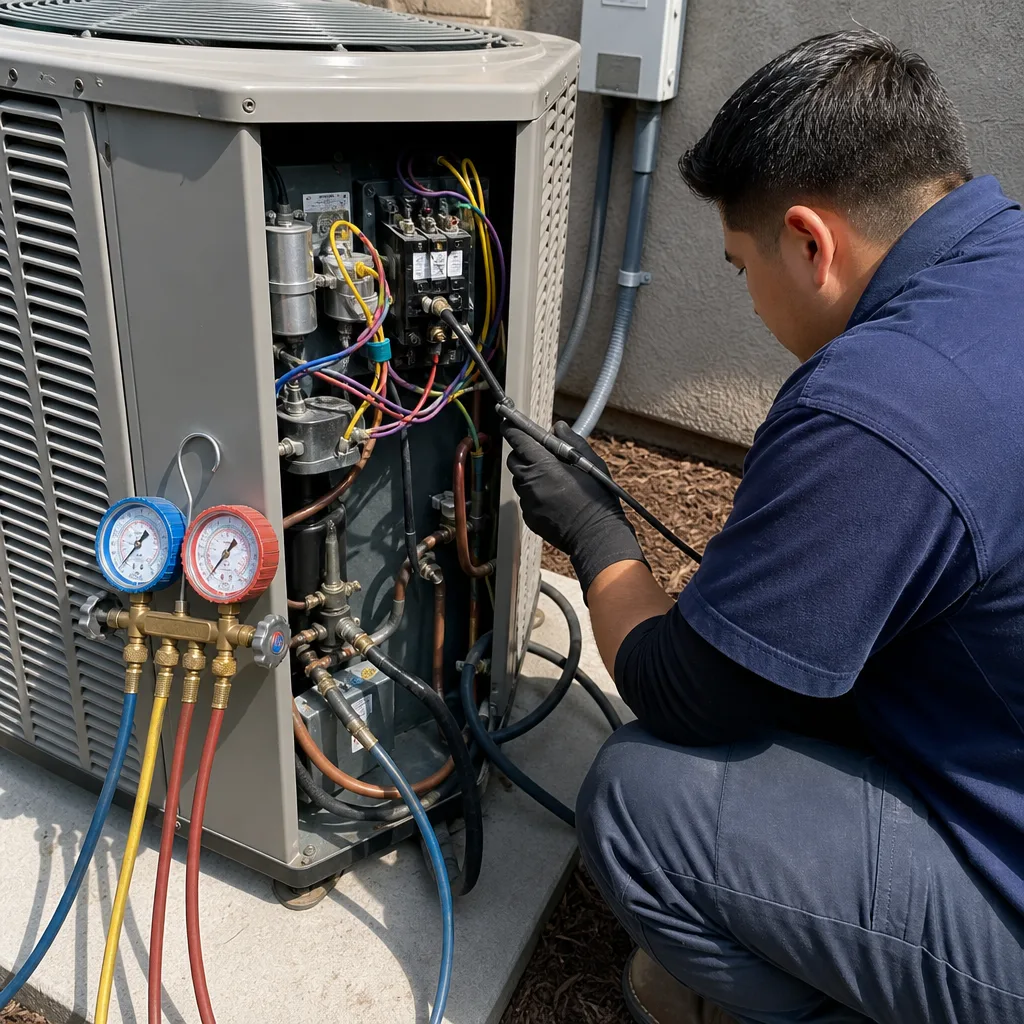 After
After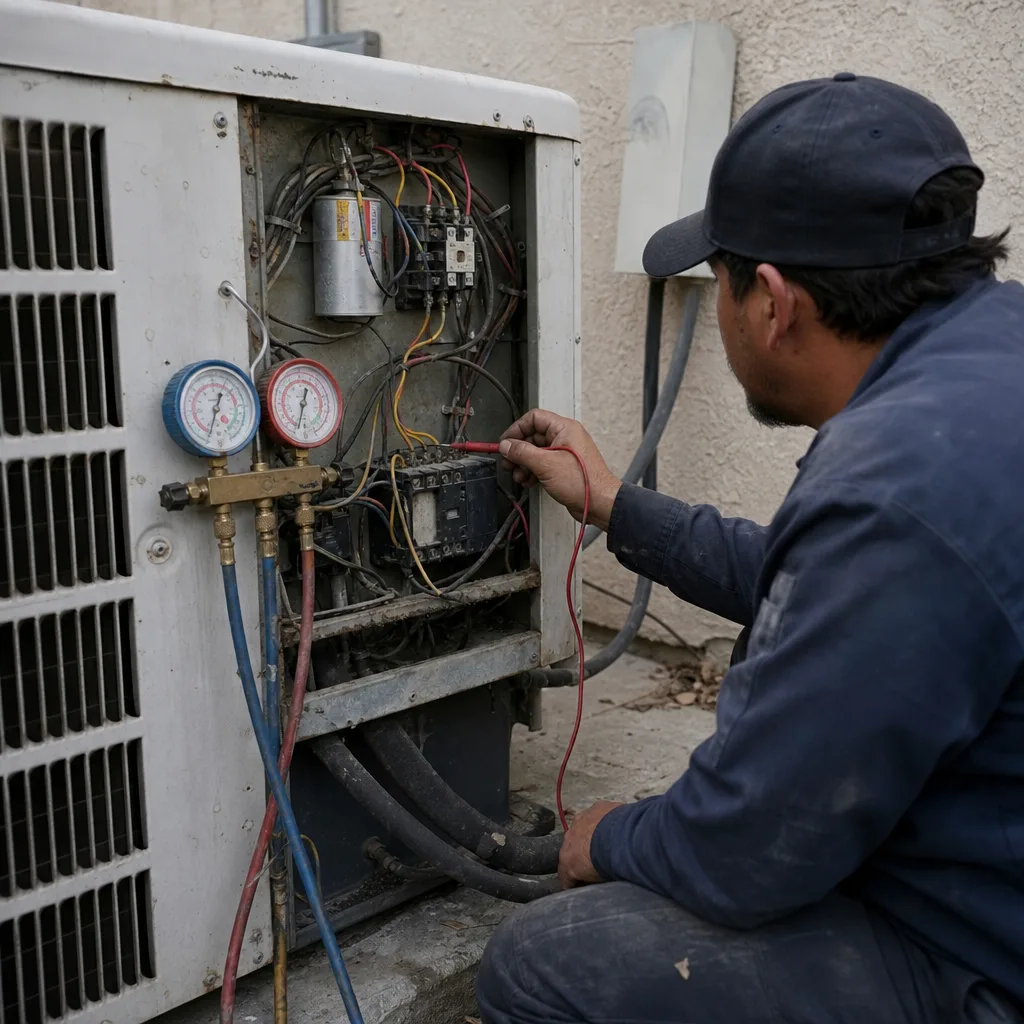 Before
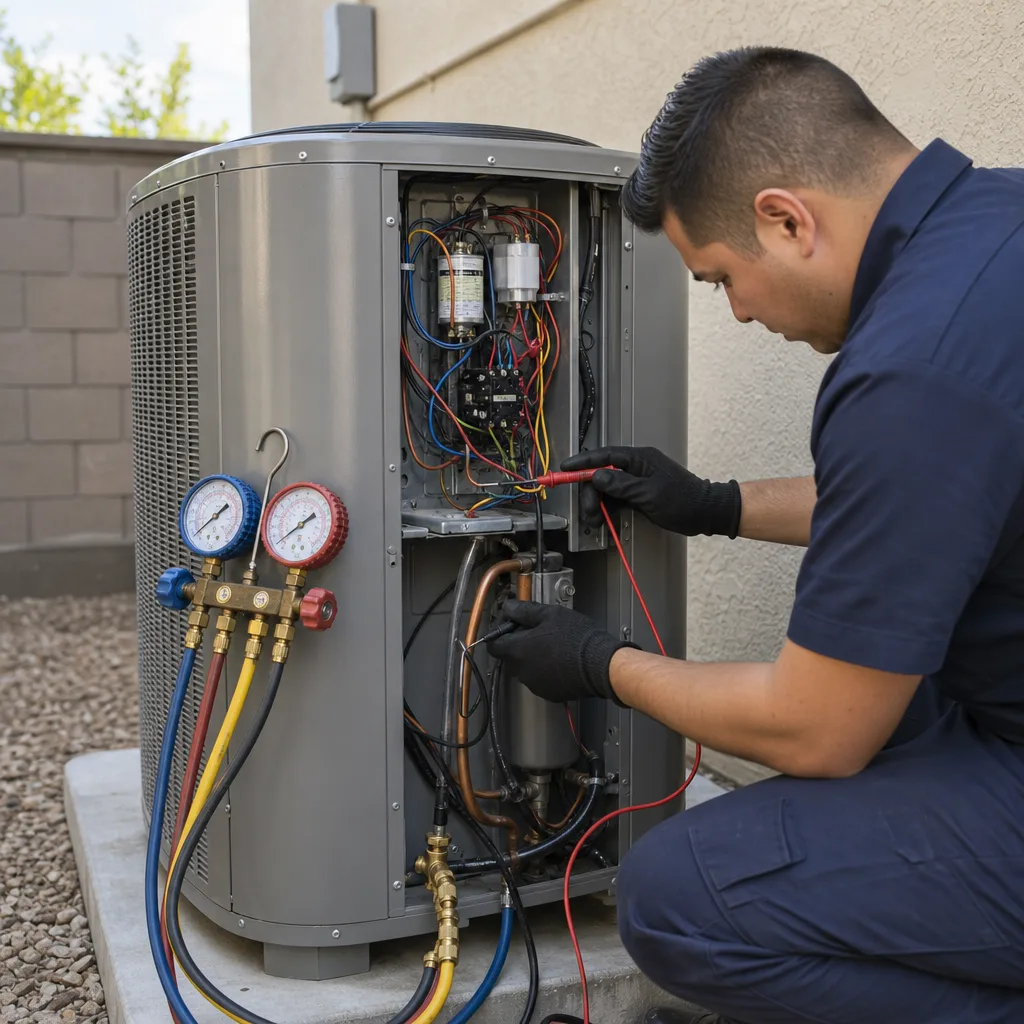 After
After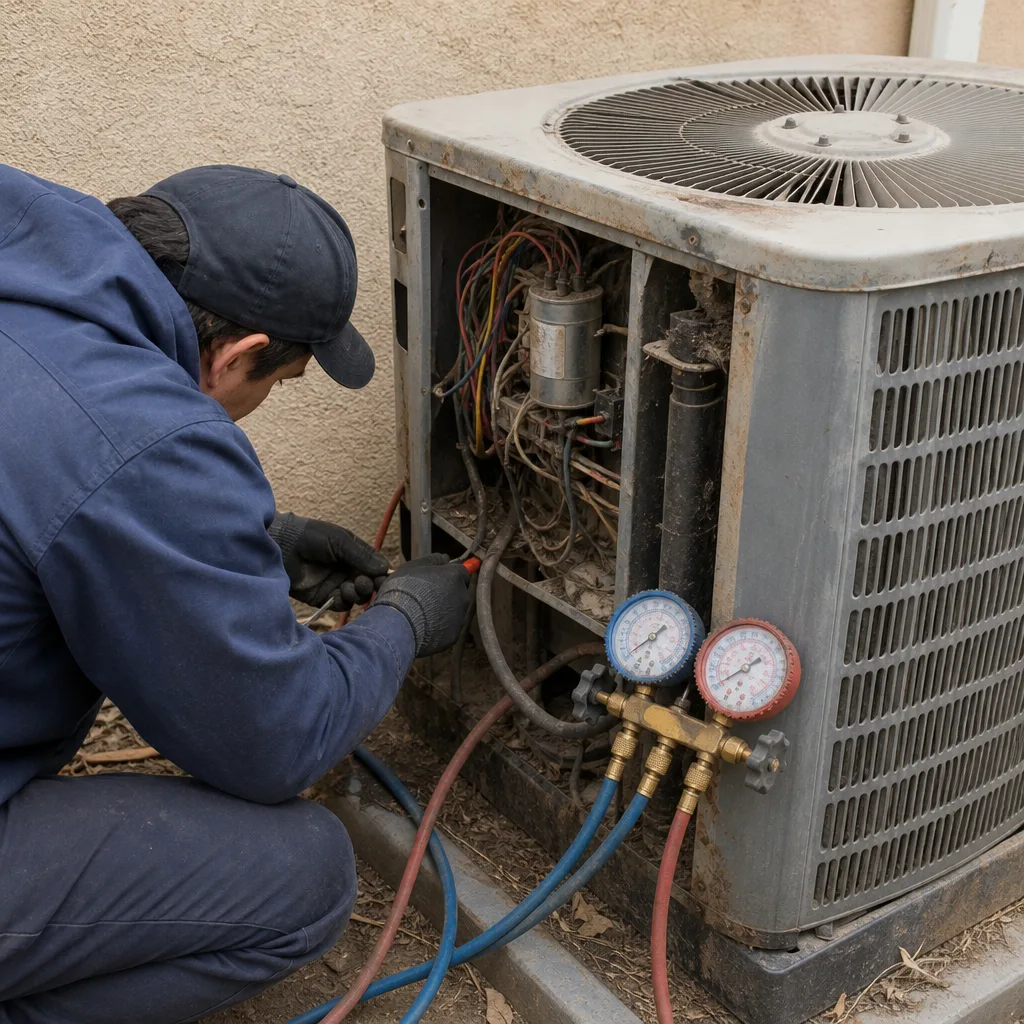 Before
 After
AfterReplacement Cost & What’s Included
Trane capacitor replacement in Fresno runs $150 – $320 installed, depending on the capacitor rating and whether we’re replacing a single-run or dual-run part. A basic 35/5 or 45/5 dual-run capacitor in a typical XR or XL condenser is usually at the lower end. A more specialized rating, a hard-start kit, or a capacitor inside an air handler that’s hard to access pushes toward the upper end.
What’s included in that price: the capacitor itself, the labor to install it, a full system start-up test to confirm the compressor and fan are running within spec, and a written guarantee on the repair for 365 days under our Done Right Promise. If the capacitor fails within that year, we come back and replace it at no charge. You’ll see the price in writing before we pick up a tool. No exceptions on that, and no one starts work until you’ve agreed to the number.
DIY or Call Us?
Replacing a capacitor involves stored electrical charge, and that’s the part we want you to take seriously. A capacitor holds a charge even after the unit is powered off, and it can deliver a shock that hurts. If you’re comfortable working on electrical equipment, you can safely inspect the capacitor by shutting off the breaker, pulling the service disconnect, and visually checking for a bulged or leaking case. That’s a reasonable homeowner check.
What we don’t recommend is swapping the part yourself unless you understand how to safely discharge the capacitor. Even with the right tools, misreading a faded label and installing the wrong microfarad rating can damage the compressor, and that’s a $2,500+ mistake on a Trane. If the case is swollen or you hear the hum, call us at (559) 354-6878 and we’ll get it sorted the same day. Devin Marlowe grew up around this trade and has seen too many DIY capacitor jobs turn into compressor replacements to pretend it’s a no-risk swap.
FAQs
A Trane capacitor typically lasts 5 to 10 years, but in Fresno’s summer heat, where condenser units run hard from May through September, capacitors often fail closer to the 5-year mark. Heat is the number one killer of capacitors. The dielectric material inside breaks down faster when the unit sits in direct sun on a 105-degree day.
No, a failed capacitor cannot be repaired; it’s a sealed component and the only correct fix is replacement. Once the internal dielectric degrades to the point of failure, rebuilding it isn’t practical or cost-effective. Some technicians will “repair” a capacitor by adding a start-assist, but that’s a band-aid, not a fix, and we don’t do that without telling you what’s actually wrong.
Most Trane capacitor replacements take 30 to 60 minutes from start to finish. That includes finding the correct rating, removing the old capacitor, installing the new one, wiring it, and testing the system under load. If the capacitor has leaked or the wiring connections are corroded, it can take a bit longer while we clean the terminals.
Yes, we keep common Trane capacitor ratings stocked on our trucks, including 35/5, 40/5, 45/5, and 50/5 μF dual-run capacitors in both 370V and 440V. If your unit needs a rarer spec, we source it the same day from supply houses in Fresno, so we can still get you running quickly. Call (559) 354-6878 for an exact quote, and estimates are always free.
If your Trane is humming instead of running, give us a call. Tell you what it needs, tell you what it costs, get it done right.
Written by Devin Marlowe, Owner, Brandt HVAC Co Fresno at Brandt HVAC Co Fresno, serving Fresno and nearby areas.