
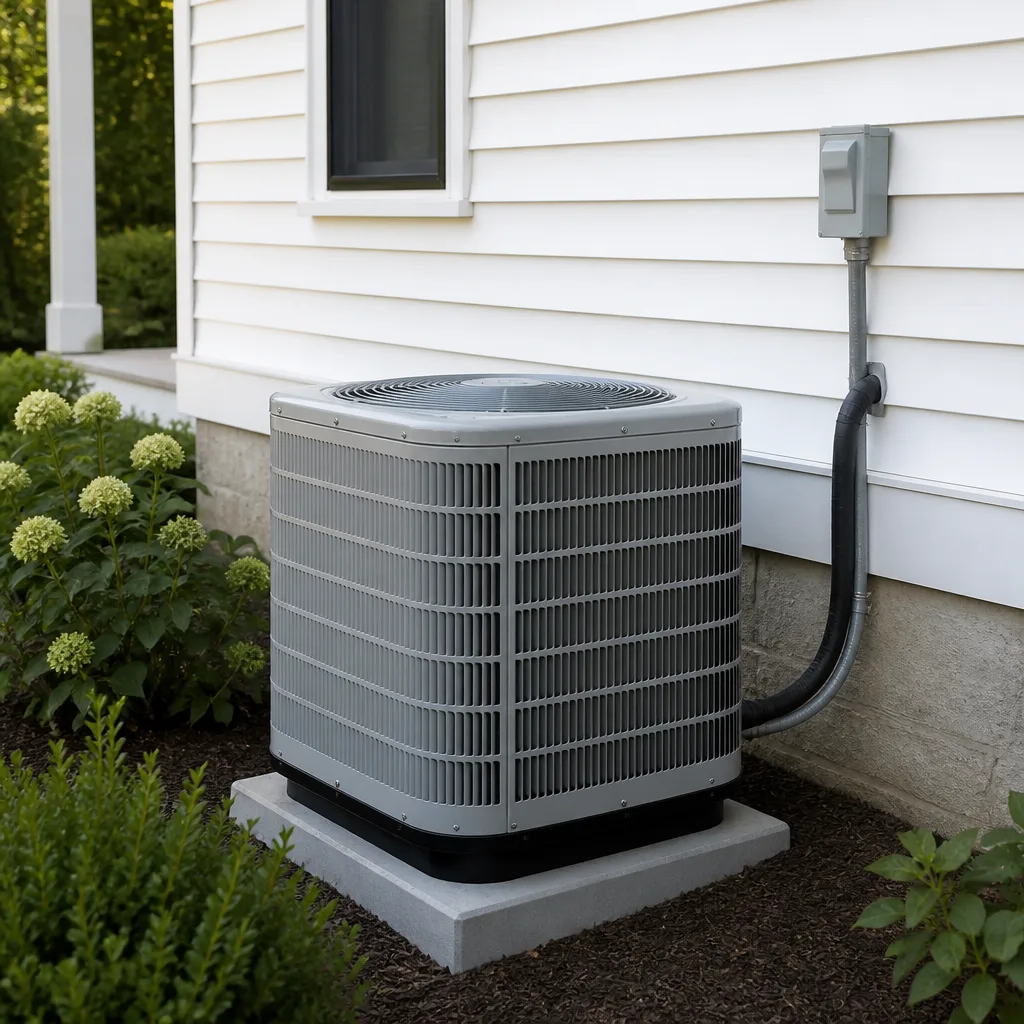
 Carrier
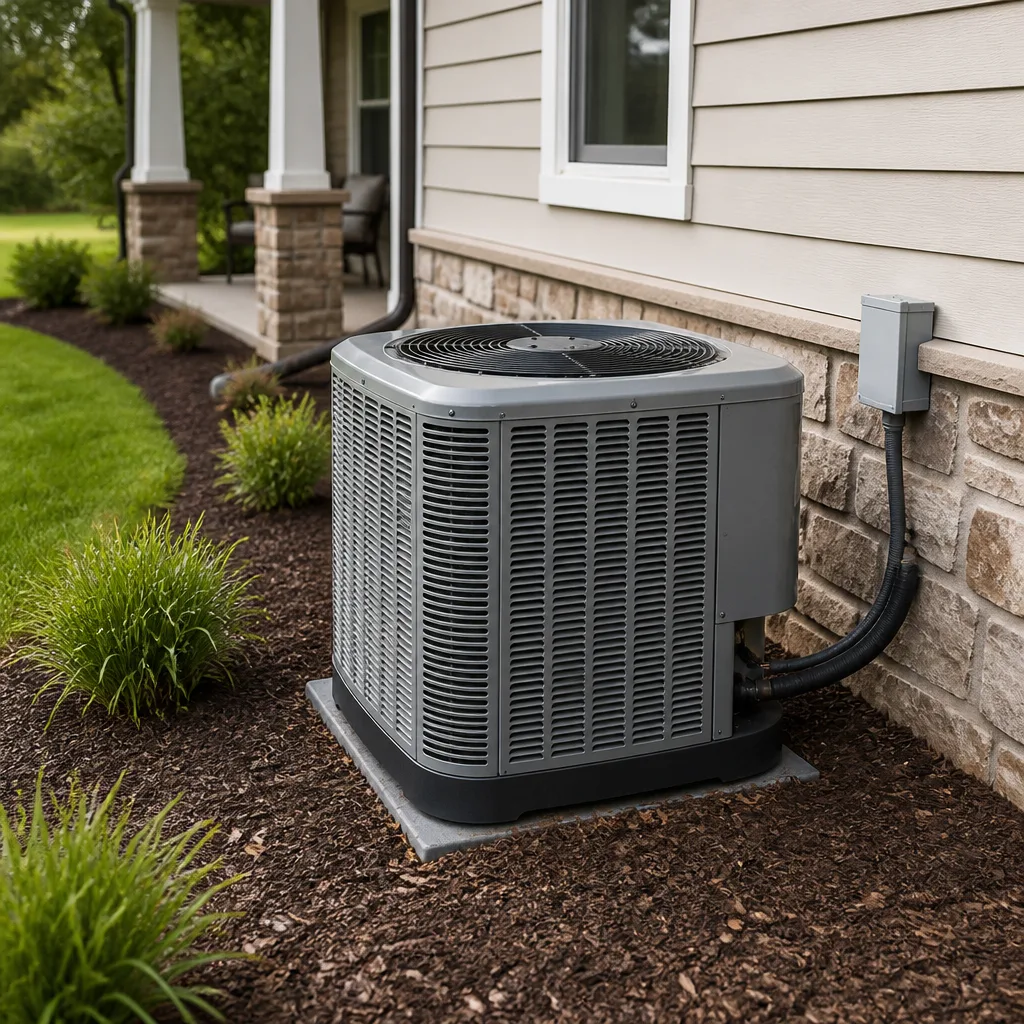 AC repair
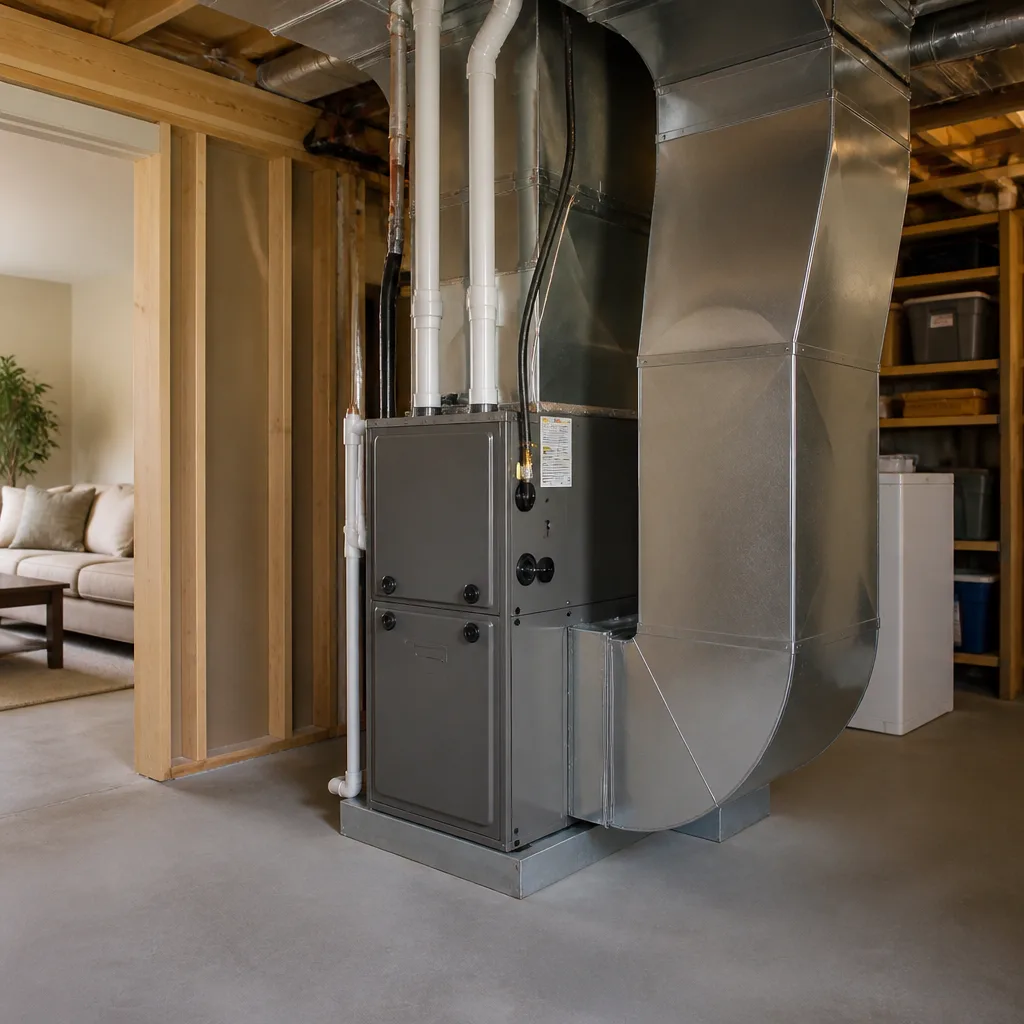 Furnace & heating
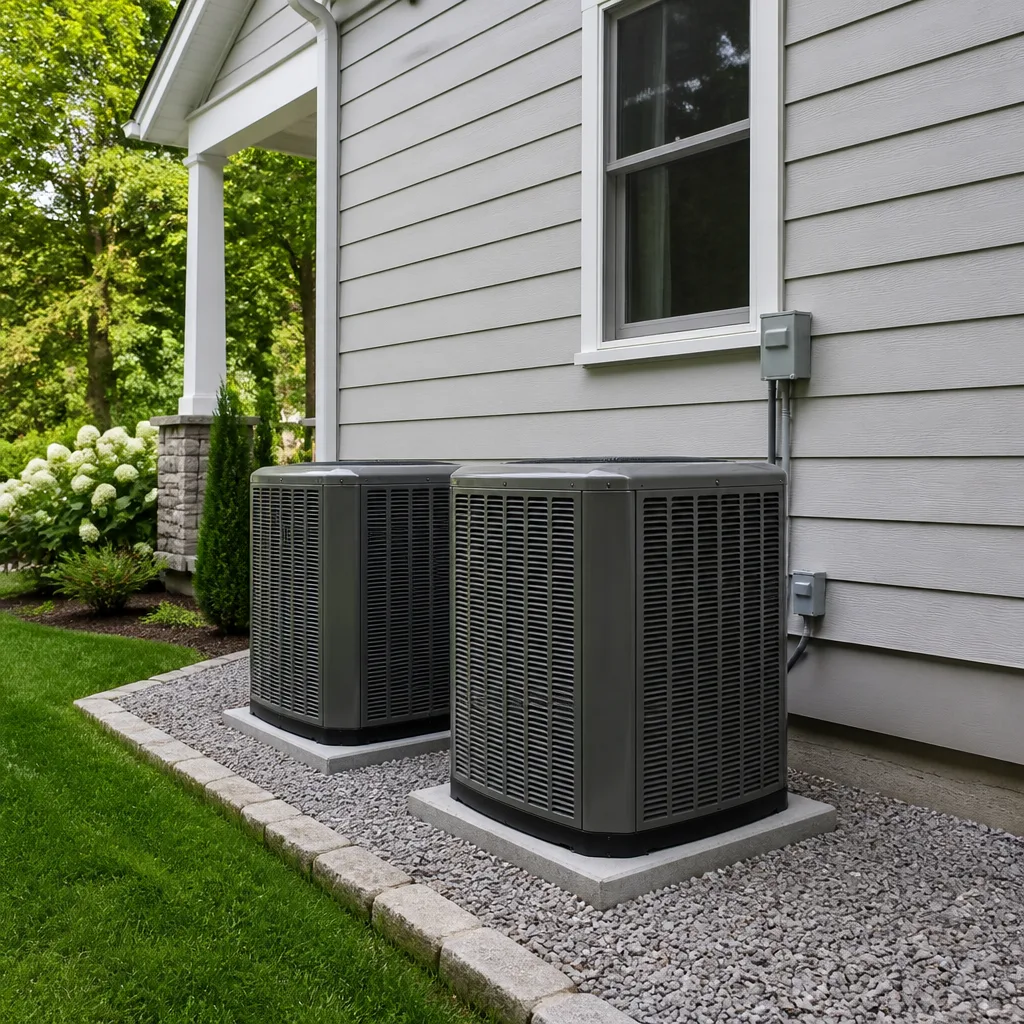 Heat pumps
 Ductless mini splits
 Trane
 Goodman
Seasonal tune-up and full diagnostic on your Carrier, Trane, or Goodman system - readings shown to you before any repair is proposed
Diagnosis first, numbers second - you approve the repair price before a single part goes in.
Get your free estimateCarrier Capacitor Replacement: The Fresno Owner’s Guide
A Carrier capacitor replacement in Fresno typically runs $150 – $320 installed, parts and labor included, and our trucks carry the common Carrier-compatible dual and single run capacitors so we can usually finish the job in one visit on the same day you call. You’ll most likely discover the problem when your outdoor unit hums but won’t start, or when the compressor kicks off after a few minutes and the fan keeps spinning without it. It’s a small part with an outsized job: giving the compressor and fan motor the electrical shove they need to get moving. When it fails in a Fresno summer, your AC goes from blowing cold to blowing nothing in a matter of hours.
A quick note before we go further: Brandt HVAC Co Fresno is an independent service provider. We’re not affiliated with Carrier, but we work on Carrier systems every week and stock parts built to Carrier’s specifications. And here’s the part where I’ll be straight with you, because this is a capacitor we’re talking about: this is a job for a trained tech, not a Saturday afternoon project. A capacitor holds a charge even after power is cut. Touching the terminals wrong can knock you on your back or worse. More on that below.
Which Carrier Models This Applies To
If your Carrier system was built in the last twenty-five years, there’s a strong chance it uses a dual run capacitor, not two separate ones. Carrier’s Comfort, Performance, and Infinity series condensers and heat pumps across the 24A, 25H, 38M, and 38Y model families all use capacitors in the 35/5, 40/5, 45/5, and 50/5 microfarad range, depending on tonnage. The first number is for the compressor, the second for the fan motor. Get this wrong and the compressor either won’t start or overheats trying.
Here’s the compatibility gotcha most homeowners run into: the microfarad rating on the new capacitor needs to match the old one within about 5 to 6 percent, but the voltage rating just needs to be equal or higher. A 370-volt capacitor is fine to replace with a 440-volt one, but not the other way around. Carrier’s older units from the late 90s and early 2000s often used 370V ratings; the newer stuff ships with 440V. The label on the side of your existing capacitor tells you everything we need: the microfarad rating, the voltage, and whether it’s a dual or single run. We snap a photo of that label, match it to what’s on the truck, and show you both before we install anything.
As for OEM versus aftermarket: a genuine Carrier capacitor costs more because it has the Carrier part number stamped on it, not because it’s meaningfully better. Quality aftermarket brands it honestly from suppliers like AmRad and Titan HD meet or exceed the same specs at a lower price. We stock quality aftermarket equivalents from those makers for Carrier, Trane, and Lennox systems, and we’ll offer you both options with the price difference spelled out before any work begins.
Styles & brands we work with
Signs Your Carrier Capacitor Replacement Is Failing
- The outdoor unit hums but the fan doesn’t spin. That hum is the compressor trying to start without the electrical kick it needs. The capacitor is often the first thing we check because it’s the most common cause.
- The fan spins, but the compressor doesn’t kick on. On a dual capacitor, one side can fail while the other still works. Your fan runs, so it looks like the AC is functioning, but no cold air comes out because the compressor side is dead.
- The system starts, runs briefly, then shuts off. A weak capacitor forces the compressor to draw more current than it should. The system overheats and trips its thermal protection, then tries again. You get short cooling bursts and a higher electric bill.
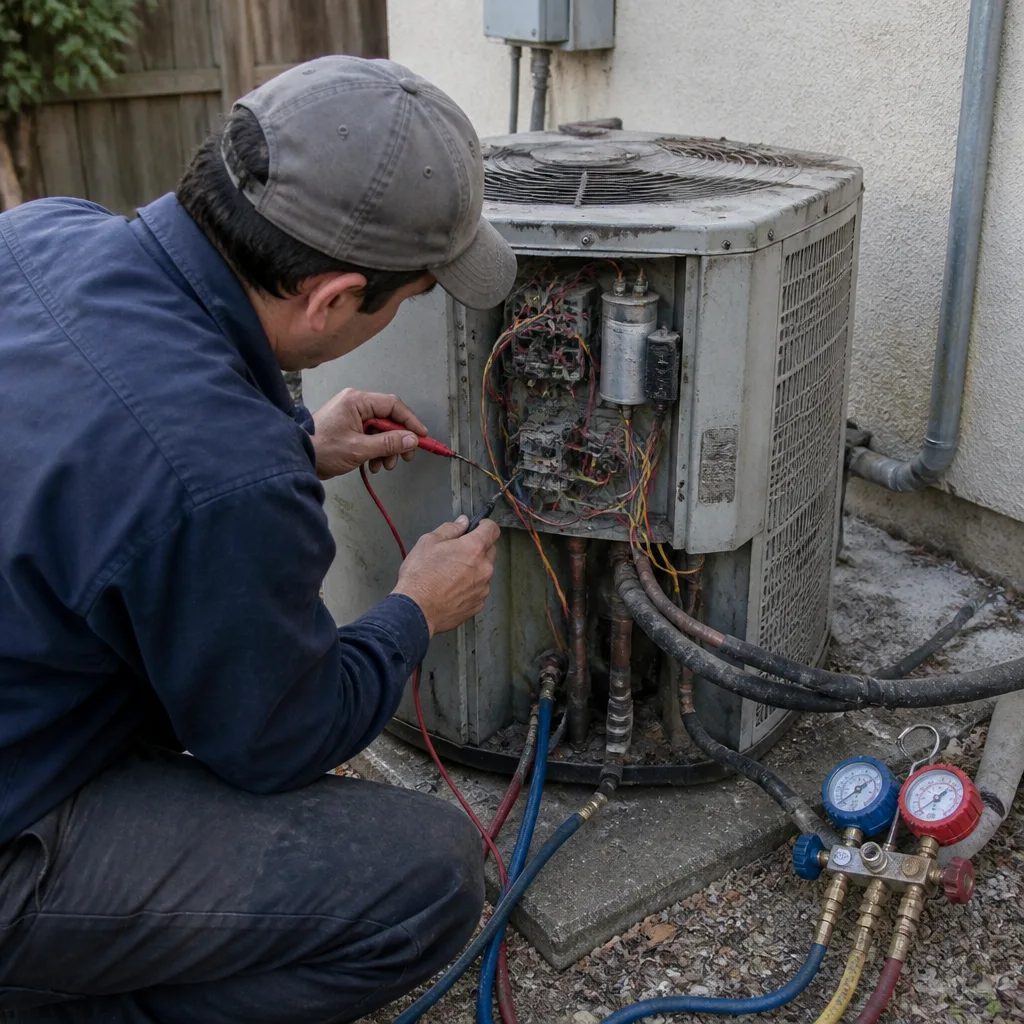
- The capacitor case is bulging, leaking, or smells burnt. Inside the metal cylinder is a roll of foil and dielectric fluid. Heat breaks down that fluid over time, the case swells, and eventually it ruptures. A bulging top or oily residue on the sides means it’s done.
- You hear a clicking sound from the outdoor unit. That’s the compressor trying to pull start current and failing. Click, pause, click. It’s not a relay issue most of the time. It’s the capacitor telling you it can’t provide the amperage anymore.
In Fresno, we see capacitors fail faster than the national average, and it’s not a mystery why. A capacitor rated for 10 years in a mild climate might last 5 to 7 here because our outdoor units run harder and longer. When daytime highs sit above 100 degrees for weeks in July and August, the capacitor’s internal temperature climbs well past its comfort zone, and the dielectric fluid degrades faster. It’s the single most common part we replace on Carrier units in the Central Valley.
See the difference
 Before
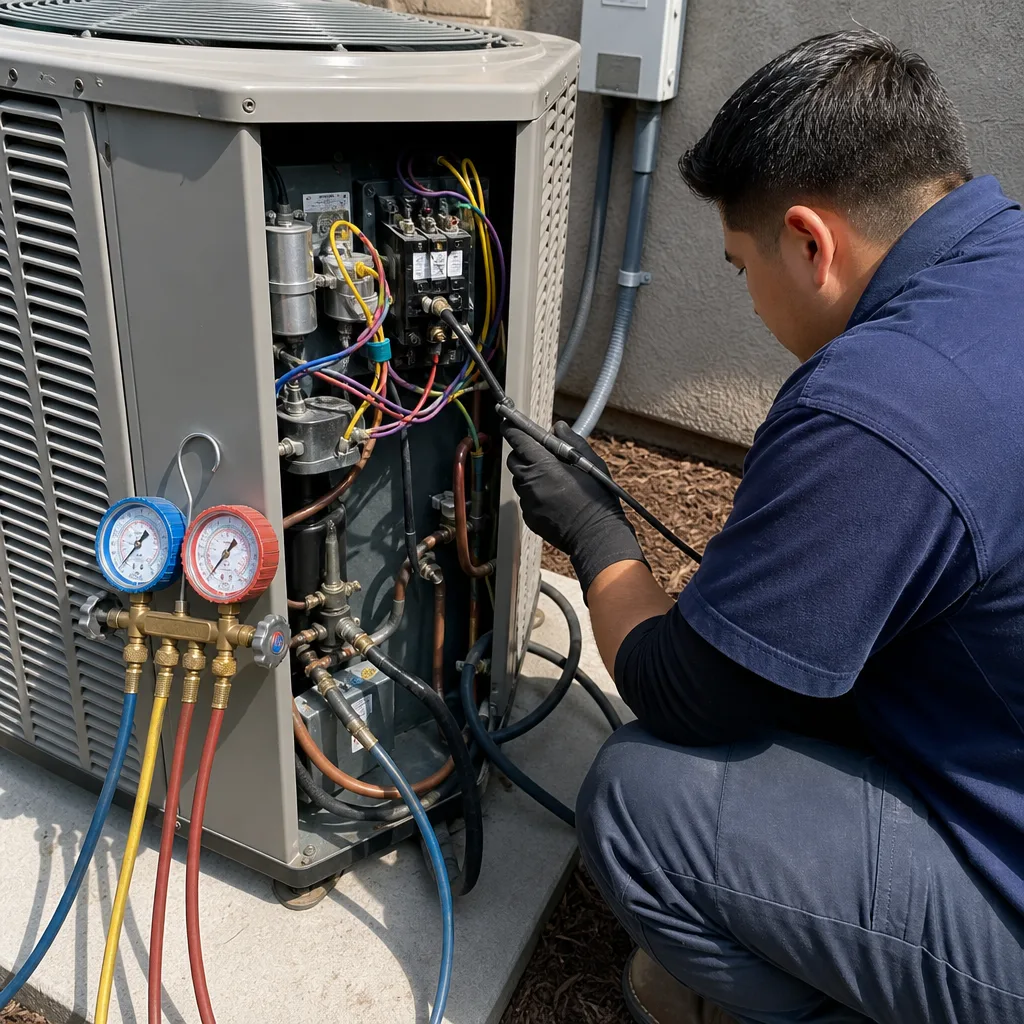 After
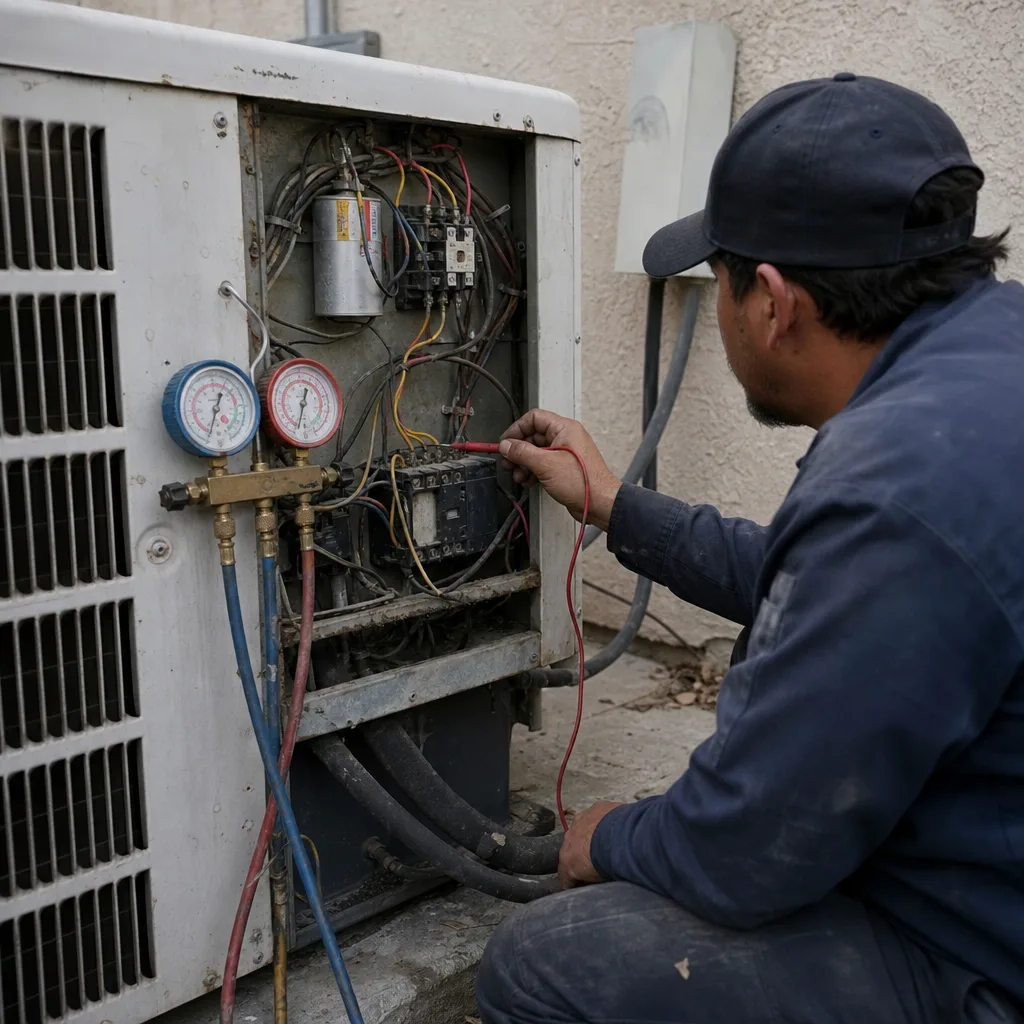 Before
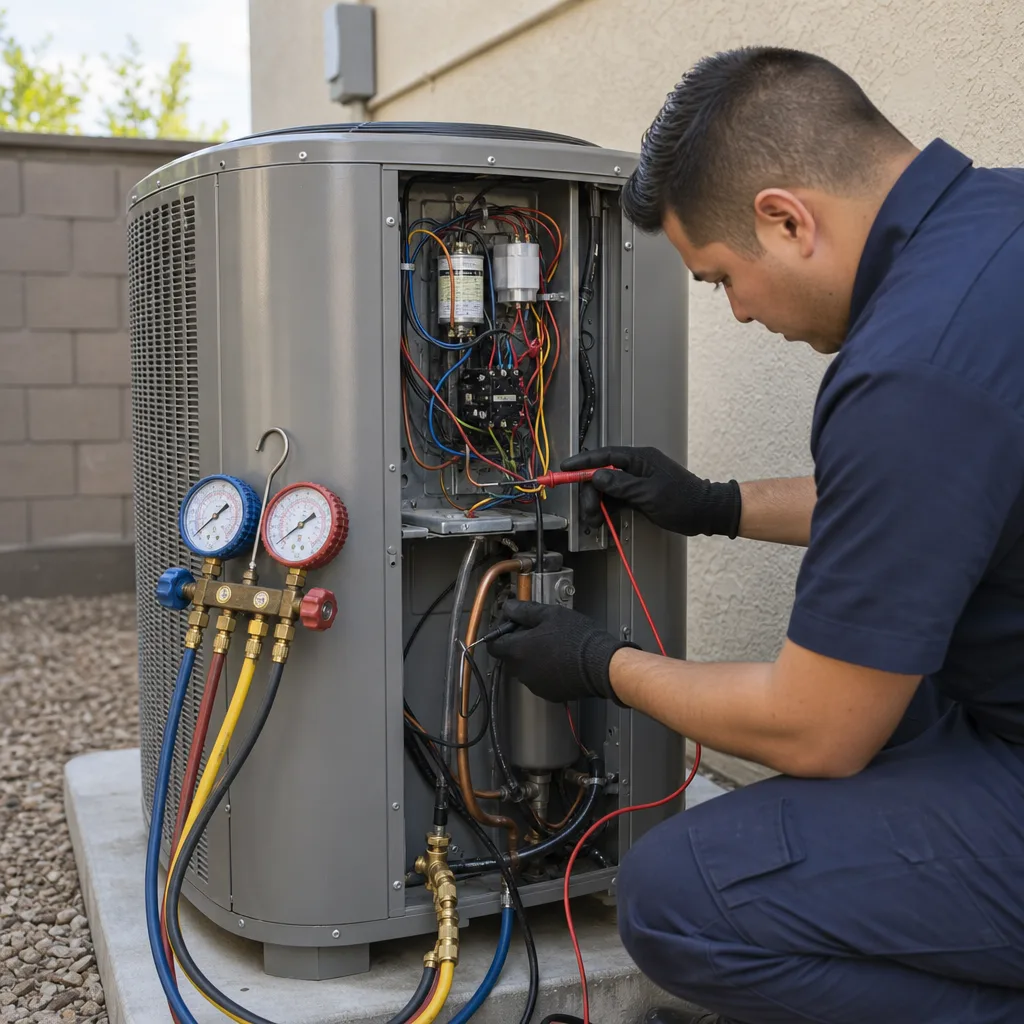 After
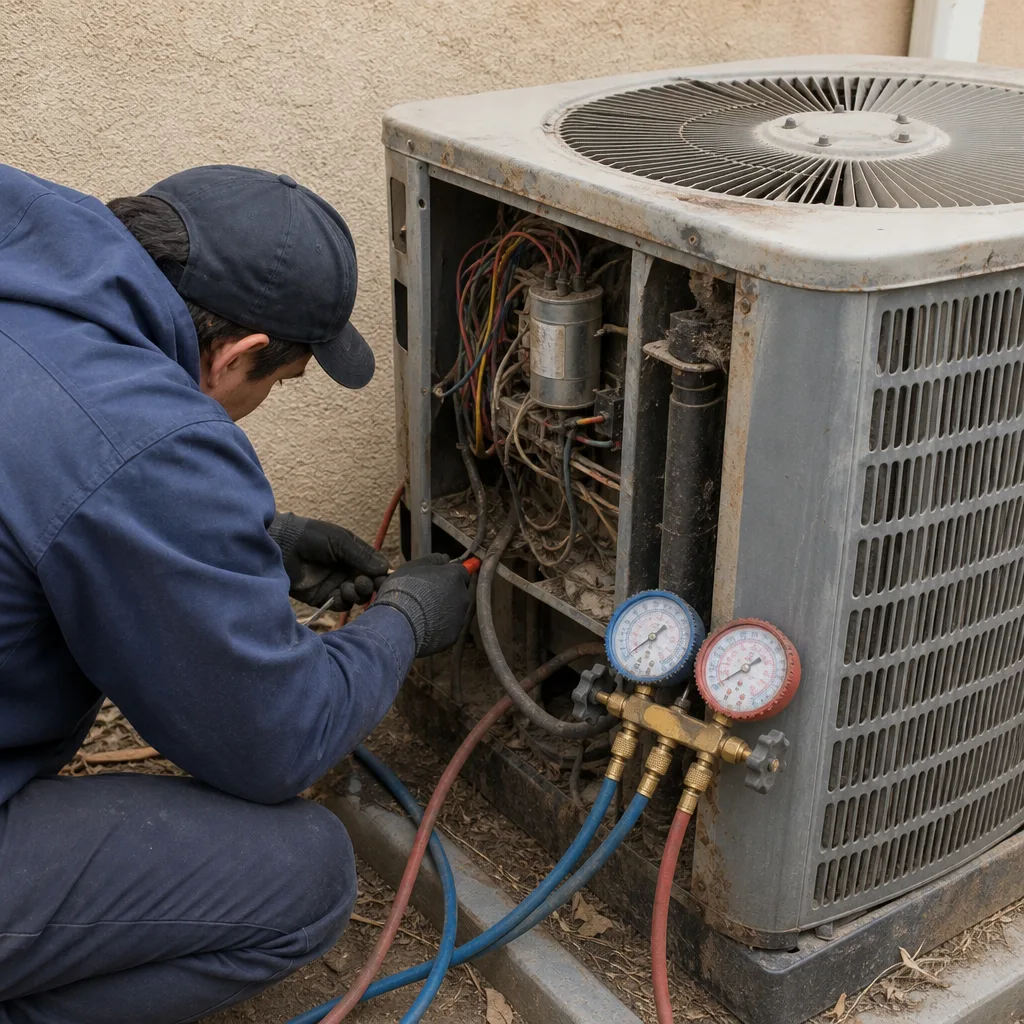 Before
 After
Replacement Cost & What’s Included
For a Carrier capacitor replacement in Fresno, you’re looking at $150 – $320 installed. The part itself is $15 – $70 depending on whether it’s a single or dual run and the microfarad rating. The rest is labor, diagnostics, and the guarantee we put behind the work. Most swaps fall right around $190 – $250 total. If your system needs additional diagnostics beyond the capacitor, that pushes the total toward the higher end of our AC repair range of $150 – $650, but we tell you the price before we touch a single wire.
Every capacitor replacement includes a written price before work starts, the new capacitor itself, installation and testing, and our written 365-Day Done Right guarantee. If the capacitor fails within a year, we come back and replace it at no charge. No argument, no hidden fee. It’s the same promise we put on every repair we do, and it’s in writing before you pay a cent.
DIY or Call Us?
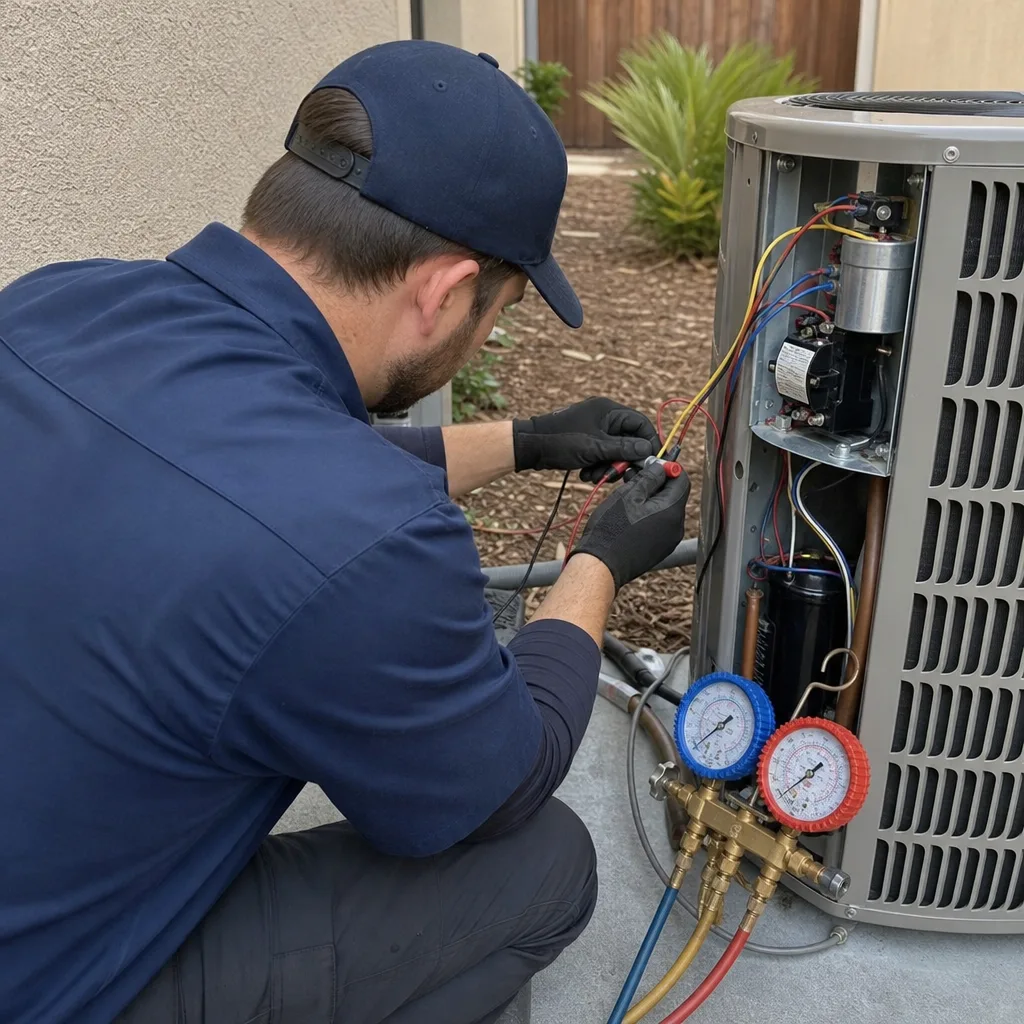
We’ll be honest about what you can safely do, because there’s one thing about capacitors worth repeating: they store electricity even after the unit is fully disconnected from power. A charged capacitor can deliver a shock strong enough to cause serious injury or stop a heart. This is not like swapping a furnace filter. This is not a job where YouTube makes you qualified. If you want to diagnose from a distance, you can safely check whether the fan spins freely by hand with the power cut, and you can visually inspect the capacitor through the access panel for bulging or leakage. Take a photo of the label too. That helps us bring the right part.
But unlocking the capacitor, discharging it safely, and rewiring a dual run capacitor correctly is where DIY goes wrong. A wrong connection and you’ll blow the new part or damage the compressor you were trying to save. That turns a $200 fix into a $1,500 compressor replacement fast. Give us a call at (559) 354-6878 and we’ll send a technician you know by name and photo before he arrives, with the right parts on the truck. Tell you what it needs, tell you what it costs, get it done right. That’s how Devin Marlowe likes to run it.
FAQs
In a mild climate, a Carrier capacitor can last 10 years or more. In Fresno, where outdoor units run hard through 100-plus-degree summers, we typically see them last 5 to 7 years before the heat degrades the internal fluid and insulation. If your system is older than that and the capacitor has never been replaced, you’re on borrowed time.
No. A capacitor is a sealed component, and once the internal dielectric breaks down, there’s nothing to rebuild. The fix is a new capacitor with matching microfarad and voltage ratings. We always show you the damaged part and the replacement before we install it so you can see exactly what you’re paying for.
The swap itself takes 30 to 45 minutes, start to finish. That includes cutting power, safely discharging the old capacitor, wiring the new one, and running the system through several start cycles to confirm everything works. If we diagnose the capacitor as the problem and have the correct part on the truck, you’re back up and running the same visit.
We stock the most common Carrier dual run capacitor ratings in 35/5, 40/5, 45/5, and 50/5 microfarads, along with a range of single run capacitors for older systems. If your unit needs something unusual, we can usually source it within a day or two in the Fresno area. Call (559) 354-6878 and a live person will help you schedule the right tech with the right part, day or night.
Call Brandt HVAC Co Fresno at (559) 354-6878 for a free estimate on your Carrier capacitor replacement. We answer the phone 24/7, send a background-checked technician by name and photo before arrival, and give you a written price before any work starts.
Written by Devin Marlowe, Owner, Brandt HVAC Co Fresno at Brandt HVAC Co Fresno, serving Fresno and nearby areas.